




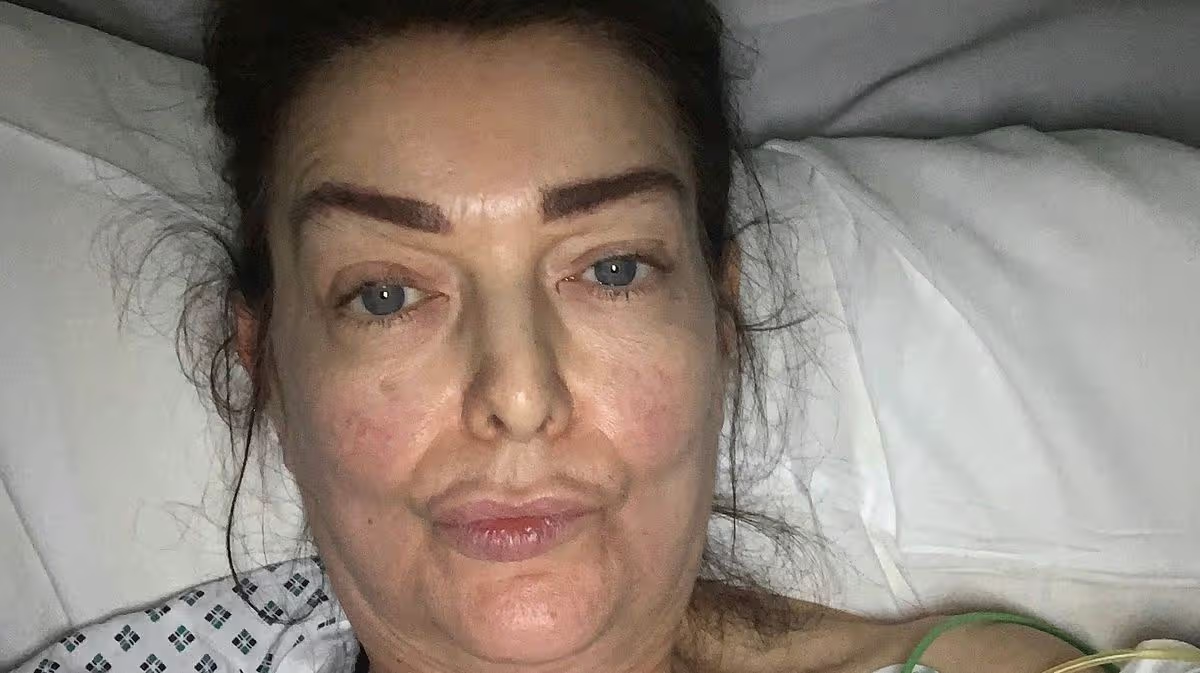
A Mother’s Journey: From Menopause Concerns to a Colon Cancer Wake-Up Call
Natalie Hushin, a 54-year-old mother and former company director from Runcorn, Cheshire, expected the changes in her body to be a normal part of life’s transitions. Like many women her age, she attributed her new experiences of bloating and an unsettled stomach to the onset of menopause. It was a logical assumption, one that countless others make, often dismissing such symptoms as minor annoyances rather than potential red flags. However, Natalie’s story took a dramatic and life-altering turn when her symptoms evolved into something she describes as “weird and unusual.” The casual explanation no longer fit, prompting a concern that would ultimately lead to a diagnosis she never anticipated. Her experience stands as a powerful reminder that our bodies sometimes communicate in urgent whispers, and confusing those whispers with background noise can have serious consequences.
The pivotal moment came when Natalie noticed something alarming that she could no longer rationalize: “speckled blood” in her stool, accompanied by increasing difficulty using the toilet. This visible sign spurred her into action, especially after discussing it with her son, who urged her to seek medical advice. Heeding this concern, she visited her GP, who quickly referred her for a colonoscopy. This procedure revealed the harsh truth—tumors were present in her colon. Weeks later, in June of last year, the formal diagnosis arrived: colon cancer. Natalie recalls the devastating moment with raw clarity, describing a flood of disbelief, heartbreak, and fear. “My whole life was flashing before me,” she said, articulating the profound shock that accompanies such news. Her personal plans and daily worries were instantly overshadowed by a daunting new reality centered on survival and treatment.
Natalie’s battle against the disease was grueling and extensive. She first underwent a marathon 10-and-a-half-hour surgery to remove the primary tumor and surrounding lymph nodes. Just as she was beginning to recover from this massive operation, further scans delivered another blow: the cancer had also spread to her liver. This necessitated an aggressive course of treatment, consisting of six rounds of chemotherapy. For three months, her life revolved around a taxing regimen of daily oral tablets and fortnightly infusions. Initially, there was hope that a follow-up procedure called a liver ablation, scheduled for February, would address the small liver tumor. However, when that procedure was delayed, the tumor grew significantly, forcing a more major liver resection by March. Natalie reflects on this setback with frustration, noting that this second major surgery might have been avoided with more timely intervention.
Through her ordeal, Natalie has become acutely aware of the subtle and often-misinterpreted symptoms of colon cancer, which is one of the most common cancers in the UK. Her initial bloating and digestive issues, so easily attributed to menopause, were early warnings. The telltale blood in her stool was the critical sign that finally triggered action. She now knows that other symptoms can include unexplained weight loss and persistent changes in bowel habits. Her mission has transformed from personal survival to public awareness. She hopes that by sharing her story, others will listen more closely to their bodies and seek medical advice for persistent changes, however minor they may seem. Early detection, as in her case, can be the key to more effective treatment and better outcomes.
The statistics underscore the importance of Natalie’s warning. According to recent World Health Organization data, colon cancer claimed over 900,000 lives globally in 2022 alone. It is a formidable disease, but not an unbeatable one, especially when caught early. Natalie considers herself fortunate; despite the setbacks and the emotional rollercoaster, her cancer was detected before it was too late, and she received life-saving surgeries and treatment. She expresses immense gratitude for the skilled surgeons who cared for her. Yet, her journey is far from over. She will require scans every three months for a decade to monitor for any recurrence, a long-term reminder of the battle she has faced.
Today, Natalie Hushin’s voice is one of resilience and advocacy. She has navigated the fear of diagnosis, the physical toll of surgery and chemotherapy, and the anxiety of ongoing surveillance. Her story humanizes the stark statistics, transforming them into a narrative of cautious hope and urgent caution. By coming forward, she provides a vital public service: demystifying symptoms, encouraging proactive health checks, and breaking the silence that often surrounds bowel health. Her message is clear—do not dismiss persistent changes in your body. What may seem like a common sign of aging could be something more serious, and seeking a doctor’s opinion could save your life.