



Paragraph 1: A Tragic Blast Shakes a Historic Community
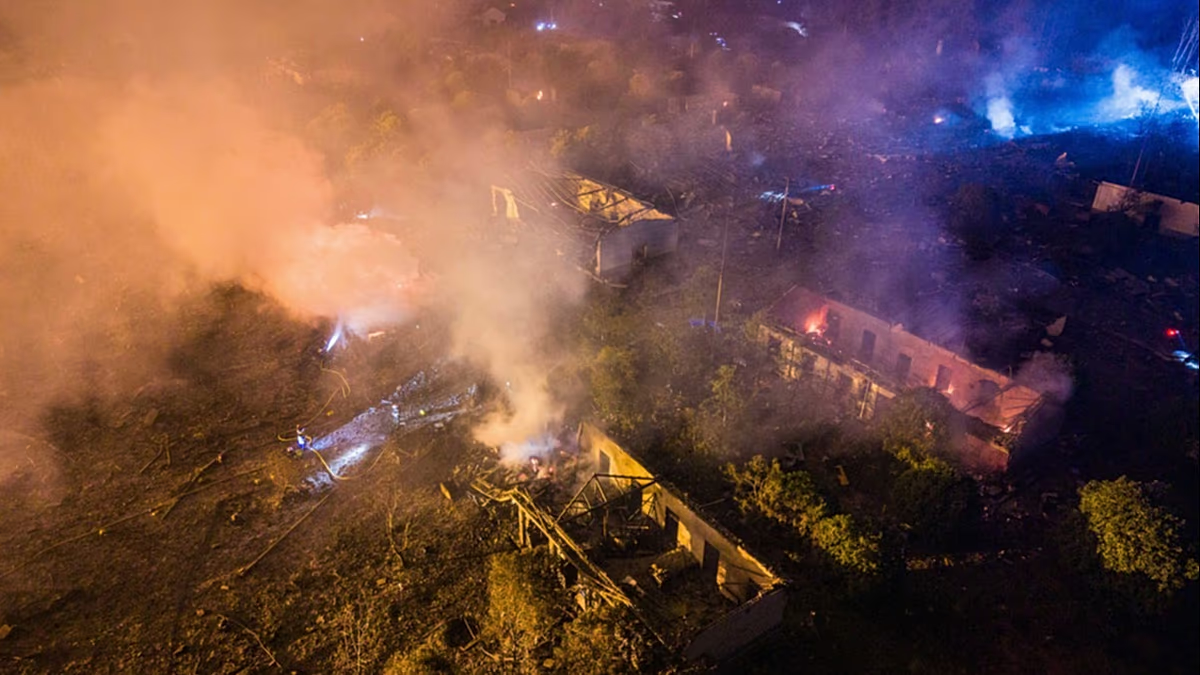
A devastating explosion ripped through a fireworks factory in Changsha, Hunan province, on a Monday afternoon, shattering the relative peace of the region. The blast, at a facility operated by the Huasheng Fireworks Manufacturing and Display Co., resulted in a tragic and swiftly rising casualty count, with state media confirming at least 21 lives lost and 61 individuals injured. The immediate aftermath was a scene of profound destruction and ongoing danger, with aerial footage revealing collapsed structures and plumes of white smoke still emanating from the site the following day. This sudden disaster sent shockwaves through the local community and prompted a massive emergency response, marking the beginning of a grim search and rescue operation under the shadow of further potential risks.
Paragraph 2: A Massive and Precarious Rescue Effort Unfolds
Recognizing the extreme peril, authorities mobilized nearly 500 rescue workers to the scene. The operation was fraught with additional hazard due to the presence of two black powder warehouses near the epicenter of the explosion, leading to the precautionary evacuation of residents from surrounding danger zones. To navigate these threats, teams employed innovative and cautious strategies, using spraying and humidification techniques to suppress dust and eliminate ignition risks. In a move to protect human responders, three robots were deployed to assist in the precarious search through the rubble, highlighting the dangerous conditions that persisted hours after the initial blast. Officials soberly warned the public that the death toll was not yet final and could continue to climb, urging nearby residents to remain vigilant and adhere strictly to official safety instructions.
Paragraph 3: National Leadership Demands Action and Accountability
The severity of the incident prompted a direct response from the highest levels of Chinese leadership. President Xi Jinping issued urgent instructions, calling for “all-out efforts” in the ongoing mission to locate the missing and provide care for the injured. Beyond the immediate crisis response, his directives underscored a demand for rigorous accountability and systemic review. He mandated a swift investigation into the root cause of the explosion and emphasized the necessity of “serious accountability” for those responsible. Furthermore, President Xi’s comments framed the tragedy as a stark reminder for broader industrial safety, ordering enhanced risk screening and hazard control across key sectors to strengthen nationwide public safety management.
Paragraph 4: An Industry Steeped in History Confronts Modern Risk
The location of this tragedy adds a layer of profound historical irony. The blast occurred in Liuyang, a city within Changsha that is celebrated as the ancestral home of fireworks. According to Guinness World Records, the first accurately documented firecracker is attributed to Li Tian, a monk from this very region during the Tang Dynasty (618-907 AD). He famously discovered that enclosing gunpowder in bamboo stems created loud explosions, eventually leading to the traditional strings of firecrackers used to ward off evil spirits and celebrate the New Year. For centuries, Liuyang’s identity and economy have been intertwined with this craft, making this modern-day industrial accident not just a news event, but a devastating blow to a community whose cultural heritage is built around the very materials that now caused such loss.
Paragraph 5: Investigation and Aftermath Begin Amidst Grief
As the dust began to settle, the focus shifted from pure rescue to investigation and consequence. Police moved quickly, detaining the person in charge of the fireworks manufacturing company, a preliminary step in what will likely be a detailed probe into operational safety protocols, regulatory compliance, and potential negligence. The combined efforts of emergency crews, robotic aids, and investigators worked in tandem to secure the site, care for the wounded, and begin piecing together the sequence of events that led to the catastrophe. For the families of the victims and the injured, this period marked the start of an agonizing journey through grief and recovery, while the community at large grappled with the juxtaposition of its celebratory global reputation and the somber reality of industrial danger.
Paragraph 6: A Sobering Reminder of the Balance Between Tradition and Safety
This explosion serves as a tragic and powerful reminder of the inherent risks in industries dealing with volatile materials, even those as culturally cherished as fireworks. It underscores the relentless challenge of managing safety in complex manufacturing processes, where tradition meets modern-scale production. The national call for strengthened hazard control reflects an urgent priority to prevent such heartbreaking losses in the future. Ultimately, the incident in Liuyang is more than a statistic; it is a story of a historic community facing sudden tragedy, of a large-scale human and technological response, and of a pressing national conversation about accountability and prevention that emerges from the ashes of disaster.