

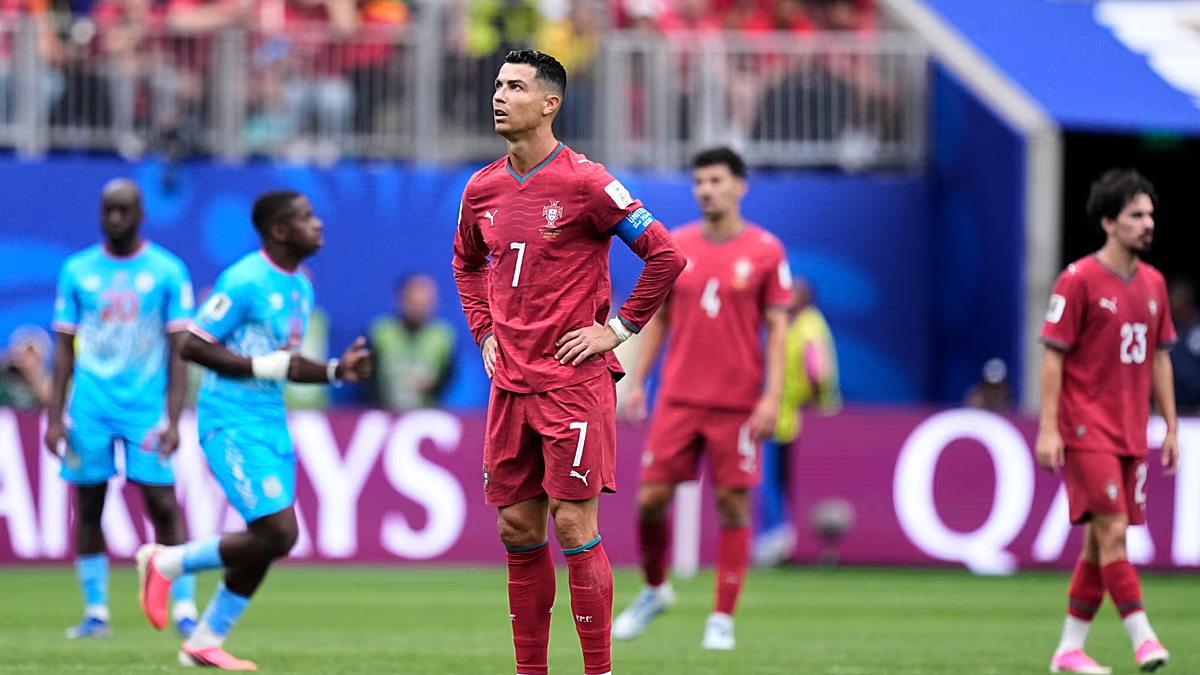
The opening match of Portugal’s 2026 World Cup campaign ended not with the triumphant roar many anticipated, but with a dispiriting 1-1 draw against the Democratic Republic of Congo. This unexpected result sent shockwaves through the football world, but the narrative quickly shifted from the team’s collective performance to the intense, laser-focused scrutiny on its aging captain, Cristiano Ronaldo. At 41 years old and competing in his sixth World Cup, Ronaldo’s every move was dissected, and the verdict from the global press was largely unforgiving. Outlets painted a picture of a legend in decline, with The Independent accusing Portugal of sacrificing “yet another World Cup to Cristiano Ronaldo’s ego” and describing him as “a statue” on the pitch. The draw plunged the Portuguese campaign into immediate doubt and ignited a fierce debate about the role of a fading superstar in a team of younger, dynamic talents.
Ronaldo bore the brunt of the criticism, which extended far beyond his quiet performance on the ball. International newspapers framed his presence as a fundamental flaw in Portugal’s tactical setup. L’Équipe saw a “caricature” of the team, while Italy’s Gazzetta dello Sport identified Ronaldo as the “obvious problem.” The Spanish daily AS delivered a particularly harsh assessment, declaring his sixth World Cup debut “discouraging” and leading to “the deepest depression” for both player and nation. The conversation reached its peak with pointed comparisons to his eternal rival, Lionel Messi, whose enduring brilliance for Argentina served as a stark contrast. The Telegraph framed it as a lesson: Messi showed why he remains essential, while Portugal saw why Ronaldo perhaps should not be. This collective media narrative questioned not just his current ability, but the very wisdom of his automatic inclusion in the starting lineup.
However, the post-match analysis revealed that Portugal’s issues were systemic and not confined to one player, even one as monumental as Ronaldo. Manager Roberto Martínez’s game plan and in-game decisions were widely panned. The Guardian suggested the team needed to improve “a lot” and criticized Martínez directly, questioning his “will or courage” to make the bold decision of benching his captain. Tactically, Portugal was described as predictable and slow, a sentiment echoed by El País, which noted the team lost its rhythm after a substitution. Furthermore, other key attackers failed to escape criticism. Marca labelled Bernardo Silva’s debut as “terrible,” and Rafael Leão was chided for a lack of personality and impact off the bench. The story was clear: this was a collective malfunction, with a stagnant attack and a confused tactical approach stifling the team’s potential.
Amidst the gloom, a few bright sparks offered a glimpse of an alternative future for Portuguese football. The midfield partnership of João Neves and Vitinha emerged as the lone beacon of hope, earning widespread praise for their energy and control. Marca hailed them as an “almost perfect double act,” with Neves, in particular, being celebrated as “a global phenomenon” and Portugal’s “most unreadable player” for his intelligent movement. This positive attention highlighted the generational tension within the squad: the vibrant, modern midfield synergy stood in stark contrast to the struggling, stationary figure leading the line. It presented a compelling question of balance—how to integrate the undeniable legacy and aerial threat of Ronaldo with the fluid, progressive football that the younger talents seem to naturally foster.
The human element of this high-stakes drama was perhaps most poignantly captured not in tactical breakdowns, but in observations of spirit and emotion. The Athletic noted that while the rest of the Portuguese team gathered to applaud their fans after the final whistle, Ronaldo had already headed for the dressing room—a small detail that spoke volumes about the frustration and isolation he may have felt. Furthermore, a fan’s comment to The Guardian tapped into a broader, almost melancholic sentiment surrounding the icon, admitting that watching Ronaldo’s difficulties in movement evoked “a sense of my own mortality.” This acknowledgement moved the discussion beyond mere sport into the realm of witnessing a once-unstoppable force grapple with the inevitable passing of time, a reality that resonates far beyond the pitch.
Portugal now faces a critical juncture as they prepare to meet World Cup debutants Uzbekistan. The draw against Congo is not a catastrophe, but it is a severe warning. The team stands at a crossroads between loyalty to a legend and a tactical recalibration that might unlock its potent younger assets. The international press has framed this as Martínez’s defining challenge: does he persist with a formula that looked broken, or does he find a new way to harness the undeniable talent within the squad? The answer will determine whether this campaign becomes a graceful final chapter for a legend or a missed opportunity for a gifted generation. The world will be watching, not just for the result, but for the profound statement of identity Portugal chooses to make on the pitch.