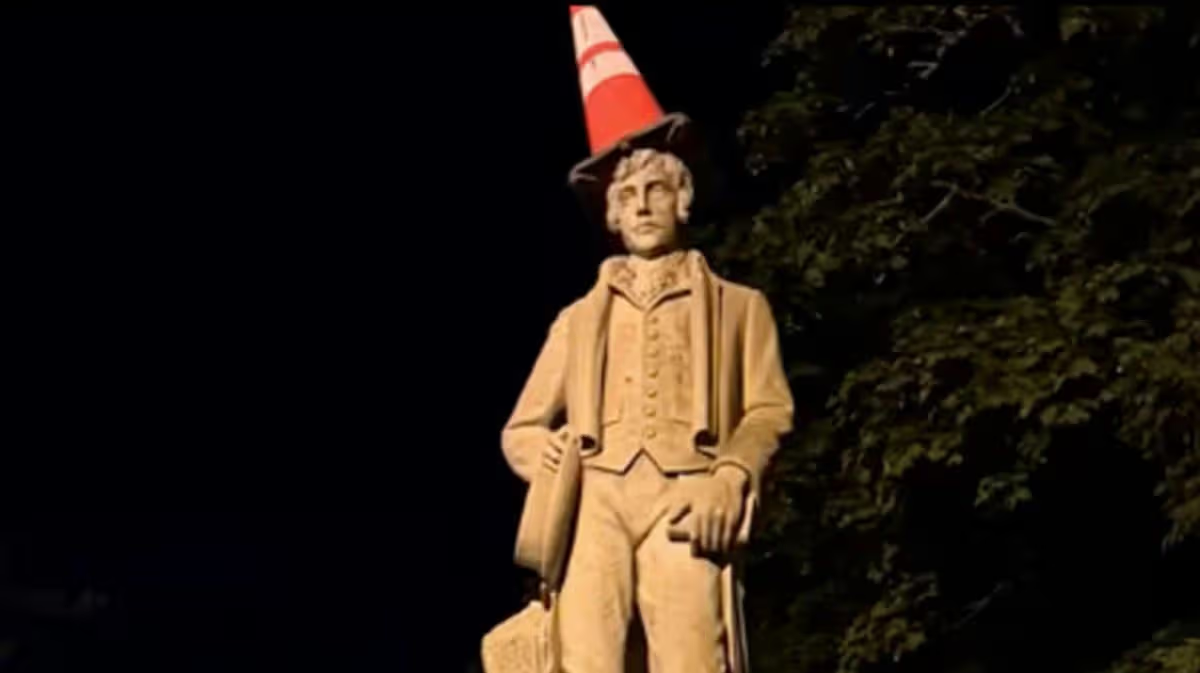


In a delightful fusion of civic ceremony and irreverent humor, Boston Mayor Michelle Wu officially celebrated the new sister-city relationship between Boston and Glasgow in a uniquely Glaswegian fashion. The announcement, made on June 18, 2026, at The Haven—Boston’s sole dedicated Scottish bar, which had served as the unofficial headquarters for the visiting Tartan Army during the World Cup—was marked not just by a signed letter of intent, but by a playful act of cultural homage. Mayor Wu revealed that she had personally placed a bright orange traffic cone atop the head of a revered Boston statue, mirroring a beloved tradition from Glasgow. This gesture, far from being a mere political formality, symbolized a deep appreciation for the joyful, anarchic spirit that Scottish fans had brought to her city, setting the tone for a partnership built on shared camaraderie and lightheartedness.
The tradition Mayor Wu referenced is iconic to Glasgow. For decades, the equestrian statue of the Duke of Wellington outside the Gallery of Modern Art has rarely been seen without a traffic cone perched precariously on his head or his horse’s. Despite repeated official removals, the cone is consistently and mysteriously reapplied by the city’s residents, becoming a stubborn symbol of Glaswegian wit and resistance to stuffy formality. By adopting this custom in Boston, Mayor Wu did more than sign a document; she actively participated in a ritual that celebrates communal identity and playful rebellion. Her choice of statue was significant, too: she “coned” the memorial to Bill Russell, the legendary Boston Celtics center who led the team to eleven NBA championships. In doing so, she connected a symbol of Boston’s sporting pride to a symbol of Glasgow’s spirited character, creating a poignant, cross-cultural inside joke.
This gesture was part of a larger wave of affection sweeping Boston, driven by the presence of the Tartan Army. The Scottish fans had utterly charmed the city, not only with their vibrant presence but with their remarkably considerate behavior. Mayor Wu specifically praised them for their positive energy and for their conscientious habit of cleaning up after themselves at public gatherings, even neatly piling litter next to overflowing bins—a detail she joyfully called “a mayor’s dream.” Their infectious chant, “No Scotland, no party,” had become a soundtrack to the city’s summer. The cone-placing, therefore, was not an isolated stunt but a reflection of a genuine, warm connection that had organically grown between the visitors and their hosts, making the official sister-city agreement feel like a natural recognition of an existing friendship.
The Scottish fans’ influence extended beyond the mayor’s office and into the very streets of Boston. In a viral TikTok video that captured the era’s spirit, a Scottish supporter in a team jersey and kilt was filmed giving Boston’s statue of Scotland’s national poet, Robert Burns, the same conical treatment. With a friend cheering him on, the fan climbed the statue, gave “Rabbie” an apologetic kiss, and successfully placed a traffic cone on his head. The video, amassing over 660,000 views, exemplified the good-natured mischief and deep national pride that defined the Tartan Army’s visit. It showed how the fans were not just spectators but active participants in weaving a new thread into the cultural fabric of Boston, leaving a tangible—if slightly silly—mark on the city’s landscape.
Mayor Wu’s actions and words highlighted a governance style embracing spontaneity and public joy. She acknowledged the practical joke’s dual nature, noting, “We do need cones that need to be in the right place to stay in the right place,” but emphasized the “sense of playful, joyful surprise” it created. Her willingness to engage in the fun, even while wearing the Scottish away kit for the signing ceremony, signaled a modern, human-centric approach to diplomacy. This event transcended a standard municipal agreement; it became a story about how shared laughter and small, symbolic acts can build stronger international bonds than any formal proclamation alone.
Looking ahead, the formal sister-city agreement is set to be finalized the following April during Tartan Week, ensuring the connection nurtured during the World Cup would have a lasting institutional framework. However, the true legacy of those days in June 2026 may well be remembered not in documents, but in the enduring image of Boston’s statues temporarily adorned with orange traffic cones. It was a moment that proved civic pride and international friendship can be forged through humor and humility, with a mayor unafraid to climb a small ladder—literally and metaphorically—to place a cone on a hero’s head, all in the name of shared joy and a brilliant, blossoming friendship between two storied cities.