


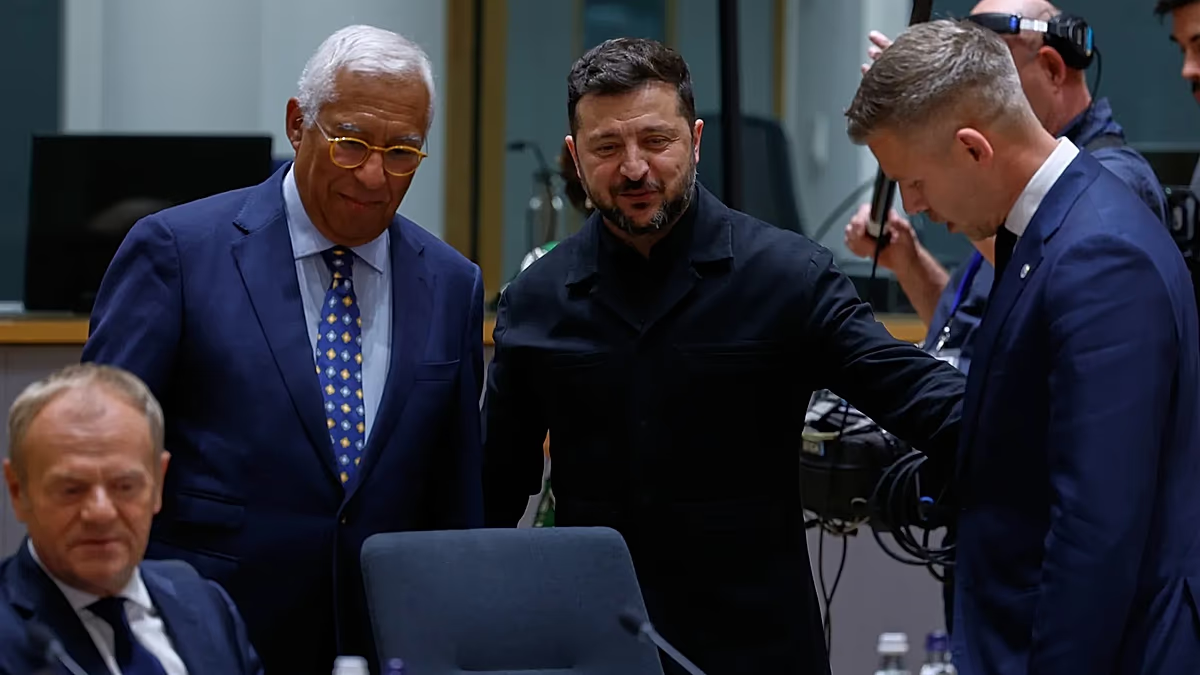
In a compelling address to European Union leaders at a crucial Brussels summit, Ukrainian President Volodymyr Zelenskyy presented a powerful, multi-faceted case for the fast-tracking of his nation’s accession to the European bloc. His argument was rooted not in bureaucratic checklists, but in profound sacrifice and shared strategic destiny. He asserted that Ukraine has already “paid the ultimate price” for its European future, enduring a brutal war of aggression that has cemented its identity as a free and independent European nation. This sacrifice, he argued, has earned Ukraine a moral right to membership, moving the discussion beyond mere political procedure into the realm of historical justice and continental solidarity.
Central to Zelenskyy’s appeal was a stark assessment of Ukraine’s indispensable role in European security. He framed his country not merely as a petitioner, but as a vital shield and a future pillar of strength for the entire Union. With a hardened military now battle-tested against a major adversary, he declared Ukraine’s armed forces to be the strongest in Europe and, de facto, the second-strongest in the NATO alliance. This formidable capability, born of necessity, represents a strategic asset for Europe’s future defense. Zelenskyy made it clear that the fight unfolding on Ukrainian soil is, in essence, a battle for the very soul and security of Europe—a “free, united and at peace” continent. His message was unambiguous: investing in Ukraine’s success and integration is an act of strategic foresight for the EU itself.
Extending this theme of defense autonomy, Zelenskyy championed a joint European ballistic missile program, identifying it as a critical and urgent initiative for continental security. He emphasized that the project, originally a Ukrainian proposal, must continue as a united effort with EU partners. This push for enhanced military-industrial cooperation underscores his vision of a Ukraine that is not only protected by Europe but actively contributes to its collective security architecture. It is a forward-looking proposition that positions Ukraine as a co-creator of a more resilient and self-reliant Europe.
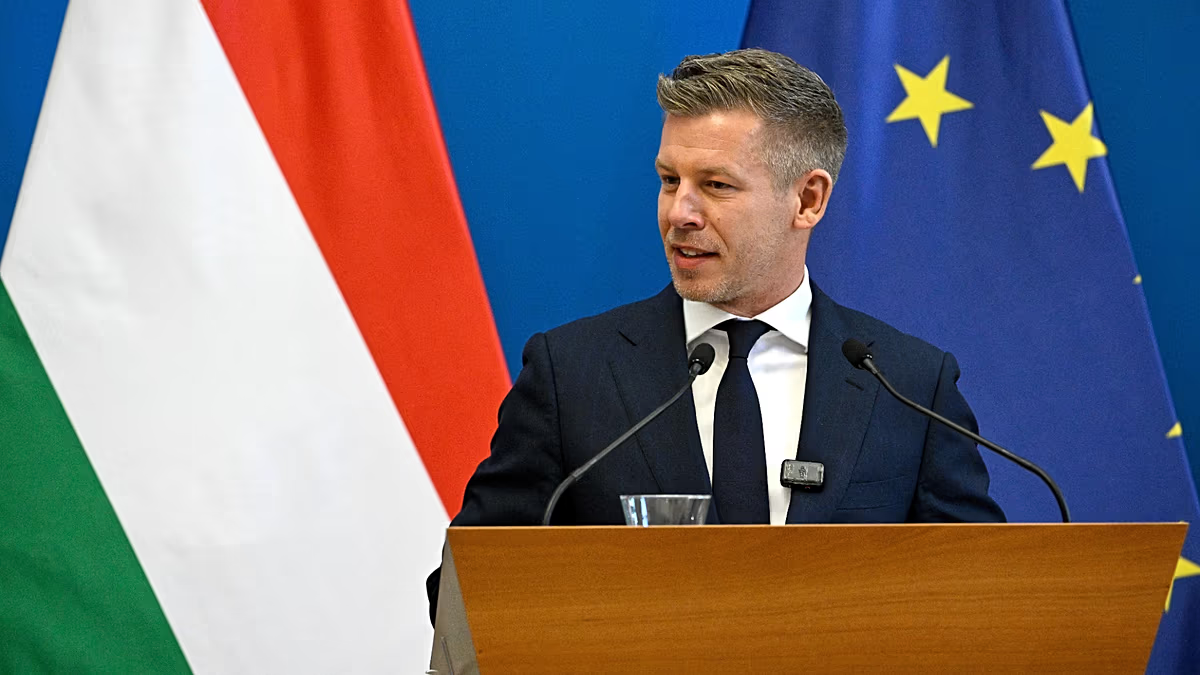
On the diplomatic front, Zelenskyy signaled a cautious optimism regarding shifting political dynamics within the EU, particularly following the change in Hungary’s leadership. Noting a “new opportunity” with the arrival of new Prime Minister Péter Magyar, he pointedly remarked that Ukraine had “survived Orbán,” a reference to the veto policies of former Prime Minister Viktor Orbán. While not holding a formal bilateral meeting with Magyar, Zelenskyy expressed gratitude to all of Ukraine’s neighbours, including Hungary, for their support. In a clear overture to Budapest, he addressed the sensitive issue of ethnic Hungarian minorities, stating that for Kyiv, “being a good neighbour has never been just words.” This balanced approach combined firmness on past obstacles with a renewed commitment to pragmatic and respectful dialogue.
Turning his focus to the ongoing conflict, Zelenskyy offered a grim and unequivocal analysis of Russian President Vladimir Putin’s intentions. He dismissed any notion of Putin’s sincerity for peace, labeling him a “madman” whose true desire is to see “Ukraine go up in flames.” He warned that Putin’s imperial goal—the restoration of a Soviet-style empire—is impossible without subjugating Ukraine, and he predicted the Russian leader would remain in power pursuing this aim indefinitely. Despite this stark reality, Zelenskyy reaffirmed his readiness for genuine negotiations, while soberly reminding his partners that the path to peace requires unwavering collective resolve to counter Russian aggression.
In conclusion, Zelenskyy’s message to the European Union was a masterful blend of moral appeal, strategic logic, and sobering realism. He presented Ukraine’s journey as one of immense cost already borne, transforming its quest for membership from a request into a rightful claim. By highlighting Ukraine’s proven defense capabilities and its active role in proposing joint security initiatives, he framed integration as a mutual gain, essential for a stronger, more secure Europe. Finally, by clearly diagnosing the relentless nature of the Russian threat, he reinforced the stakes of the moment: supporting Ukraine’s European future is not an act of charity, but a fundamental investment in the continent’s own freedom, stability, and enduring peace.