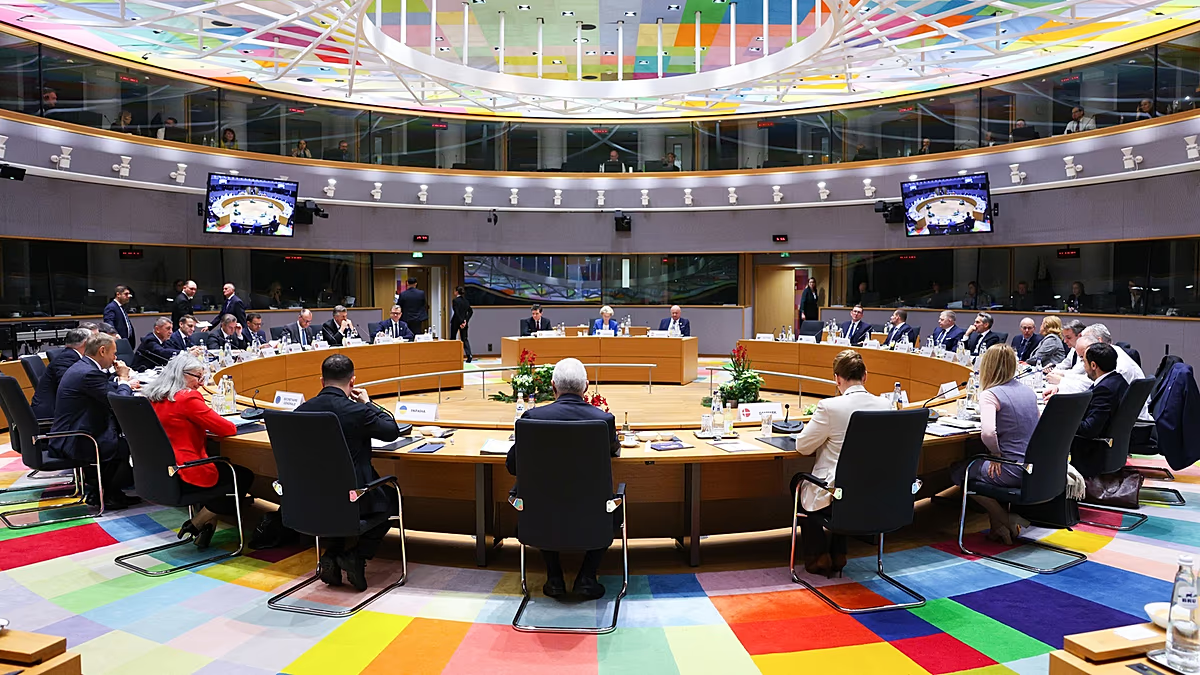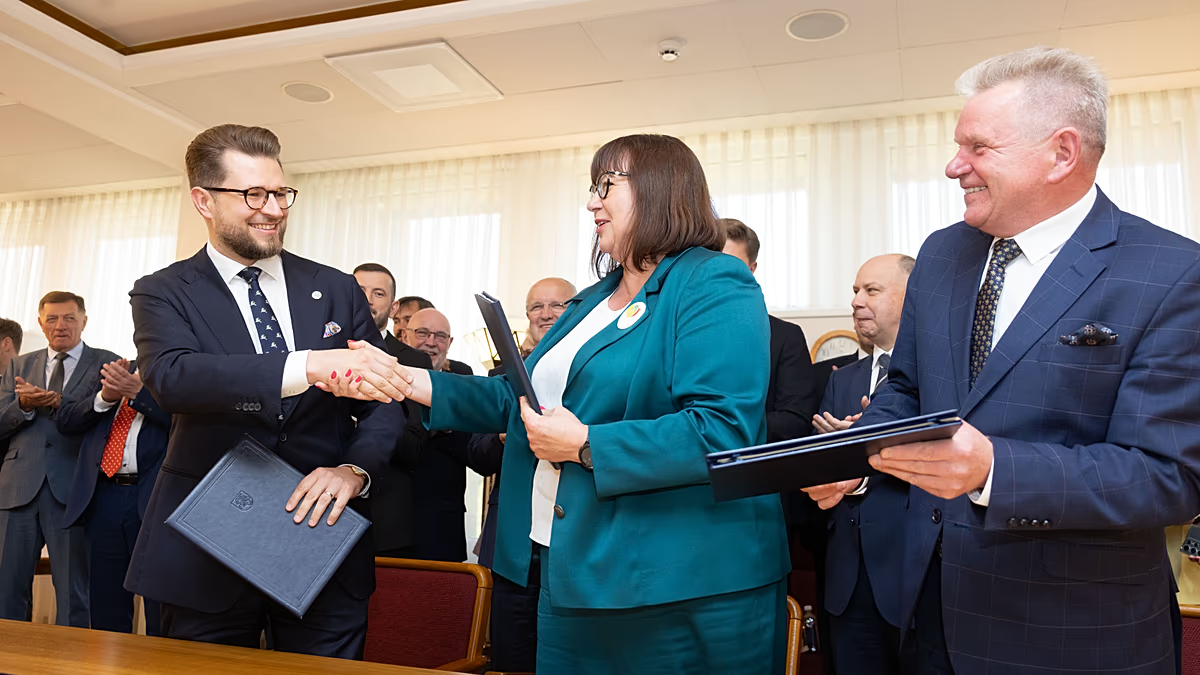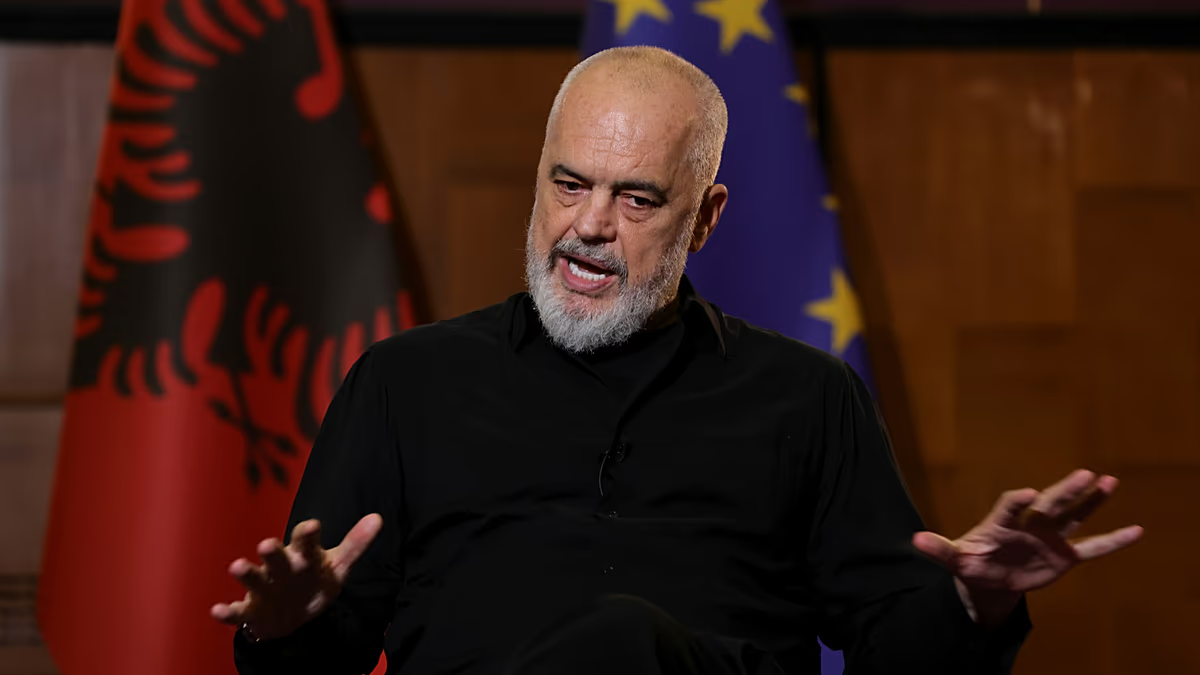
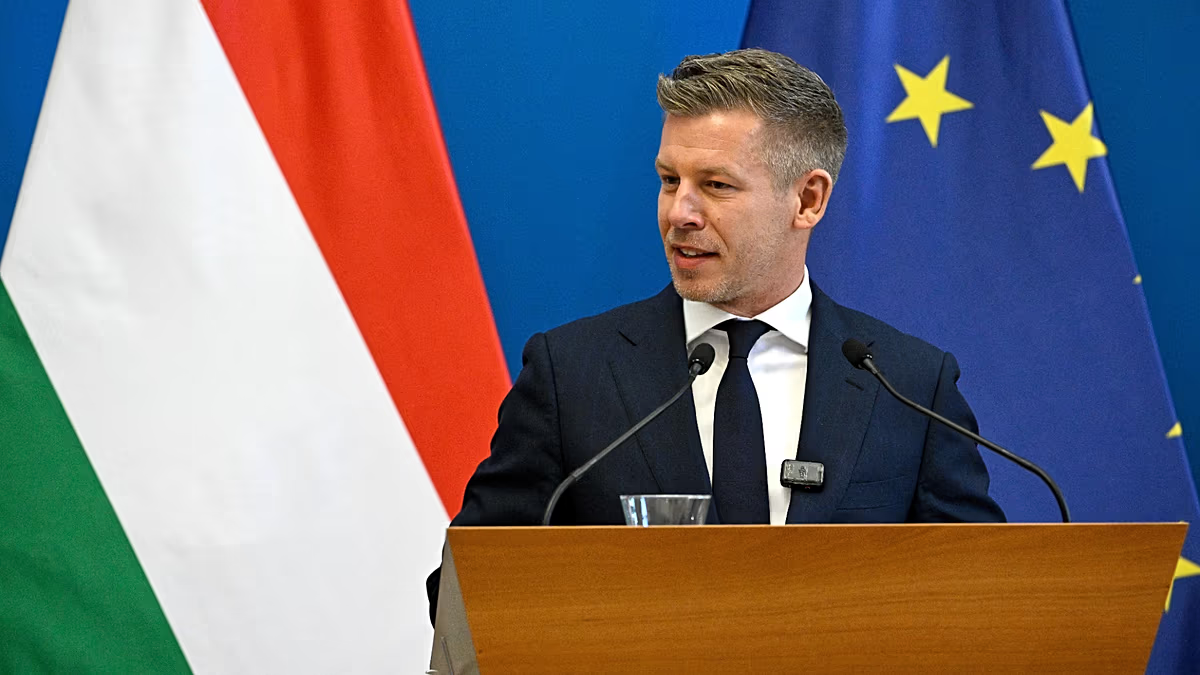


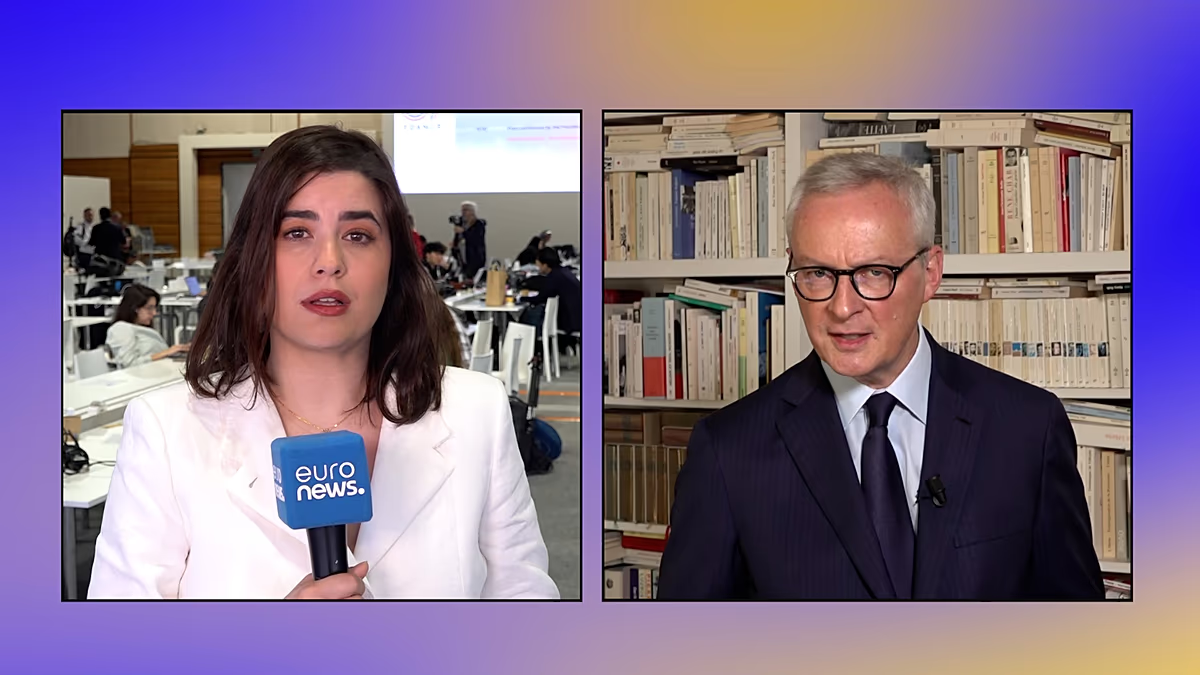
In the evolving landscape of European politics, a provocative proposal has emerged from former French Economy Minister Bruno Le Maire. Speaking on the sidelines of the G7 summit in Évian, he argued that the path to a stronger, more relevant Europe lies not in the cumbersome consensus of all 27 member states, but in the decisive action of a core coalition of six nations. His comments strike at the heart of a long-standing dilemma for the European Union: how to maintain unity and democratic inclusion while also acting with the speed and resolve demanded by contemporary global crises. Le Maire’s vision suggests a radical streamlining, where depth of integration among a few could drive progress for the entire bloc, challenging the traditional notion that strength is derived solely from the unanimity of all members.
Le Maire, a seasoned figure who served as France’s economy and finance minister for a record duration, bases his argument on the urgent lessons of recent years. He observes that the complex geopolitical threats facing Europe—from conflicts in Ukraine and the Middle East to economic coercion from global powers—require agile and firm responses. The current EU framework, often bound by the principle of unanimity, can lead to “long talks and very few decisions.” In a world where adversaries and competitors act swiftly, this institutional inertia becomes a critical vulnerability. For Le Maire, the solution is a pragmatic shift in how Europe organizes itself internally to project strength externally, moving from a model of exhaustive consultation to one of focused initiative.
The proposed coalition, dubbed the “E6,” would consist of the EU’s six largest economies: France, Germany, Italy, Spain, Poland, and the Netherlands. These nations, Le Maire contends, should band together to formulate common positions on pivotal issues ranging from defense and foreign policy to strategic autonomy in areas like semiconductor manufacturing and nuclear energy. The idea is that this core group would drive policy forward, creating a fait accompli of progress. Other member states would then be welcome to join these initiatives, but the initial momentum would not be held hostage to the slowest or most reluctant voice. “First of all, let’s move on,” Le Maire urged, encapsulating a philosophy of action over endless deliberation.
A significant impetus for this proposal is the perceived pressure from traditional allies, notably the United States. Le Maire pointedly criticized what he described as economic “blackmail” from the U.S. administration, citing threats of tariffs in response to European regulatory actions against American tech giants. He framed this not as a minor trade dispute, but as a fundamental challenge to European sovereignty and the principles of partnership between allies. In his view, only a united front of Europe’s most powerful economies can muster the collective economic weight to resist such pressure and negotiate from a position of strength. This unity, he argues, would send a clear message: access to the vast European market is contingent on mutual respect.
This concept of a “two-speed Europe” or a “coalition of the willing” is not entirely novel; it already exists in nascent forms. Earlier this year, the finance ministers of these same six countries formally launched the E6 group to push for swift action in strategic domains like defense, supply chain resilience, and strengthening the international role of the euro. Their joint efforts, such as a call to accelerate the long-stalled Capital Markets Union, demonstrate a working model of this approach. European Commission President Ursula von der Leyen has endorsed such flexible frameworks as a pragmatic means to bolster the European economy when full consensus is unattainable, suggesting the idea has traction at the highest levels of EU governance.
Ultimately, Bruno Le Maire’s proposal forces a critical conversation about the future of European integration. It presents a stark choice between the ideal of full, unanimous cohesion and the practical necessity for decisive, collective action in a dangerous world. While critics may warn that such an inner circle could create divisions and alienate smaller member states, proponents see it as the only viable method to transform Europe into a truly strategic global actor. The debate revolves around a fundamental question: In the face of external threats and internal inertia, should Europe prioritize perfect unity or effective power? The answer to that question may well define the bloc’s trajectory for decades to come.