

A Long-Awaited Celebration: New York City Unites for the Knicks
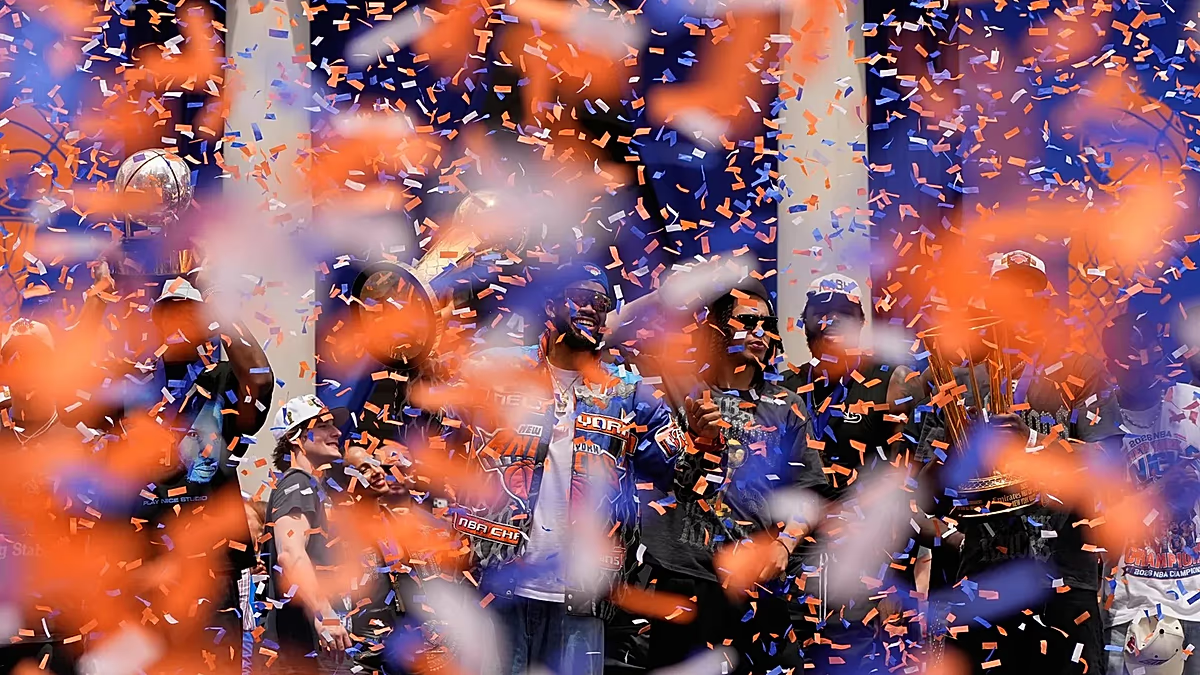
On a bright Thursday morning, the heart of Manhattan was transformed into a vibrant tapestry of blue and orange as tens of thousands of jubilant New York Knicks fans converged for a historic victory parade. The city, buzzing with an energy not felt in decades, celebrated its basketball team’s triumphant NBA Finals win, which ended a grueling 53-year championship drought. The parade, a meticulously organized event by Mayor Zohran Mamdani’s administration, saw the largest security deployment in New York City history for a planned gathering, with 10,000 police officers ensuring the safety of the massive, euphoric crowd. From the early hours, public viewing areas were packed to capacity, a testament to the deep, unwavering loyalty of a fanbase that had waited generations for this moment. The air crackled with chants of “Let’s go Knicks,” a powerful, collective roar that seemed to shake the very foundations of the skyscrapers lining the route, turning the day into a profound civic celebration.
The scenes of sheer joy and spontaneous celebration painted a picture of a city reborn in unity. Fans, having paid for line-sitters or waited overnight themselves, created a human sea of devotion. Among them was Anthony Martorelli, a 29-year-old retail worker, who captured the sentiment of many: “The Knicks unite the city unlike any other team. We were starved for so long.” This hunger made every detail of the parade a cherished spectacle. In a display of pure, inventive fandom, dozens scrambled atop a city dump truck—deployed as a security barrier—to gain a better view of their heroes. The crowd itself was a mosaic of New York life, even featuring a couple in full wedding attire weaving through the masses, planning to head straight to their ceremony after the parade. For attendees like IT teacher Jeff Gartner, who brought his young son, the organized “chaos” was a small price for witnessing history. “This is probably a memory he’ll live with for the rest of his days,” Gartner remarked, highlighting the intergenerational significance of the event.
The procession itself was a journey through New York’s storied history, traveling along the famed “Canyon of Heroes” from Bowling Green to City Hall. This route, tradition-steeped in ticker-tape parades dating back to the 19th century, was showered with 1.1 tonnes of recycled confetti, creating a blizzard of celebration under the summer sun. The convergence of sports, music, and civic pride reached its pinnacle at City Hall, where Mayor Mamdani, donning a Knicks jersey over his formal attire, presented the team with the symbolic key to the city. The ceremony was elevated by a heartfelt performance from Grammy-winning icon Alicia Keys, who sang the city’s anthem, “Empire State of Mind.” Mayor Mamdani’s words resonated deeply: “What a gift it is to be brought together by pure, unfiltered joy… For as long as we live, we will remember this feeling of a city together, a city alive, a city overcome by happiness.”
For the players, riding atop floats through the adoring crowd, the parade was the culmination of an extraordinary journey. Jalen Brunson, honored as the 2026 NBA Finals Most Valuable Player, addressed the fans with palpable emotion, thanking them for their steadfast belief. “Somehow, some way, I knew we were going to find a way to get this done,” he said, his voice reflecting the resilient spirit that defined the team’s championship run. The parade was not just a celebration of a title but a validation of years of struggle and hope for the franchise and its supporters. The event created significant logistical challenges, coinciding with an influx of World Cup football fans and leading to widespread street closures and traffic disruptions across Manhattan. Yet, for the thousands in attendance, any inconvenience was utterly inconsequential, willingly endured for this once-in-a-lifetime experience of shared triumph.
The emotional core of the day was found in the stories of lifelong fans for whom this victory was a deeply personal milestone. James Smallwood, a 62-year-old retiree and five-time cancer survivor, connected this championship directly to his childhood and his own battles. He recalled being a nine-year-old in 1973, the last time the Knicks won, remembering his sisters celebrating with Miller High Life beer. “That’s when I became a fan,” he shared, his voice thick with emotion. “This means so much to see.” His story echoed throughout the crowd—a tapestry of individuals for whom the Knicks’ success was intertwined with personal history, resilience, and identity. This victory was more than a sports achievement; it was a cathartic release, a collective healing, and a powerful reminder of the threads that connect generations of New Yorkers.
As the confetti settled and the echoes of cheers faded against the glass and steel of Lower Manhattan, the 2026 Knicks victory parade cemented itself as more than a sporting event. It was a profound cultural moment that showcased the unifying power of shared hope and long-awaited joy. In a nation often divided, the day stood out as a pure, celebratory anomaly. For a few hours, the city’s famed pace slowed to savor a collective dream realized, proving that after decades of patience, faith could indeed be rewarded. The parade was not just a celebration of a team, but a love letter to the city itself—a vibrant, resilient, and eternally hopeful New York, painted in the brilliant hues of blue and orange, forever united by the memory of a championship that meant everything.