

A Glimmer of Hope, Tempered by Deep-Seated Skepticism
In the summer of 2026, the news broke that the United States and Iran had reached a tentative agreement aimed at de-escalating years of simmering tension and open conflict. From the bustling streets of Tehran to the sun-drenched avenues of Tel Aviv, the announcement landed not with a unifying bang of celebration, but with a complex, weary sigh of cautious relief mixed with profound doubt. For citizens in these two capitals, geographically distant yet perpetually locked in a shadow dance of animosity, the agreement represented not a clear victory, but a fragile pause—a momentary glimmer of hope in a landscape long defined by shadows of mistrust.
Tehran’s Cautious Optimism Amid Economic Strain
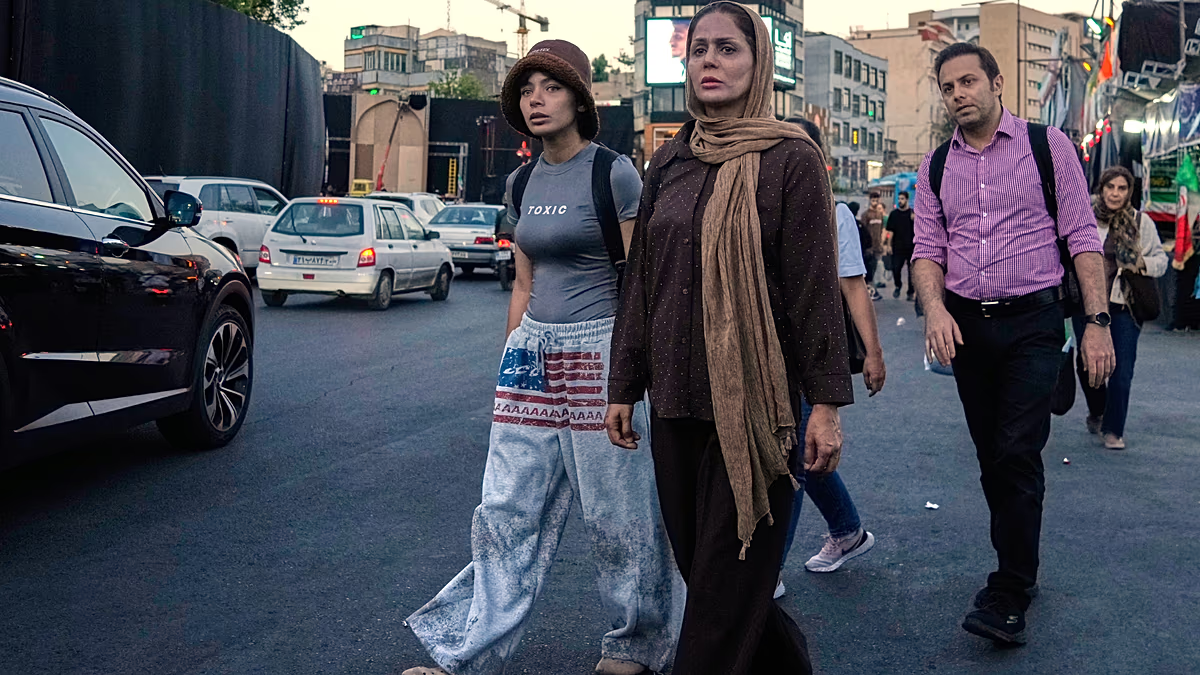
In Tehran, the initial reaction among many ordinary citizens was one of weary optimism. Years of crippling economic sanctions, international isolation, and the ever-present specter of war had taken a severe toll. For a mother worrying about the price of bread, a young graduate facing a job market with no prospects, or a businessman navigating an impenetrable web of restrictions, the promise of sanctions relief offered a tangible beacon of hope. There was a palpable desire to rejoin the global community, to breathe an economic and social air not thickened by perpetual crisis. In cafes and living rooms, some voiced a tentative welcome for the deal, seeing it as a necessary, pragmatic step toward normalcy—a chance for their children to inherit a country defined by its culture and potential, rather than its conflicts.
The Hardliners’ Disdain and National Pride
However, this cautious optimism was far from universal. Vocal factions within Iran, particularly those aligned with hardline political and military elements, viewed the agreement with open disdain. To them, any negotiation with the “Great Satan” was a form of capitulation, a betrayal of revolutionary principles. They questioned what core concessions Iran had made regarding its regional influence or its defense capabilities, fearing a slow erosion of national sovereignty and pride. For these Iranians, resistance was a cornerstone of identity, and the deal smelled of compromise—a dangerous softening in the face of an adversary perceived as eternally untrustworthy. Their skepticism was a powerful undercurrent, reminding the world that Tehran’s streets have never spoken with a single voice, and that any path forward would be contested at home.
Tel Aviv’s Relief Shadowed by Strategic Anxiety
Across the region, in Tel Aviv, the emotional cocktail was similarly potent but flavored differently. For many Israelis, the primary and most immediate emotion was a deep, visceral relief. The constant state of high alert, the rocket sirens, the nights spent in safe rooms—the agreement promised a reprieve from the immediate, existential fear that had become a grinding feature of daily life. The thought of sleeping through the night without interruption, of children playing outside without the looming threat of escalation, provided a powerful argument in the deal’s favor. In a country built on the longing for security, the prospect of a sustained calm, however fragile, was undeniably attractive.
The Unwavering Question of Trust and Security
Yet, this relief was almost instantly shadowed by a pervasive and deeply ingrained skepticism. The question on everyone’s lips, from security analysts in think tanks to people chatting over coffee on Dizengoff Street, was starkly simple: “Can we trust them?” Decades of hostile rhetoric, support for proxy groups, and direct threats had forged an ironclad perception of Iran as a regime that used diplomacy as a tactic, not a principle. Many Israelis questioned the enforcement mechanisms of the deal, fearing it would merely provide Iran with the economic resources to further arm its allies like Hezbollah, all while stalling for time to advance its nuclear capabilities. The agreement, for them, felt like a risky gamble with their fundamental security, brokered by an external power (the U.S.) that might not always prioritize their immediate peril.
A Fragile Path Forward on Unsteady Ground
Ultimately, the mixed reactions in Tehran and Tel Aviv paint a portrait of two societies exhausted by conflict yet paralyzed by deep-seated mutual suspicion. The citizens in both cities, in their own ways, are desperately grasping for a future less burdened by the weight of perpetual confrontation. The shopkeeper in Tehran and the software engineer in Tel Aviv share a common, quiet desire for normalcy. However, this shared aspiration is buried beneath mountains of historical grievance, ideological divergence, and security dilemmas that no single agreement can erase. The 2026 deal, therefore, does not arrive as a triumphant peace treaty, but as a fragile administrative pause—a temporary bridge built over a chasm of distrust. Its success will not be determined by the signing ceremony, but by the daily, gradual, and painfully slow process of building a minimal, transactional confidence on the ground. The weary, hopeful, and skeptical voices from these two streets are a reminder that the hardest part of diplomacy begins after the announcement, in the hearts and minds of the people who have lived with the echoes of enmity for far too long.