

The first chapter of the 2026 FIFA World Cup has concluded, with all 48 teams having stepped onto the grandest stage and revealed their initial hand. The opening matchday delivered the promised global spectacle, blending routine victories for titans with stirring underdog performances that remind us why this tournament captivates billions. As the dust settles, the narrative crystalizes: points are now at an absolute premium, and every team is recalibrating for the second round of group stage battles, where dreams of knockout football will either be ignited or decisively dimmed.
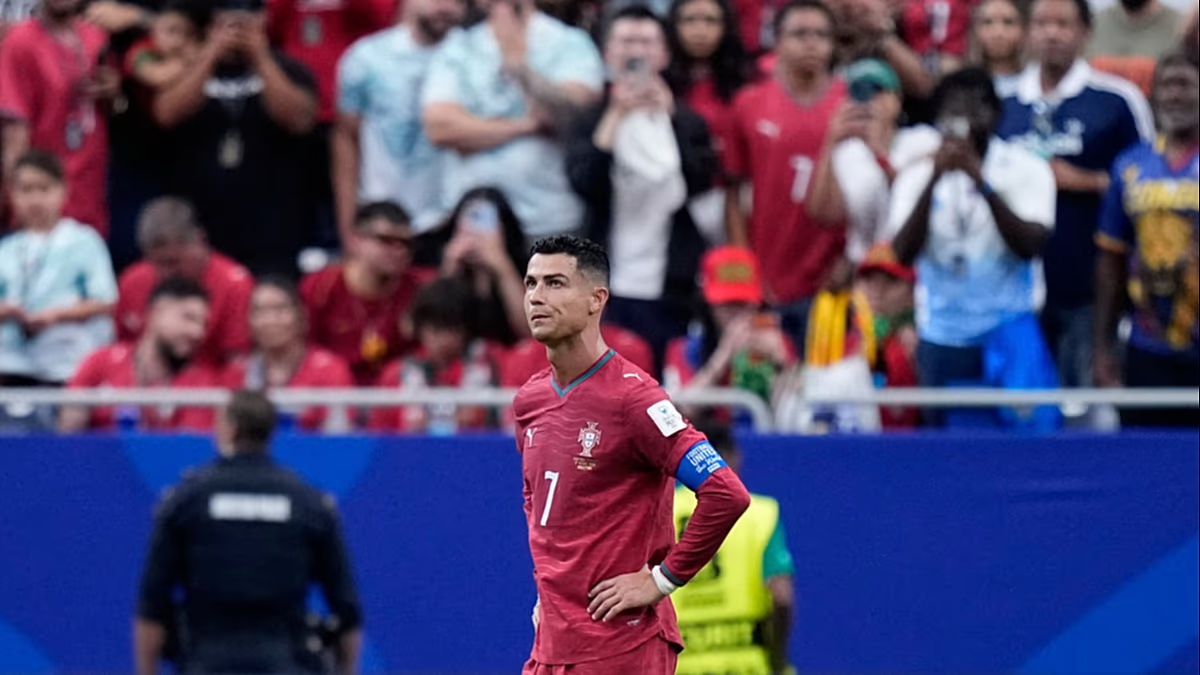
The most poignant story of the evening emerged from Houston, where Portugal, a favored contender, was held to a frustrating 1-1 draw by the resilient Democratic Republic of the Congo. In what was his record-tying sixth World Cup appearance, Cristiano Ronaldo, the ageless icon, found himself in an uncharacteristic and subdued spotlight. While peers like Messi, Mbappé, and his own teammate, young João Neves—who headed in an early opener—flourished in their openers, Ronaldo spurned key chances, his visible frustration mirroring his team’s struggle against both a disciplined Congolese side and the oppressive Texan heat. His post-match promise on social media, “This is far from over,” was a defiant note from a legend under scrutiny, underscoring that even the greatest scripts face unexpected revisions.
Elsewhere, the results followed a more predictable rhythm, though not without their own drama. Austria navigated a potentially tricky fixture against Jordan to secure a 3-1 victory, a win built on persistence as much as quality. After a stunning Jordanian equalizer threatened to shift momentum, a fortunate deflection and a very late penalty allowed Das Team to collect a crucial three points. Meanwhile, Colombia, spearheaded by the lively Luis Díaz, showcased South American flair in a 3-1 triumph over a game Uzbekistan, asserting their ambition in a tightly contested group.
However, the true fireworks of the night were reserved for a heavyweight European clash. In a thrilling, end-to-end contest, England announced their title credentials with a commanding 4-2 victory over perennial contenders Croatia. The narrative within the match was quintessential tournament drama: Harry Kane, the embodiment of English resilience, missed a penalty only to coolly convert the retake, later adding a second with a classic striker’s header. Jude Bellingham’s explosive second-half goal exemplified the new generation’s fearlessness, capping a performance that balanced attacking verve with mental fortitude—a potent combination for any team with championship aspirations.
The day’s proceedings also highlighted the fine margins that define World Cup fate. In a tense, tactical battle, Ghana and Panama proved that dominance in statistics means little without a finishing touch. Despite Panama controlling possession and passing metrics, it was Ghana who snatched a priceless, dramatic winner in the 95th minute. That single moment of precision, emerging from a match of measured struggle, exemplifies the tournament’s brutal beauty: months of preparation can hinge on one fleeting second of chaos or clarity.
As the global footballing caravan moves to Matchday Two, the stakes are magnified. For Portugal, it is a test of mentality and leadership. For England and Colombia, it is about consolidating momentum. For teams like Ghana and Austria, it is about proving their narrow victories were foundations, not flukes. And for every team sitting on one point or none, the equation becomes beautifully simple: win or go home. The first acts have been written, filled with personal milestones, collective statements, and heartbreaking near-misses. Now, the true plot begins.