


An Evening of Grandeur and Diplomacy: Trump’s Visit to Versailles
The 2018 G7 summit in the French town of Evian, focused on weighty global economic and security issues, concluded not with a formal press conference, but with a gesture of profound historical and cultural symbolism. President Donald Trump traveled from the businesslike setting of the summit to the unparalleled opulence of the Palace of Versailles. There, he was greeted by French President Emmanuel Macron for a private reception and dinner, an event framed as a celebration of the 250th anniversary of the United States. This was far more than a social courtesy; it was a meticulously staged piece of diplomatic theater, set against a backdrop of lingering tensions over trade, Iran, and Russia, designed to foster personal rapport within an atmosphere of shared respect for heritage and power.
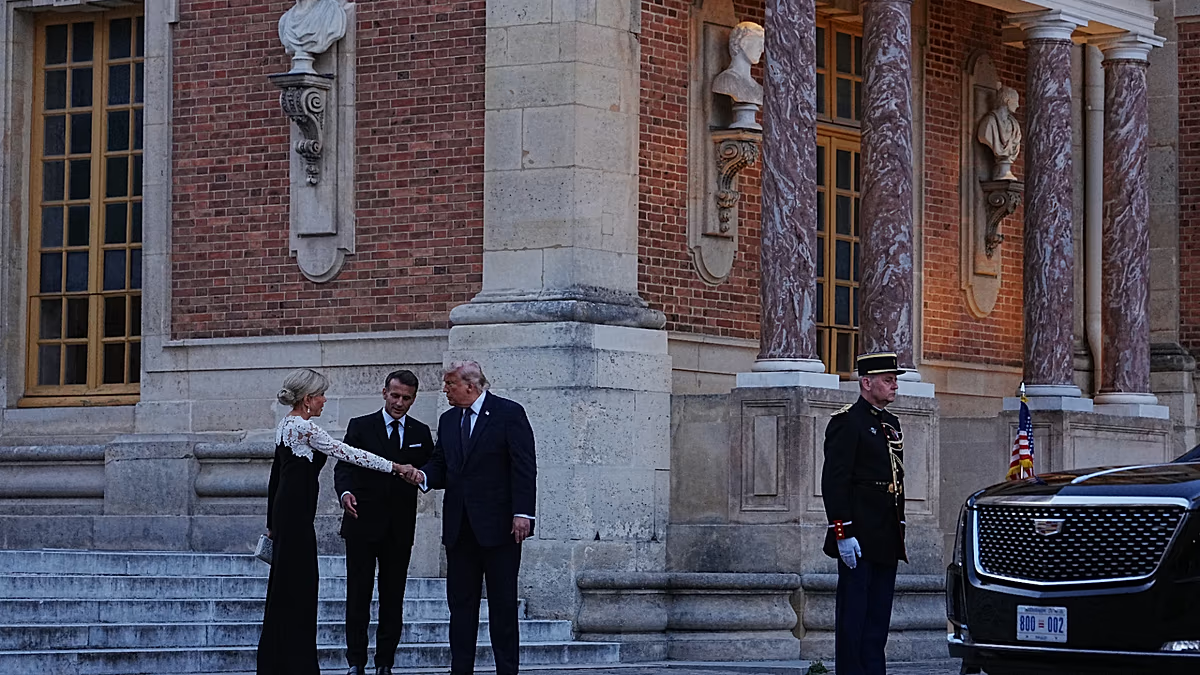
Stepping into the golden glow of the late evening sun, President Trump’s arrival at Versailles was a spectacle in itself. He walked through the vast courtyard, the imposing palace facade looming ahead, and paused for photographs before the legendary golden gates. This imagery was powerful and intentional. Versailles is not merely a beautiful museum; it is a UNESCO World Heritage site and the ultimate symbol of French gloire—the absolute monarchical power of Louis XIV, the Sun King. By hosting the American president here, Macron was deploying what he himself termed a “diplomatic tool and an instrument of influence.” He was speaking a language of prestige and legacy, appealing to Trump’s noted appreciation for grandeur and “beautiful places,” while implicitly framing their dialogue within a context of historic significance and sovereign power.
This elegant evening served a crucial dual purpose. On one level, it provided a ceremonial and harmonious conclusion to a G7 gathering that, like many during that period, was punctuated by public disagreements, particularly between Trump and other Western allies on issues like trade tariffs and climate change. The dinner offered a respite from the negotiating table, a chance to reset the tone with one of Europe’s most pivotal leaders. On a deeper, more strategic level, Macron was investing in the personal relationship he has consistently sought with Trump. Recognizing the American president’s style of deal-making and diplomacy, which often prioritized direct leader-to-leader connections, Macron understood that fostering goodwill in a unique, bilateral setting could be more productive than multilateral debates. The informal talks over dinner were an opportunity to navigate the complex dossiers of Iran’s nuclear activities and the conflict in Ukraine away from the glare of the full alliance.
The choice of Versailles as a venue for marking America’s 250th anniversary was rich with historical irony and resonance. The palace stands as a monument to the very European monarchical excess that the American revolution sought to reject. Yet, it was also French financial and military support, born from its own rivalry with Britain, that proved indispensable to the American colonists’ success. Hosting an American president at this site acknowledged that deep, if complicated, historical entanglement. It was a nod to the long-standing Franco-American alliance, a relationship that has weathered countless storms since the Revolutionary War. In a time of transatlantic strain, the setting reminded both leaders of a shared, if distant, past of cooperation against common adversaries.
Ultimately, the evening at Versailles represented the core of Macron’s diplomatic approach to the Trump administration: engage, charm, and persuade through a blend of personal diplomacy and the soft power of French culture and history. While fundamental policy differences on multilateralism, trade, and global governance remained starkly evident, Macron believed in the necessity of maintaining open channels. This private dinner was an attempt to build capital in the bank of personal rapport, capital that might be drawn upon in future moments of crisis or disagreement. It was an acknowledgment that in an era of disruptive diplomacy, sometimes the most important conversations happen not in summit halls, but in the shadow of golden gates and historic palaces, where the pageantry of the past is enlisted to shape the negotiations of the present.
In the final analysis, the images of the two presidents at Versailles were a study in contrasts—the classical, enduring majesty of Old Europe meeting the disruptive, modern political force of America. Yet, the event itself underscored a timeless diplomatic truth: relationships between nations are built and managed by individuals. By creating a moment of shared awe and private discussion, Macron aimed to temper the public disagreements of the G7 with a gesture of respect and alliance. Whether this elegant investment in personal diplomacy would yield dividends on the pressing issues of Iran, trade, or European security remained to be seen, but it highlighted the enduring human element at the heart of international affairs, even within the most ornate and historic of settings.