


A potential landmark agreement between the United States and Iran appears to be taking shape, outlined in a leaked 14-point document that details a framework for ending hostilities and forging a new, albeit tense, relationship. While neither Washington nor Tehran has officially confirmed the draft’s authenticity, its contents—widely reported by Arabic-language media and discussed at the G7 summit—suggest a significant diplomatic shift. The core bargain is stark: Iran pledges to never produce nuclear weapons and to swiftly reopen the strategically vital Strait of Hormuz. In return, the United States agrees to a comprehensive package of financial incentives, including the lifting of all sanctions and the creation of a massive $300 billion reconstruction fund for Iran. This draft, described by diplomats as a two-page memorandum of understanding, could form the basis for a formal deal, though its final wording may yet change before a planned signing ceremony.
Central to the proposed agreement is a mutual declaration to end the war “on all fronts,” including in Lebanon, where Iran’s proxy, Hezbollah, has been engaged in conflict with Israel. The document commits both nations to refrain from the threat or use of force against each other, a clause that implicitly addresses Israel’s military campaigns, though Israeli officials have already distanced themselves from what they term “Trump’s deal.” Furthermore, the US reportedly agrees to respect Iran’s sovereignty and cease pursuing regime change, a major policy reversal. In exchange, Iran’s unconditional renunciation of nuclear weapons development meets a critical US demand, though critics like former National Security Adviser John Bolton argue the deal fails to dismantle Iran’s existing nuclear program and represents a one-sided victory for Tehran.
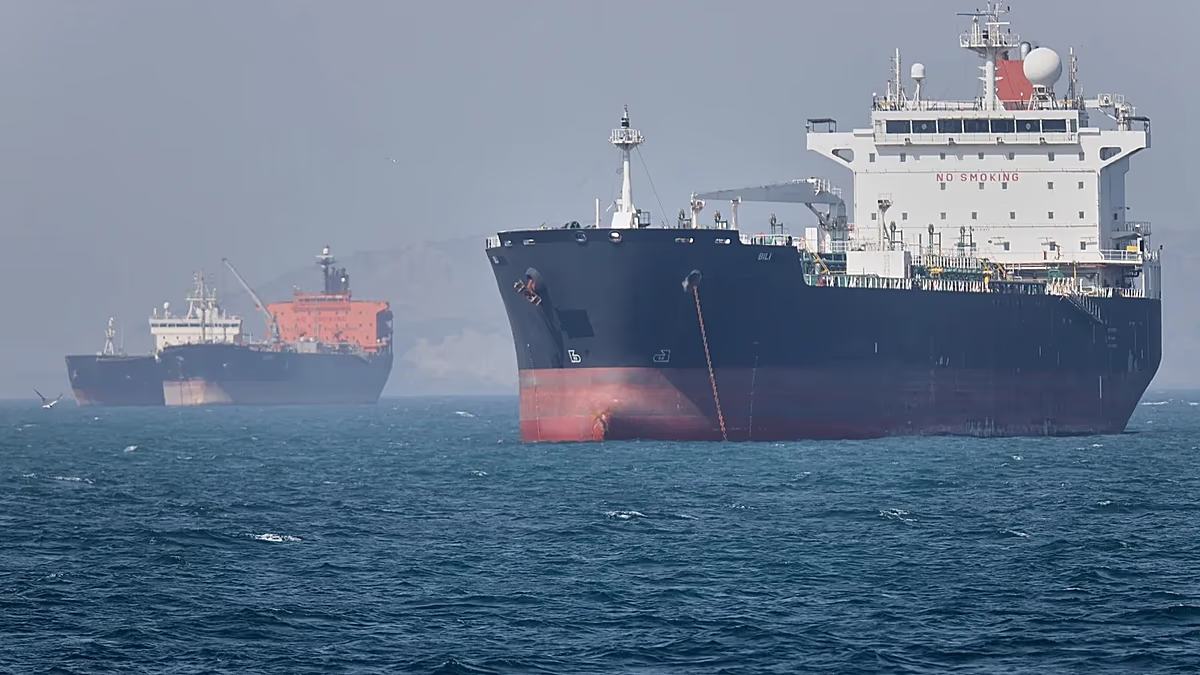
The immediate practical focus of the deal is the reopening of the Strait of Hormuz, the world’s most important oil transit chokepoint. The document commits the US to lift its naval blockade of Iranian ports immediately upon signing, while Iran pledges to take steps to resume merchant ship traffic and work to clear mines and technical obstacles within 30 days. However, significant uncertainties remain, including whether Iran will continue to assert sovereignty and potentially charge passage fees—a point European diplomats insist they will not accept. Global shipping companies also caution that resuming safe navigation will require extensive new planning for vessels, crews, and insurance. European leaders, while welcoming the diplomatic momentum, have suggested a potential maritime mission to ensure safe passage, indicating that international oversight of the strait’s reopening will be crucial.
The financial component of the deal is its most ambitious and contentious element. The promise of a $300 billion rehabilitation fund, the unfreezing of assets, and the lifting of all sanctions represent a dramatic economic lifeline for Iran, which has long demanded war reparations. However, the document does not specify the fund’s sources. President Trump has stated unequivocally that the US will contribute “not a cent,” suggesting the burden would fall on regional partners and other nations. This ambiguity raises questions about the fund’s feasibility. European Commission President Ursula von der Leyen emphasized that the EU would only ease sanctions upon seeing “real change on the ground,” reflecting widespread caution. The deal, therefore, creates a framework for investment contingent on Iran’s future behavior as a “normal country.”
The leaked draft has exposed tensions and skepticism among allies and at home. European nations, while supportive of peace efforts, are carefully guarding their own policies and financial commitments. Israel has openly rejected the premise of the deal, vowing to continue its military operations for national defense. Within the US, the agreement is viewed by some as a series of major concessions, with the language suggesting the US has committed to more points than Iran. Reports indicate President Trump pushed these concessions to secure the deal as Iran threatened renewed strikes against Israel. The document seeks to lock in the agreement through a binding UN Security Council resolution, a measure intended by Iran to provide an international guarantee against future US or Israeli attacks.
As the world awaits the official release of the final text, the draft outlines a fragile and complex peace. It hinges on swift, tangible actions like reopening the Strait of Hormuz, and on long-term, conditional promises of economic revival for Iran. The path forward is fraught with logistical challenges and deep-seated mistrust among all parties involved. While the framework represents a potential off-ramp from years of confrontation, its success will depend entirely on the meticulous implementation of its terms and the willingness of both sides, and the international community, to move from a state of conflict to an uneasy, transactional coexistence. The ceremony in Lucerne may sign a document, but the real work of building peace is just beginning.