


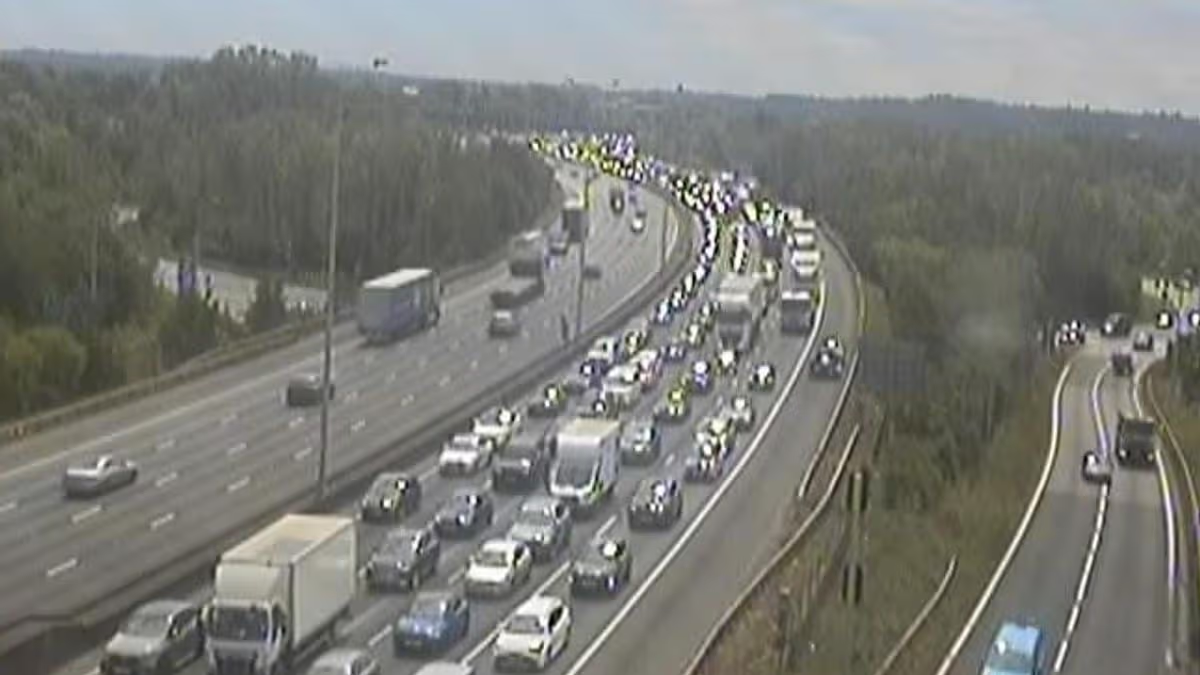
The familiar, bustling stretch of the M25 motorway encircling London, a vital artery for countless commuters, businesses, and travellers, has once again been brought to a grinding halt. This afternoon, the clockwise carriageway near Heathrow Airport, one of the world’s busiest international hubs, transformed from a flowing river of traffic into a stagnant, metallic sea. The culprit, as is so often the case on these critical road networks, was a single broken-down vehicle. Positioned at Junction 14 for the A3113 Airport Way, this immobilized car or truck acted as an unexpected and unwelcome plug, swiftly choking the flow of thousands of other journeys. What begins as a minor inconvenience for one individual rapidly escalates into a logistical nightmare for hundreds more, a stark reminder of the fragile balance that keeps our modern transit systems moving.
The impact was both immediate and visually stark. From the air, the scene would have revealed a long, serpentine line of stationary and slow-moving vehicles, their roofs glinting in the afternoon sun, tailing back for miles. On the ground, the reality was one of mounting frustration. Drivers and passengers found themselves ensnared in bumper-to-bumper traffic, their progress measured not in miles per hour, but in inches per minute. The constant idle of engines and the faint shimmer of heat from radiators created a palpable atmosphere of stagnation. Among those caught in the snarl was one particularly exasperated motorist who, seeking a digital outlet for a very human frustration, took to social media to simply state: “This is painful.” This brief, relatable lament captured the universal sentiment of the situation—the draining combination of wasted time, helplessness, and the disruption of carefully planned days.
Beyond the immediate gridlock, the ripple effects of such an incident are profound and far-reaching. For the individual families packed into their cars, it meant missed appointments, anxious glances at clocks, and hungry or tired children in the backseat. For couriers and hauliers, it translated into costly delays, missed delivery windows, and logistical headaches that would resonate long after the road cleared. Most critically, the location adjacent to Heathrow meant that countless air travellers, their nerves already frayed with the anticipation of flights, were now locked in a race against time on the very road meant to ensure their timely arrival. The stress of potentially missing a long-awaited holiday, a crucial business meeting, or a heartfelt reunion is compounded exponentially by each motionless minute on the motorway, turning a routine journey into a source of significant anxiety.
In response to the crisis, the complex machinery of traffic management swung into action. Highways Agency officers and recovery vehicles would have been dispatched with urgency, navigating the very congestion they sought to alleviate to reach the stricken vehicle. Overhead matrix signs likely flashed warnings of the delays ahead, offering alternative route suggestions that themselves would soon become clogged as drivers sought escape. The constant updates from traffic monitoring services and radio travel bulletins became a lifeline for those trapped, offering both a explanation for their plight and a faint hope that resolution was near. This coordinated effort highlights the silent, ongoing work required to manage our road networks, where teams work under pressure to restore order from chaos, one breakdown at a time.
Events like this serve as a powerful, if unwelcome, prompt for reflection on our relationship with infrastructure and travel. In our hyper-connected world, we operate on assumptions of seamless mobility, building tight schedules that leave little room for the unpredictable. A single point of failure—a mechanical fault, a minor collision, a moment of inattention—can unravel these plans for thousands, exposing the vulnerability woven into our daily lives. It underscores the importance of not just building robust systems, but also cultivating personal resilience: allowing extra time, packing patience, and remembering that behind every steering wheel is a person sharing in the collective frustration. The shared experience, voiced in that simple social media post, creates a fleeting community of commuters, all in the same proverbial boat, or in this case, the same stationary car.
Finally, as the recovery vehicle eventually cleared the obstruction and the traffic began its slow, tentative return to flow, the legacy of the delay lingered. The lost hours could not be reclaimed; the stress hormones needed time to subside. Yet, there is also a collective sigh of relief as brake lights extinguish and engines find their proper gear once more. The M25 resumes its endless, looping journey, a testament to both the efficiency we expect and the disruptions we must inevitably endure. The incident near Heathrow fades from the headlines, but for those who endured it, it remains a story of a frustrating afternoon, a reminder of our shared dependence on these paved pathways, and a hope that the next journey will be a smoother one.