

Jeremy Clarkson’s Candid Health Journey and the Resilient Future of Clarkson’s Farm
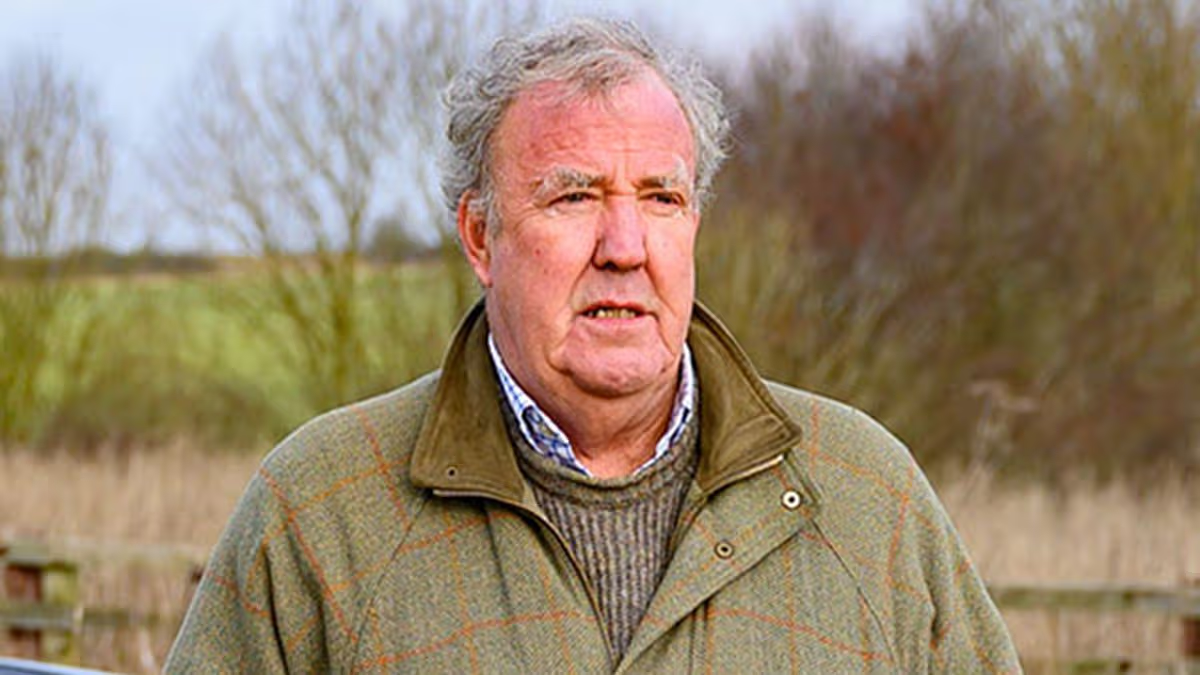
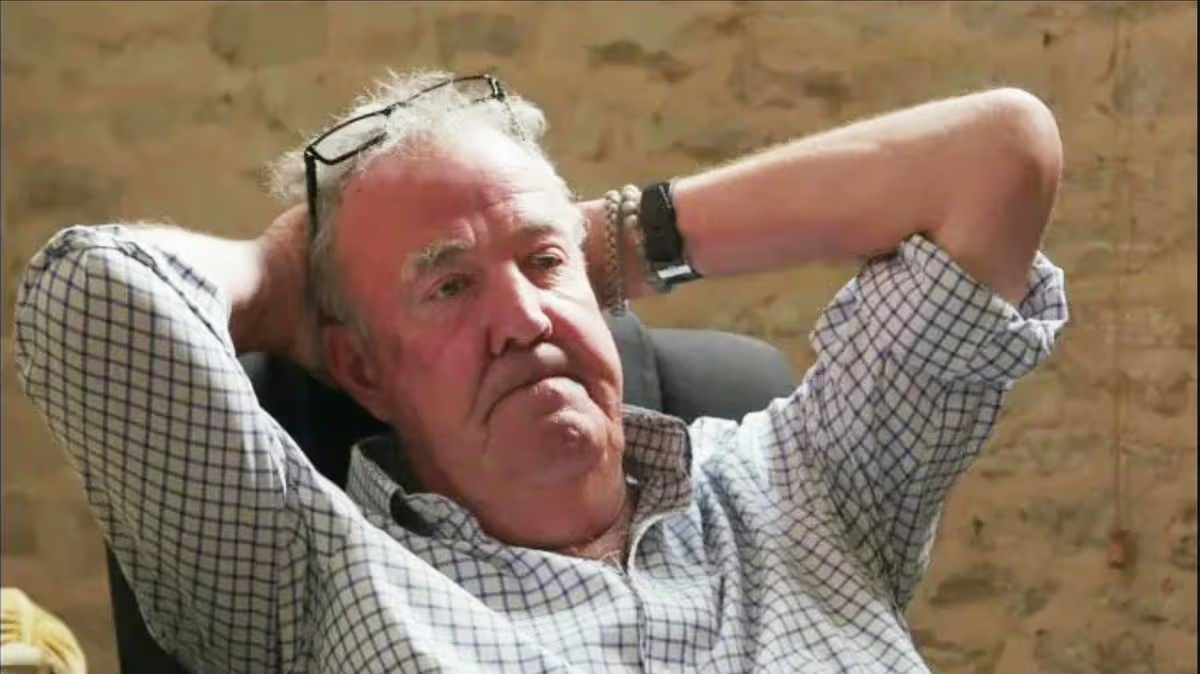
Jeremy Clarkson’s recent, deeply personal admission of an “aggressive” prostate cancer diagnosis has profoundly shifted the tone of his beloved series, Clarkson’s Farm. In a moment that left farm manager Kaleb Cooper in tears, Clarkson revealed in the show’s fifth season that he had known since May and had already undergone treatment, which involved using ultrasound to effectively destroy ten percent of his prostate—the specific area containing the cancer. The season’s conclusion was especially poignant, filmed from a hospital bed where Clarkson addressed viewers with uncharacteristic vulnerability. He spoke of complications and framed the show’s future in starkly personal terms, telling fans that if his treatment proved successful, he would return for a sixth season; if not, he would not. This raw disclosure was preceded by an emotional Instagram post where Clarkson, visibly holding back tears, warned that the final episodes would be a stark departure from the show’s usual bucolic charm, describing them as a “really, really difficult watch.”
This public health battle has inevitably prompted questions about the future of the hit Prime Video series. While the show has not yet been officially renewed for a sixth season, there are strong indicators that it will continue. Clarkson himself has expressed enthusiasm, telling The Sun that Amazon wants another series and so does he, citing he already has “two quite good ideas.” Furthermore, planning documents submitted to local councils reportedly reference a commissioned sixth season slated for a 2027 release. Practical filming, however, has faced its own hurdles, with Clarkson noting in a newspaper column that relentless rain and a TB lockdown for his cattle have temporarily halted both farming and filming activities. This intersection of personal resilience and logistical challenge now defines the narrative around Diddly Squat Farm.
Clarkson’s journey is, soberingly, part of a wider pattern of health struggles within the close-knit cast, underscoring the very real human stakes behind the show’s charming facade. The fan-favorite farmhand, Gerald Cooper, had previously revealed his own prostate cancer diagnosis during the show’s third series. Thankfully, Gerald is now cancer-free and channeled his experience into a positive venture, launching a racehorse syndicate named ‘The Mullet’ to raise awareness for Prostate Cancer UK. Similarly, the show’s beloved builder, Alan Townsend, faced a life-threatening heart condition, undergoing a quadruple bypass surgery—a procedure he admitted frightened him “to death.” His recovery, marked by a significant loss of lung capacity and a “nasty” surgical wound, was documented in the latest season, offering a powerful testament to his determination to return to the work he loves.
Remarkably, Clarkson’s own health narrative extends beyond his cancer diagnosis. In a separate and equally alarming incident detailed at the start of season five, he shared that he had undergone an emergency heart procedure in late 2024 after medics discovered he was just days away from a heart attack, resulting in a stent being fitted. He attributed the immense stress of launching ‘The Farmer’s Dog’ pub as a key factor. In a striking coincidence, his follow-up cardiac checks occurred in the same hospital where his friend and castmate, Alan, was recovering from his bypass surgery, highlighting the shared vulnerability that has bonded the Diddly Squat team far beyond their professional roles.
The cumulative weight of these stories—Clarkson’s cancer and heart scare, Gerald’s prostate cancer, and Alan’s major heart surgery—transforms Clarkson’s Farm from a simple documentary about agricultural mishaps into a profound chronicle of resilience, mortality, and camaraderie. The show’s heart has always been its characters, and their genuine battles have deepened the connection with millions of viewers. Clarkson’s warning about the “difficult watch” acknowledges this shift, inviting the audience to share not just in the triumphs of a harvest or the comedy of a failed business scheme, but in the sobering, universal challenges of health and aging.
Ultimately, the future of Clarkson’s Farm now feels intrinsically tied to the personal future of the man at its center. His on-screen statement, poised between “season six” and a silent farewell, frames the show’s continuation as a victory in itself. Whether filming amidst the rain or planning new ventures, the team’s efforts are shadowed by, yet defiant in the face of, life’s fragility. The series, should it continue, promises to carry forward this newfound depth—a testament not just to the struggle of farming, but to the enduring spirit of a community determined to persevere, both on the land and within their own lives. The final word, for now, rests with Clarkson’s own hopeful, albeit uncertain, sign-off: “Take care, everyone.”