



The Invisible Housemates: How Shared Living Shapes Our Microbial Selves
Our homes are not just shared spaces of brick and mortar, wood and plaster; they are intricate ecosystems where we constantly exchange invisible, microscopic life with those we live beside. A groundbreaking study has illuminated this unseen world, revealing that the simple act of cohabitation—whether with family, friends, or partners—fundamentally reshapes our personal microbial communities, or microbiomes. Researchers discovered that individuals sharing a home significantly swap microbes, with housemates sharing 19% of their gut microbiome strains and 26% of their oral microbiome strains, a stark contrast to the mere 6% and 0% shared between people living apart. This finding underscores a profound truth: “Who we decide to share our homes with can have a huge influence on our microbiomes, which has potential consequences for our health,” as noted by Vitor Heidrich, the study’s first author. Our chosen companions become, quite literally, part of us at a microbial level, embedding themselves in the very fabric of our biological identity.
The Daily Dance of Microbial Exchange
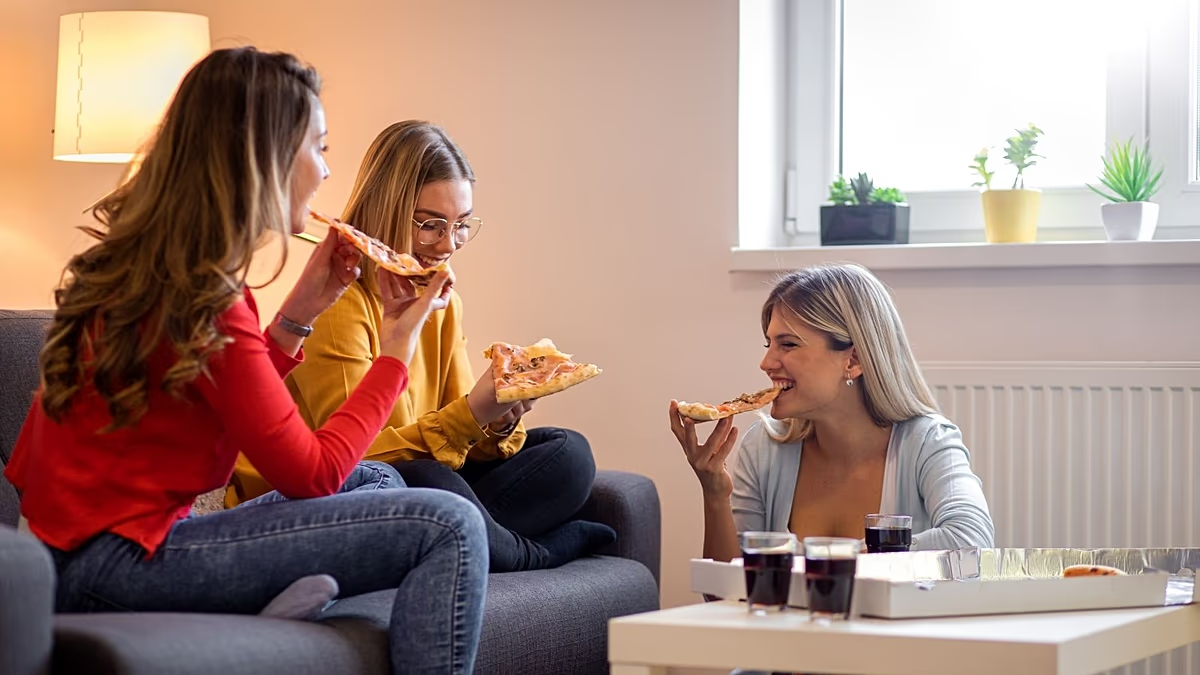
This microbial transfer is not a mysterious or rare event but a mundane consequence of daily life. The exchange occurs through the countless tiny interactions that define shared living: preparing meals together, sharing food, using the same bathrooms, and breathing the same air. These routines create a continuous, low-level traffic of bacteria, viruses, fungi, and other microorganisms between individuals. As senior author Nicola Segata points out, while we often focus on how diet and lifestyle alter the microbes already inside us, this research shifts the question to their origin. “It doesn’t solve the question about where the microbes are coming from,” he notes, highlighting that a significant portion of our microscopic residents are immigrants, gifted to us by those we live with. Our bodies become a melting pot, not just of our own inherited and acquired microbes, but of a collective household microbiome.
Kisses, Kinship, and Oral Communities
Interestingly, the study found that the degree of sharing varies with the intimacy of the relationship, painting a nuanced picture of microbial connection. While all cohabitants showed increased oral microbiome sharing, romantic partners stood out, sharing an average of 44% of their oral microbes—a figure the researchers attribute to the direct and intimate contact of kissing. This creates a uniquely blended oral ecosystem between partners. Yet, perhaps surprisingly, the overall transmission rate for oral microbes was only slightly higher than for gut microbes across all household members. Segata found this counterintuitive, suggesting that “most of our microbes are kind of everywhere, and the microbial exchange is very high, but our microbiomes are shaped more at the level of whether our body accepts the colonisation of these bacteria.” In other words, our bodies are constantly being seeded with microbes from our environment and housemates, but our internal “soil”—our immune system and physiology—ultimately decides which ones take root and flourish.
A Shadow Side: The Ease of Spreading “Unhealthy” Microbes
One of the study’s more concerning revelations is that the microbes most readily traded between people were often those linked to poorer health outcomes. The researchers found that easily transmitted gut microbes were more likely associated with conditions like type 2 diabetes and general cardiometabolic issues. In the mouth, the most transmissible species included microbes linked to colorectal cancer and several opportunistic pathogens that can threaten individuals with compromised immune systems. This suggests that the traits which make a microbe a successful traveler—able to survive outside a host and colonize a new one—may overlap with traits that allow it to thrive in disease states. As Heidrich speculates, “The same traits that help them survive the journey between humans may also allow them to thrive in the inflammatory conditions associated with disease.” This paints our shared microbial landscape as one with potential risks, where undesirable tenants might be the most efficient at moving in.
Implications for Health and Future Therapies
These insights carry significant weight for our understanding of health and disease. They move the microbiome from a purely individual characteristic to a partially communal one, influenced by our social circles and living arrangements. This could explain patterns of non-genetic disease clustering within households and communities. Furthermore, the findings offer crucial guidance for developing microbiome-based treatments. For therapies like fecal microbiota transplants (FMT) or targeted probiotics, understanding which microbes are naturally transmissible and which are stubbornly personal is vital. It can help scientists design more effective treatments by selecting microbial strains that can successfully engraft and persist in a new host, leveraging the natural pathways of exchange we engage in every day.
Embracing Our Shared Microbial World
Ultimately, this research humanizes the invisible world within and between us. It tells a story of connection that is deeper than we ever imagined, where we routinely give and receive pieces of our biological selves through the ordinary acts of cohabitation. Our flatmates do, in a very real sense, live “rent-free in our gut.” This shared microbial life is a testament to our interconnectedness, a biological echo of our social bonds. While it introduces a note of caution regarding the spread of disease-associated microbes, it also opens doors for innovative approaches to healing. By acknowledging that our microbiome is both a personal and a shared responsibility, we can move toward a more holistic view of health—one that considers not just what we eat or how we exercise, but also who we share our lives and our microbes with.