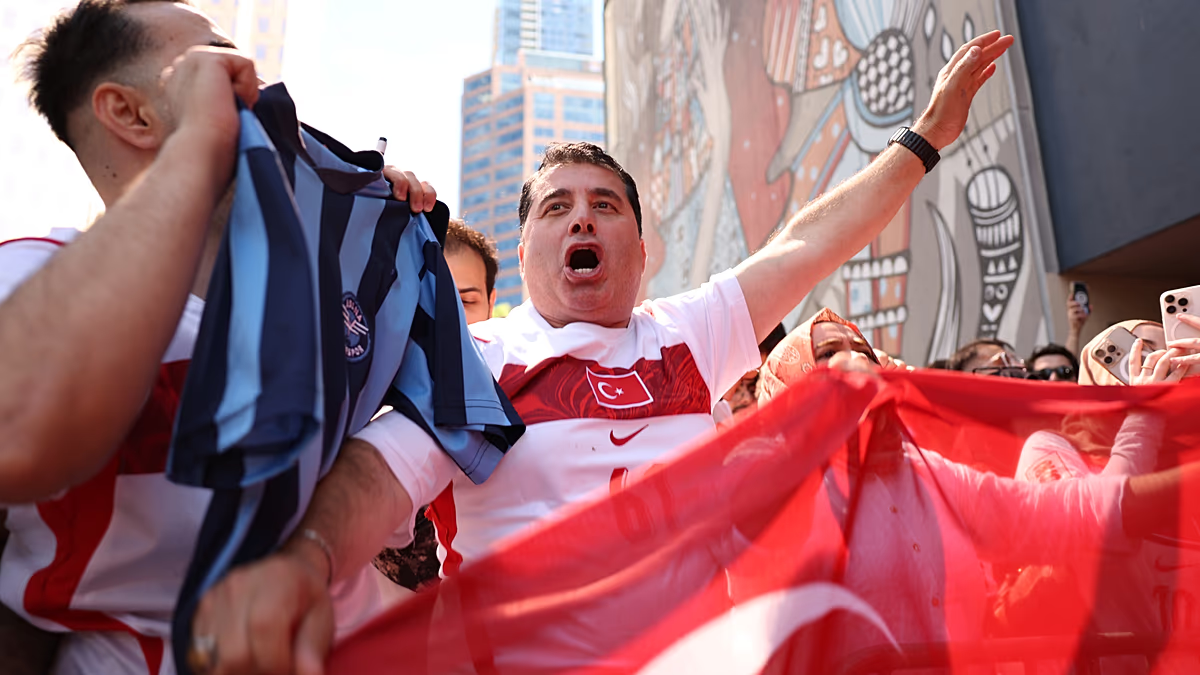




The upcoming 2026 FIFA World Cup, uniquely spanning three nations—Canada, Mexico, and the United States—is set to be a historic spectacle of global sport. With expectations of over six million attendees traversing borders and congregating in host cities between June and July, the event represents not only a celebration of football but also an unprecedented logistical and public health undertaking. As fans from every corner of the planet descend upon stadiums, fan zones, and cities, the sheer scale of human movement creates a complex web of potential health challenges. Public health experts worldwide are watching closely, understanding that such mass gatherings, while joyous, can also serve as accelerants for the spread of infectious diseases. The task at hand is to safeguard the wellbeing of millions without dampening the spirit of the tournament, a delicate balance that requires immense preparation and vigilant, cross-border cooperation.
Leading this crucial effort is a team like the Health Security Operations Center co-led by Rebecca Katz at Georgetown University. Their mission underscores the extraordinary complexity of this particular event. Unlike a World Cup contained within a single country, this tournament unfolds across three distinct nations, each with its own healthcare systems and regulations, encompassing over 48 different jurisdictional areas when including team base camps and travel routes. This fragmentation demands a harmonized, binational approach to disease monitoring. The team’s core functions are a constant pulse check on public health: they surveil disease signals in host communities, analyze risks associated with the ebb and flow of travelers, issue health alerts when necessary, and even track online discussions to catch emerging concerns. Their work is the invisible safety net beneath the visible fanfare, ensuring that health authorities from Vancouver to Mexico City are coordinated and prepared.
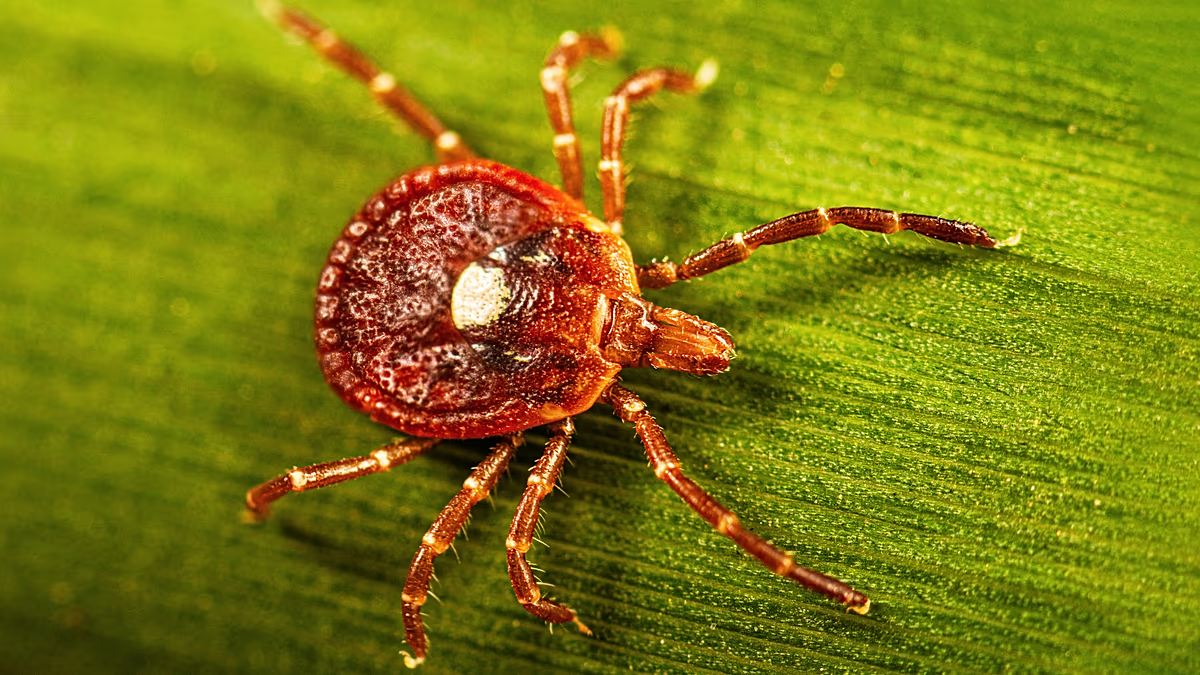
A key question, of course, is what specific threats are on the radar. The team publishes daily reports that assess risks, even tailoring alerts for national teams based on their camp locations and match schedules. Some monitored pathogens are universal to any large gathering: respiratory illnesses like influenza and COVID-19, gastrointestinal bugs, and sexually transmitted infections. However, other concerns are more region-specific. Currently, measles is a top priority, given active outbreaks reported in various jurisdictions across all three host countries. The highly contagious nature of measles, especially in dense crowds, makes it a significant threat. The surveillance list also includes diseases like dengue fever, hepatitis A, and mpox (formerly monkeypox). This portfolio represents a modern understanding of mass gathering health, focusing on a range of viruses and bacteria that could exploit the conditions of travel and congregation.
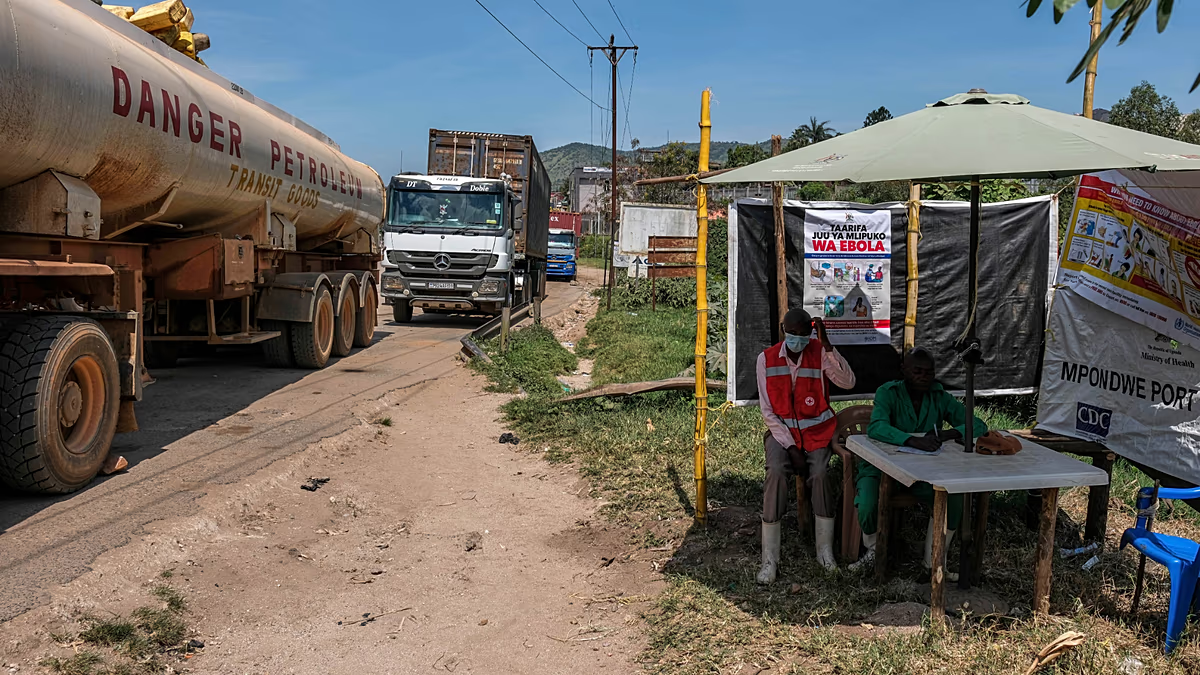
One disease that often sparks high anxiety is Ebola, given a serious ongoing outbreak in the Democratic Republic of Congo (DRC). Katz confirms the global health community is deeply concerned and actively assisting in the response. However, for the World Cup in North America, the risk is currently assessed as low. This is due to the nature of Ebola transmission—which requires direct contact with bodily fluids—and the robust travel restrictions and screening protocols already in place for arrivals from affected regions. This point is illustrated by the arrival of the DRC national team itself in Houston, Texas; the health team’s reports confirmed that all players and staff had no recent travel history to the outbreak area within the critical 21-day window. This example highlights how targeted, evidence-based assessments prevent unnecessary panic while maintaining rigorous safeguards, allowing the Congolese team and their fans to focus on the sport.
A critical and innovative tool powering this surveillance is wastewater monitoring. This technology, propelled into the mainstream during the COVID-19 pandemic, has become a cornerstone of the health team’s strategy. By analyzing samples from sewer systems, experts can detect genetic fragments of viruses shed by infected individuals, even before they show symptoms or seek medical care. Katz describes it as a powerful method to “find the needle in the haystack,” offering an anonymous, community-wide health snapshot. This system acts as an ultra-sensitive early-warning network. In the context of a threat like Ebola, it means that a single, undetected case in a host city could potentially be identified through wastewater, triggering an immediate and targeted public health response long before a wider outbreak could occur.
Ultimately, the health security operation for the 2026 World Cup is a monumental exercise in proactive, collaborative science. It moves beyond simply reacting to outbreaks and instead strives to predict and prevent them. By weaving together traditional epidemiology with advanced tools like wastewater analysis, and by coordinating across dozens of jurisdictions, health experts are working to create a safer environment for everyone. Their goal is to ensure that the story of the 2026 World Cup is defined solely by the drama on the pitch, the unity of fans, and the celebration of football, rather than by a preventable public health crisis. In this way, the tournament becomes a testament not only to athletic excellence but also to humanity’s capacity to organize, innovate, and protect one another on a global stage.