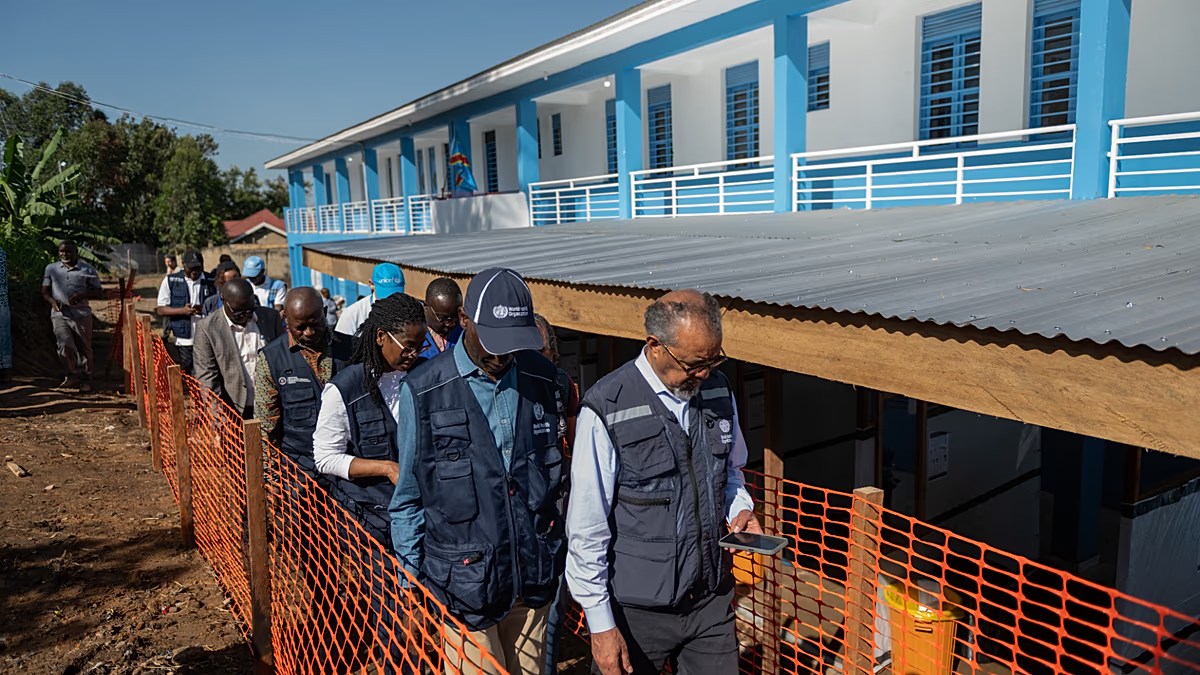

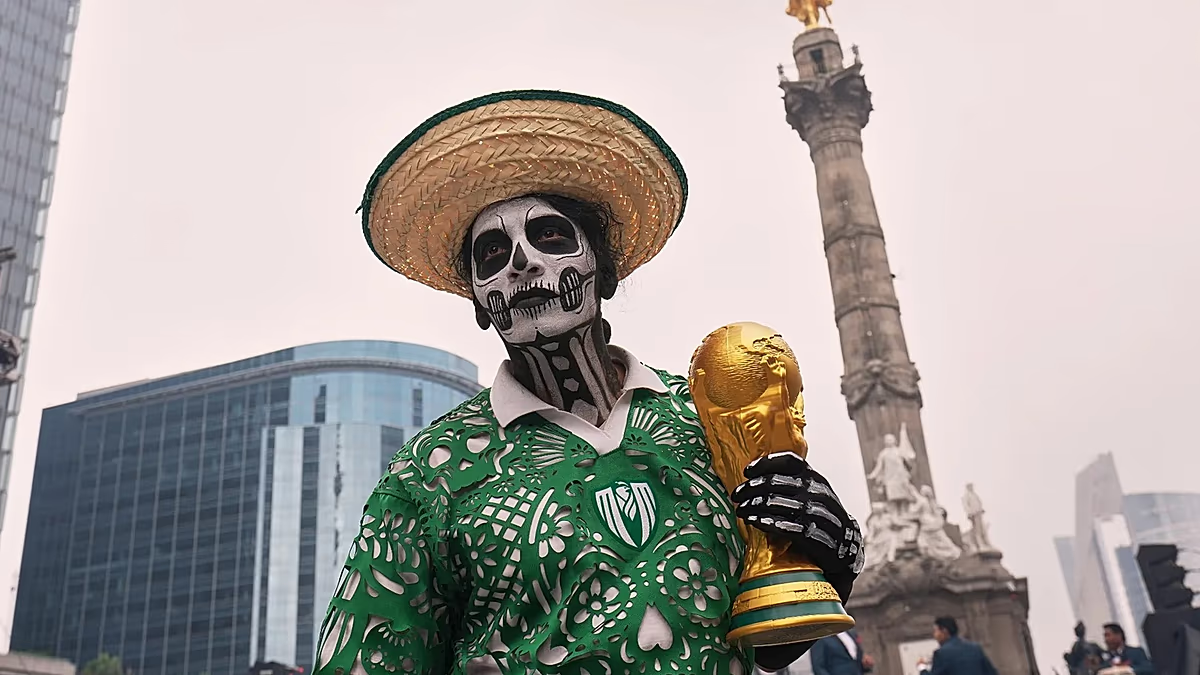


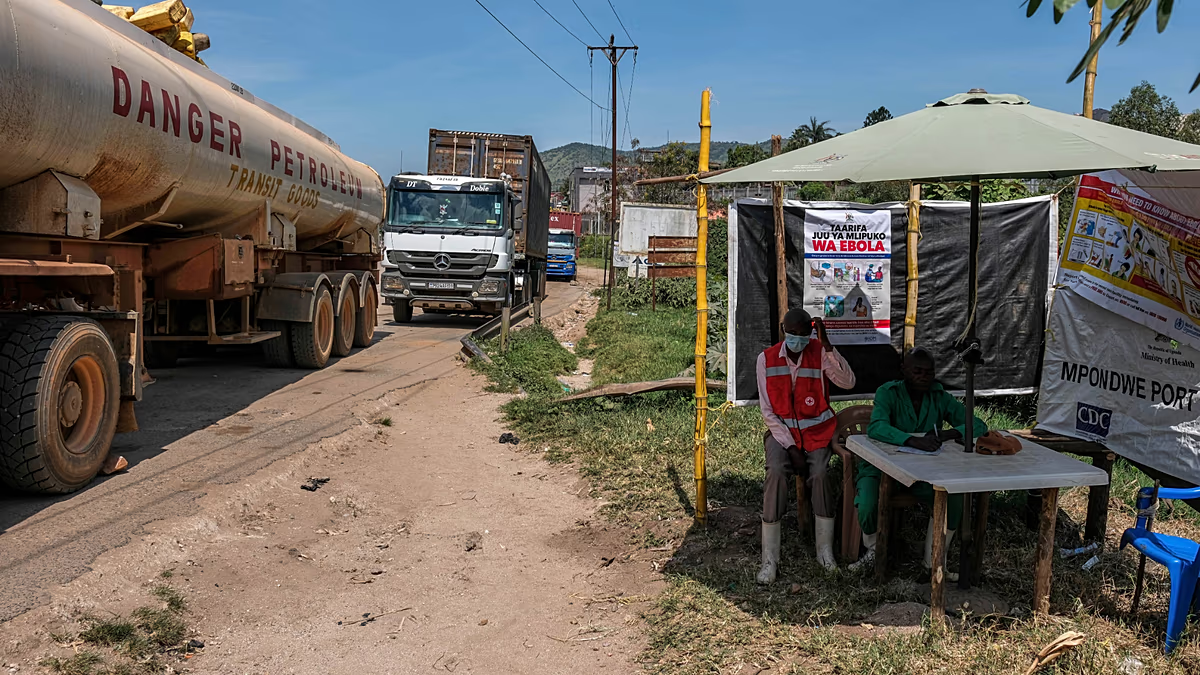
As the world anticipates the excitement of the upcoming FIFA World Cup, hosted across North America, a concerning but distant health threat has sparked a diplomatic and public health debate. The Ebola virus, with outbreaks reported in the Democratic Republic of Congo and Uganda, has become a point of contention regarding how nations should balance vigilance with openness. At the heart of this discussion is a clear divide between the reassurance offered by global health authorities and the more cautious, restrictive approach championed by the United States government. The World Health Organization’s European regional director, Dr. Hans Kluge, has directly addressed the millions of fans preparing to travel, stating unequivocally, “There is no reason to change your plans. Travel as normal, stay informed and enjoy the tournament.” This message is rooted in the current data, which shows no cases in the host countries or Europe, and the nature of the virus, which spreads only through direct contact with bodily fluids of a symptomatic person.
The factual landscape provides context for this reassurance. As of mid-June, cases, while tragic, are concentrated in specific, often remote areas of Central Africa. Rigorous screening measures are already in place for travelers departing from affected regions. Dr. Kluge emphasized that these factors mean “the overall risk remains low.” The primary strategy, endorsed by the WHO and the European Centre for Disease Prevention and Control (ECDC), is one of preparedness and vigilance at points of entry, rather than broad travel bans. This approach focuses on identifying and isolating any potential case that might arise, trusting in robust public health systems to contain it without disrupting global mobility and the international spirit of an event like the World Cup.
However, the United States has adopted a markedly different stance. Citing the highest standards of national security and public health, the Trump Administration has imposed entry restrictions on travelers from Congo, South Sudan, and Uganda. A State Department official framed the move as a necessary protective measure for the nation. Furthermore, Washington is not merely acting unilaterally; it is actively pressuring other countries, particularly those with significant traveler flow to the World Cup, to enact similar restrictions. The U.S. Ambassador to Belgium, for instance, publicly called on Belgian authorities to impose entry bans. The implied stakes are high, with warnings that countries refusing such measures could face reciprocal consequences for their own citizens seeking to enter the United States.
This pressure puts nations like Belgium, and by extension the European Union, in a delicate position. Belgium’s response has been to politely but firmly decline the U.S. approach, choosing instead to align with international health guidelines. A spokesperson for Health Minister Frank Vandenbroucke stated, “We remain vigilant and prepared,” affirming that the country will follow the recommendations of the WHO and ECDC. The Belgian stance is that preparedness—having systems ready to detect and respond to a sick traveler upon arrival—is a more effective and proportionate response than blanket travel bans, which can be stigmatizing and counterproductive. The European Commission supports this coordinated EU-wide approach, stating there is “no evidence that additional measures are needed upon entry.”
The divergence in strategy sets the stage for a complex diplomatic dialogue, even at the highest levels. European Commission President Ursula von der Leyen discussed the Ebola response with U.S. Secretary of State Marco Rubio, underscoring the issue’s importance, though the details of their conversation remain private. The planned discussion of the outbreak by EU health ministers highlights that the topic is being taken seriously, but within a framework of collective, science-based decision-making. The European position seems to be one of calibrated caution, seeking to protect public health without yielding to fear or measures that could harm international cooperation and the global economy, especially during a major event.
Ultimately, the situation presents a classic tension in global health governance: the clash between sovereign, unilateral action and multilateral, coordinated guidance. The United States, prioritizing a perceived imperative for maximum security, has chosen a path of restrictions and pressure. Meanwhile, European nations, guided by the WHO, are betting on preparedness, surveillance, and trust in their health systems. For the millions of football fans around the world, the message from health authorities remains one of calm encouragement. The coming weeks will test whether this crisis of confidence between allies can be managed without escalating into travel chaos, ensuring that the world’s focus can remain on the athletic spectacle on the field, rather than the diplomatic maneuvering off of it.