



Paragraph 1: A Pivotal Decision
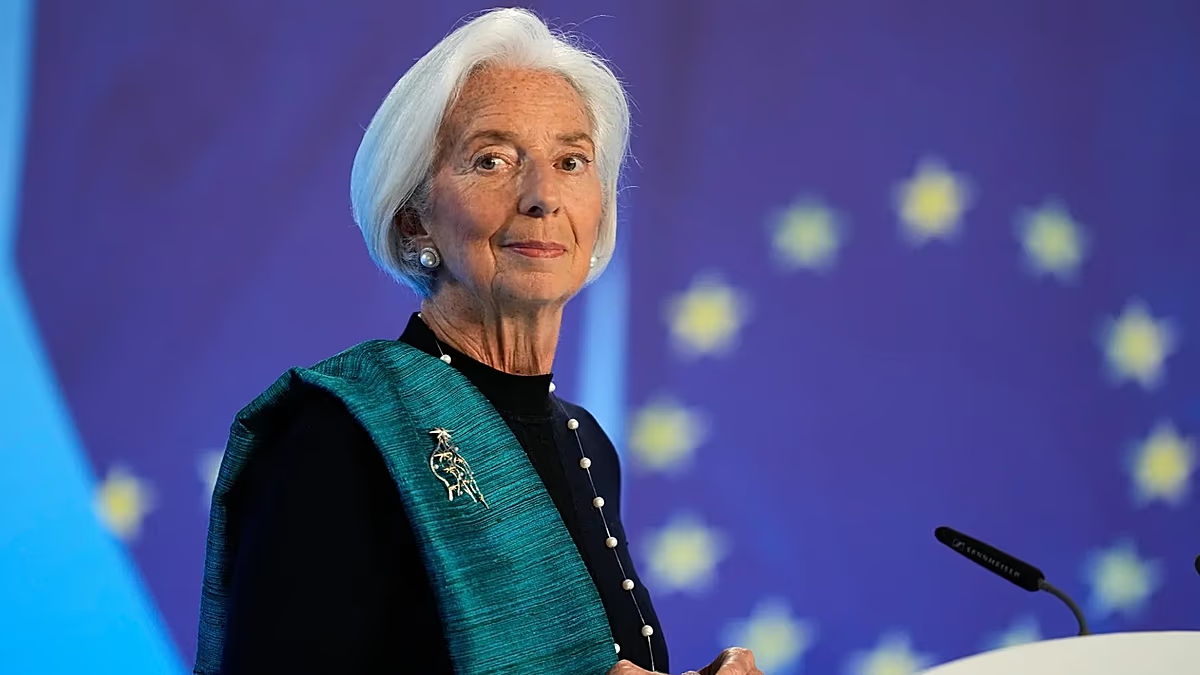
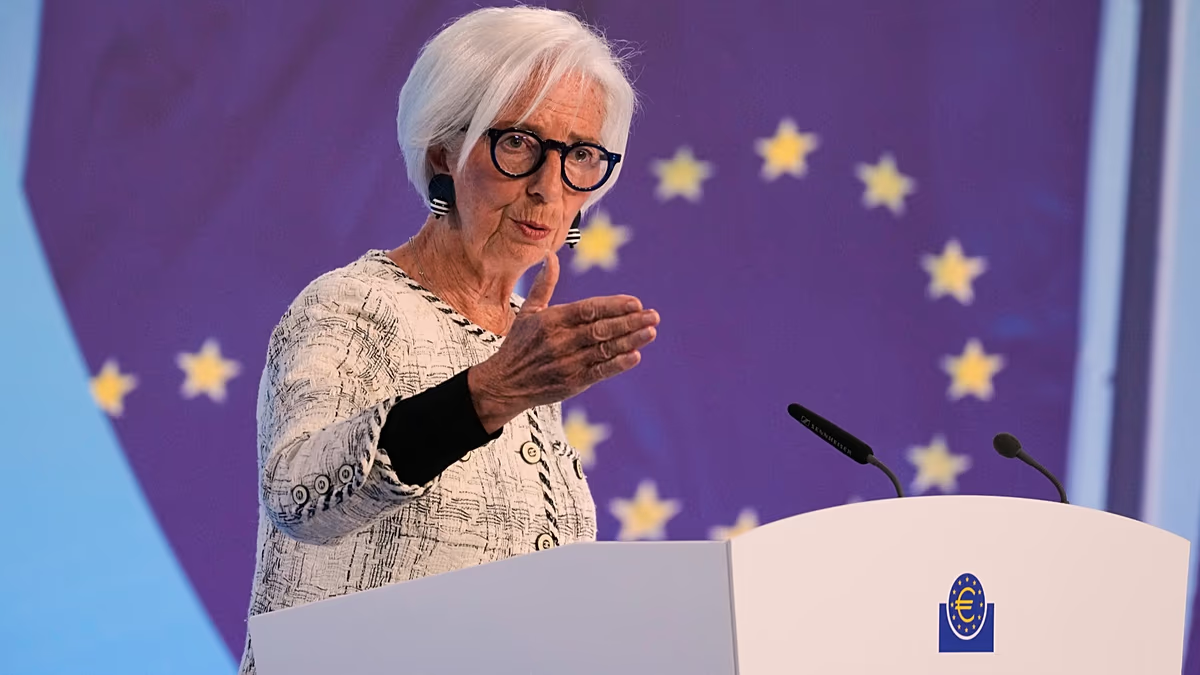
On a Thursday in June 2026, the European Central Bank (ECB) made a significant and sobering move, raising interest rates for the first time in nearly three years. This decision marks a clear end to a period of monetary easing and signals a return to the challenging fight against inflation. The central bank lifted its key deposit rate from 2% to 2.25%, a move that reverberated through financial markets and across the 21-nation eurozone. The hike, while seemingly modest, represents a major policy shift, acknowledging that the brief respite from high inflation has come to an abrupt end.
Paragraph 2: The Inflationary Fire Rekindled
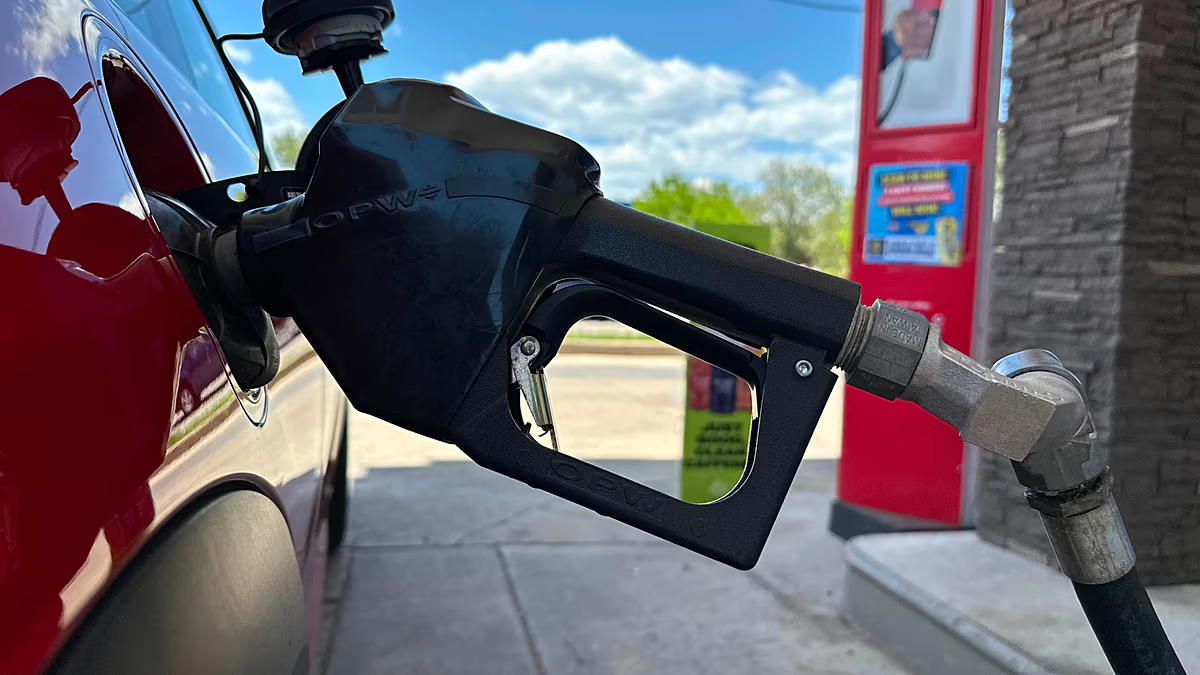
The driving force behind this abrupt change in direction was a stark and unwelcome resurgence of inflation. Data for May showed consumer prices rising at an annual rate of 3.2%, the highest level since September 2023. This surge was primarily, but not exclusively, fueled by a dramatic 10.9% jump in energy prices, a consequence of the ongoing conflict involving Iran. More alarmingly for policymakers, “core” inflation—which excludes volatile food and energy costs—also rose noticeably. This key indicator climbed from 2.2% to 2.5%, proving that inflationary pressures were spreading deep into the wider economy, threatening to become entrenched in wages and consumer expectations.
Paragraph 3: An Economy Caught in a Vise
The ECB’s move arrives at a perilously difficult moment for the eurozone economy, which finds itself caught in the grips of a potential stagflationary trap. Stagflation is the toxic combination of stagnant economic growth coupled with rising prices. The bloc’s economy had already contracted by 0.2% in the first quarter of 2026. Forecasters, including the ECB’s own survey of professionals, have sharply downgraded growth projections for the full year, citing the crushing impact of high energy costs on both consumer spending and business investment. In essence, the ECB is being forced to apply the brakes with higher interest rates just as the economic engine is already sputtering.
Paragraph 4: The Human and Market Impact
For millions of Europeans, this technical decision translates into immediate and tangible financial strain. Households will face higher monthly mortgage payments, and businesses will see the cost of loans for expansion or operations increase. This added pressure comes at a time when purchasing power is already being severely squeezed by elevated bills for fuel, heating, and electricity. The financial markets interpreted the move not as a one-off correction but as the likely beginning of a new tightening cycle, with investors betting there is roughly a 50% chance of another rate hike as soon as September.
Paragraph 5: The Intellectual Justification
The intellectual groundwork for this decisive action was laid in the weeks leading up to the meeting, most forcefully by key ECB officials. Isabel Schnabel, an influential Executive Board member, argued publicly that the central bank could no longer afford to wait and see if geopolitical tensions would ease. She warned that the risk of inflation expectations becoming “de-anchored”—where businesses and workers permanently adjust their price and wage-setting behavior—was rising dangerously. Chief Economist Philip Lane concurred, noting that the economic landscape had darkened since the bank’s previous forecasts. Together, they shifted the consensus, convincing the governing council that inaction had become the riskier path, with Schnabel even suggesting inflation could soar to 4% by year’s end.
Paragraph 6: A Necessary but Painful Course
In summary, the European Central Bank’s rate hike is a defensive maneuver born of necessity. It is a recognition that the temporary factors driving inflation have morphed into a more persistent threat, one that risks undermining the very foundation of price stability. The governing council concluded that allowing inflation to fester would be far more damaging to the economy in the long run than the short-term pain caused by higher borrowing costs. This decision, therefore, is not just a response to a monthly data point, but a strategic attempt to steer the eurozone away from the destabilizing cliffs of stagflation, even as it accepts the tough journey ahead. The story of this economic chapter is still unfolding, with the well-being of the continent’s economy hanging in the balance.