


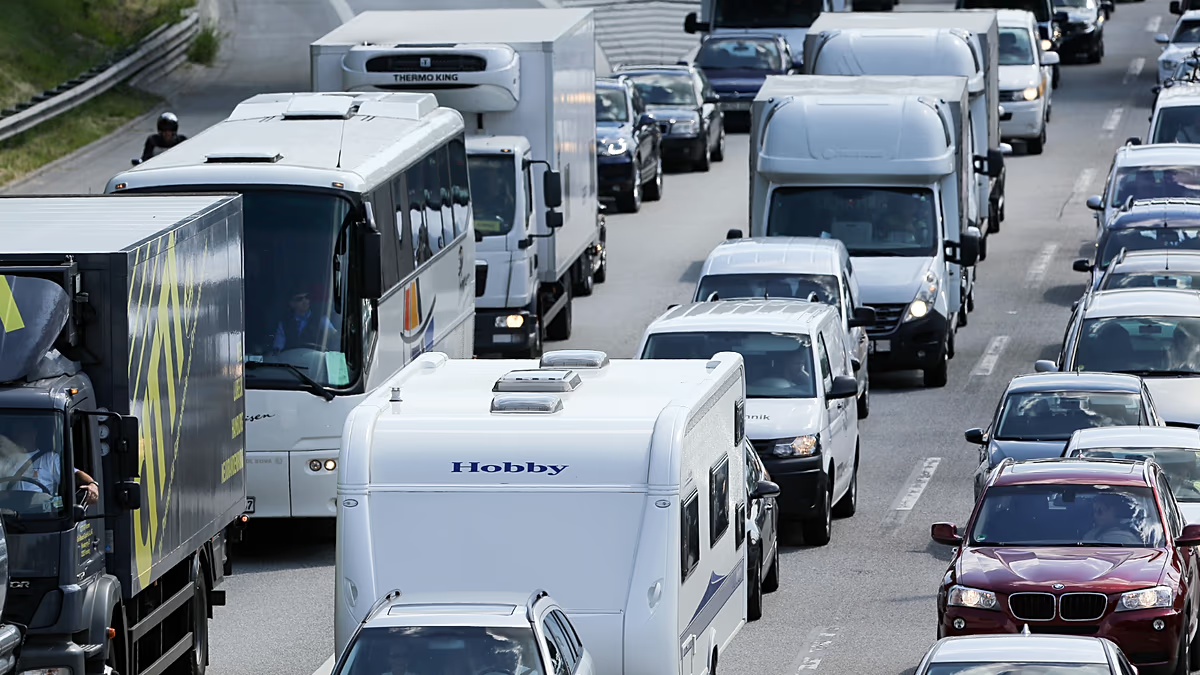
The European Union has taken a significant, yet contentious, step in its climate policy by expanding its carbon market to include buildings and road transport. This new system, known as the Emissions Trading System 2 (ETS2), is scheduled to launch in 2028. It will require fuel suppliers to purchase “polluting permits” for the carbon dioxide emitted by the gasoline, heating oil, and natural gas they sell. The core idea is to apply a financial cost to carbon emissions from these sectors, incentivizing a shift toward cleaner energy and greater efficiency. However, this move directly touches the daily lives of citizens, as the cost of these permits is likely to be passed down, potentially raising prices for heating homes and filling gas tanks. Recognizing this social and economic risk, EU lawmakers have simultaneously worked to fortify a financial safety net designed to prevent runaway costs for consumers.
This safety net is a reinforced “market stability reserve,” a mechanism agreed upon by the European Council and European Parliament. It acts as an economic buffer for the new system. If the price of carbon permits under ETS2 spikes above a threshold of €45 per tonne—a scenario that could dramatically increase household energy bills—the EU can intervene. The agreement empowers the bloc to inject up to 80 million emergency carbon permits into the market annually, a quadrupling of the original limit. By flooding the market with these extra allowances, the increased supply would push prices back down, protecting households and businesses from the most severe price shocks. As Danuše Nerudová, the European Parliament’s lead negotiator, stated, the deal reinforces price stability and prioritizes support for vulnerable citizens.
The political journey to this agreement has been far from smooth, revealing deep divisions within the bloc over the pace and social impact of the green transition. The controversy stems from a fundamental tension: the urgent need to reduce emissions versus the immediate burden on citizens. Earlier this year, Slovakia and the Czech Republic explicitly called for delaying the new carbon costs until at least 2030, citing the law’s profound social impact. Conversely, a coalition of wealthier, often more energy-efficient nations like Sweden, Denmark, Finland, the Netherlands, and Luxembourg opposed any delays or weakening of the system. This split underscores a broader EU challenge: aligning the economic realities of member states with varying energy dependencies and household incomes under a single, ambitious climate policy.
The concerns about social impact are supported by economic analysis. A 2026 study highlighted that the ETS2 will increase consumer prices in all EU countries. At a carbon price of €57.5 per tonne, the average cost of living could rise by just over 1%. Crucially, the burden will not be felt equally. The study predicts that central and eastern European countries are likely to experience larger price increases. These nations often have older building stock, less efficient heating systems, and a greater reliance on fossil fuels for transport. In contrast, northern and western European countries, with better energy efficiency and more advanced electrification of heating and transport, will be somewhat shielded. This uneven impact fuels the political disagreements and underscores the necessity of the stability mechanisms.
The newly strengthened market stability reserve itself is an evolution of a tool first created in 2015 for the original industrial carbon market. Back then, a massive oversupply of permits had made it too cheap for factories to pollute, undermining the system’s environmental goal. The reserve was designed to automatically absorb surplus permits, correcting the market and restoring a meaningful price signal for carbon. The EU is now applying this learned experience to the sensitive sectors of buildings and transport. The latest adjustments also fine-tune the trigger points for releasing permits, aiming to avoid sudden supply shifts and send a more stable, predictable price signal to the market—a key point emphasized by Cypriot Minister Maria Panayiotou on behalf of the EU Council Presidency.
With the political deal now struck, the focus shifts to implementation and ongoing assessment. The agreement itself mandates that the European Commission conduct a thorough review by October 2027, ahead of the 2028 launch. This assessment will evaluate the application of ETS2 to buildings and road transport and the appropriateness of measures to protect vulnerable households—a direct nod to the social concerns raised by nearly half of the EU’s member states. The deal now awaits formal endorsement by both the Council and the Parliament. Ultimately, this package represents the EU’s attempt to balance two imperatives: driving forward with its legally binding climate targets while installing guardrails against the type of severe consumer price volatility that could trigger a political backlash and undermine the transition itself.