

In a moment of significant international tension, the board of governors for the United Nations’ nuclear watchdog, the International Atomic Energy Agency (IAEA), has issued a firm and urgent directive to Iran. Meeting at the agency’s headquarters in Vienna, the board passed a resolution demanding that Tehran provide “complete information” regarding its stockpile of uranium enriched to near weapons-grade levels and grant inspectors full access to its nuclear facilities. The resolution underscores that this cooperation is not merely procedural but “essential and urgent” to verify that no nuclear material has been diverted for non-peaceful purposes. This diplomatic move, spearheaded by France, Germany, the United Kingdom, and the United States, represents a concerted effort to maintain pressure on Iran through institutional channels, aiming to compel compliance with international non-proliferation agreements.
The vote itself revealed a divided international community, reflecting the complex geopolitical landscape surrounding Iran’s nuclear program. Of the IAEA’s 35-member board, 21 countries voted in favor of the resolution. Notably, Russia and China, alongside Niger, opposed the measure, while ten nations abstained and one member did not vote. This split highlights the challenges in achieving a unified global stance, as major powers balance non-proliferation concerns with broader diplomatic and strategic relationships. A senior Western diplomat involved in the process emphasized that the resolution’s core objective is to sustain diplomatic pressure, aiming to bring Iran back into compliance with its legally binding safeguards obligations without immediate escalation.
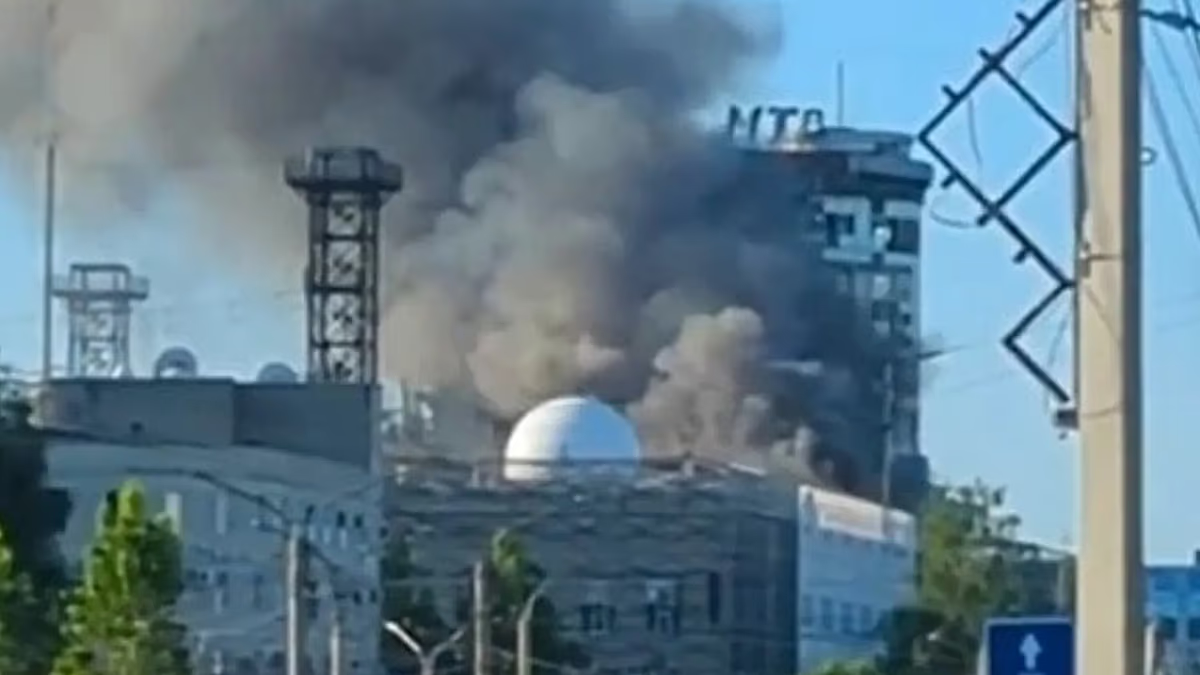
This diplomatic censure occurs against a backdrop of dangerously escalating military conflict in the Middle East, which adds a layer of immediacy and risk to the nuclear issue. The resolution was adopted on the same day the United States launched airstrikes against Iranian targets, with Tehran retaliating against regional adversaries. These clashes threaten to unravel fragile peace efforts and create a volatile environment where technical nuclear compliance becomes entangled with broader hostilities. The situation is further complicated by the aftermath of military strikes on Iranian nuclear sites by Israel and the U.S. in June 2025. Since those attacks, Iran has barred IAEA inspectors from the affected sites, preventing the agency from assessing the damage or verifying the status of the country’s sensitive uranium stockpile.
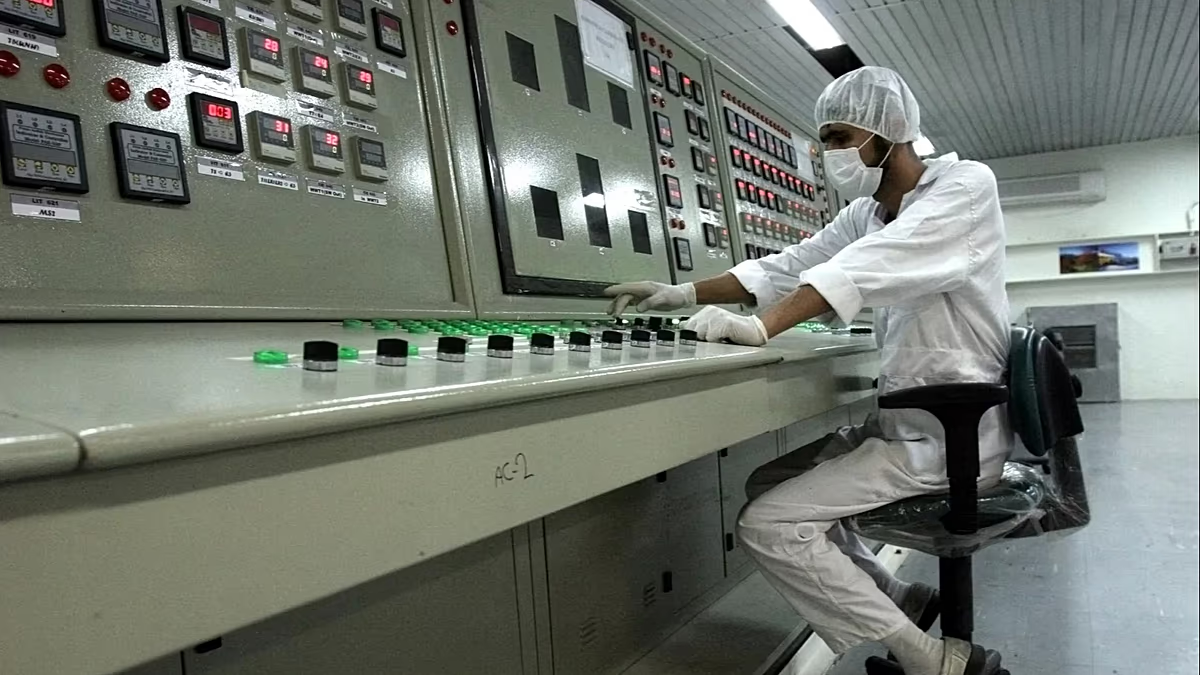
The material at the heart of this dispute is both technically complex and profoundly alarming. According to the IAEA, Iran possesses approximately 440.9 kilograms of uranium enriched to 60% purity—a level just a short technical step away from the 90% purity considered weapons-grade. IAEA Director General Rafael Grossi has cautioned that this stockpile, in theory, contains enough fissile material for up to ten nuclear bombs, should Iran choose to weaponize it. He has been careful to state that this does not mean Iran possesses a weapon, but the potential clearly exists. This stockpile, combined with Iran’s refusal to provide satisfactory explanations for traces of uranium found at several undeclared sites, fuels deep-seated suspicions in Western capitals that Tehran had a clandestine nuclear weapons program in the past and may be preserving the option for the future.
Iran continues to vigorously deny any ambition to develop nuclear weapons, insisting its program is solely for peaceful civilian purposes such as energy production and medical research. However, the IAEA board’s resolution “deeply regrets” Iran’s persistent failure over the past year to remedy its non-compliance. This formal finding of non-compliance, first declared in June of last year, was a landmark moment—the first such determination in two decades. The core of the standoff remains Iran’s longstanding refusal to provide “technically credible answers” to the IAEA’s questions about the origin of uranium particles found at old, undeclared locations. For the international watchdog, resolving these unanswered questions is a fundamental prerequisite for establishing trust and ensuring the exclusively peaceful nature of Iran’s nuclear activities.
While the resolution stops short of immediately referring Iran to the UN Security Council for potential sanctions—a more severe step last taken in 2006—it deliberately keeps that option on the table. The text explicitly states that the board “will stand ready to take further action,” including by addressing the “timing and content” of a formal report on Iran’s non-compliance for the Security Council’s consideration. This creates a critical diplomatic window. The message to Tehran is clear: the international community, or at least a significant portion of it, is demanding tangible cooperation and transparency. The path forward now hinges on whether Iran will choose to engage with the IAEA to de-escalate the situation or whether continued obstruction will lead to a more severe international confrontation at the Security Council level, all while regional military tensions continue to simmer.