



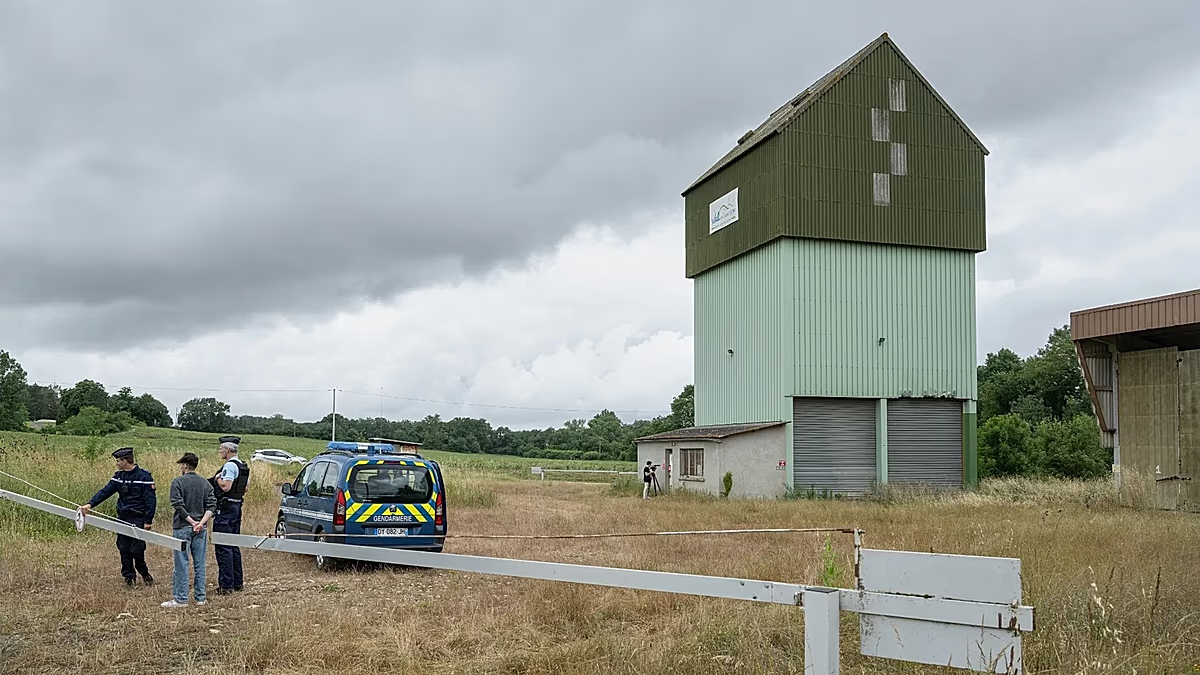
The tragic case of Lyhanna, an eleven-year-old girl from the southwestern town of Fleurance whose life was brutally cut short, has erupted into a profound national crisis in France, shaking public confidence in the very institutions designed to protect the most vulnerable. Lyhanna disappeared on May 29th, and the discovery of her body last week confirmed the nation’ Reli worst fears. The ensuing outrage, however, has focused less on the unnamed suspect—a 41-year-old father from a neighboring village—and more on a judicial system that appears to have catastrophically failed. It was revealed that this same man had twice before been formally accused of raping a child, investigations that were either dropped or stalled. This revelation has forced a painful and public reckoning, prompting President Emmanuel Macron to voice a fear gripping the nation: the erosion of trust in France’s institutions.
At the heart of the scandal is a chilling account of systemic neglect. One mother, who wishes to remain anonymous, has come forward with a story that encapsulates the failure. She filed a legal complaint in August of last year, accusing the same suspect of repeatedly raping her young daughter. The case was supported by a medical report, yet for nine months, no action was taken. “I called every Monday morning,” the mother recounted, describing her desperate attempts to spur the police into action. Her pleas were met not with urgency, but with a threat: she was warned that if she continued “harassing” them, charges would be filed against her. This grotesque inversion of victim and system underscores a bureaucracy seemingly immune to the cries of children and their families, allowing a suspected predator to remain free until another child vanished.
President Macron, addressing his cabinet, acknowledged “clear malfunctions” and called for a meticulous dissection of both individual and systemic failures across all public services involved. Yet, he also urged calm, stating, “We do not respond to a tragedy with shouting.” This plea for restraint has done little to quell a wave of public anger that saw approximately 60,000 people protest across the country, with many demanding the resignation of Justice Minister Gérald Darmanin. While Darmanin has refused to step down, he has apologized for what he termed a “huge failure” in Lyhanna’s case. The political tension highlights the difficult path ahead: the need for substantive, structural reform versus the public’s immediate demand for accountability and change.
Disturbingly, this case is not an isolated breakdown but a symptom of a deeply flawed system. An independent commission, CIIVISE, reports that only 7% of complaints for the sexual assault of a minor in France result in a conviction. A 2022 government report, highlighted by Mediapart, painted a picture of an overburdened and under-resourced judiciary where, in 70% of child abuse cases, basic investigative steps—like checking phone records or security footage—are never undertaken due to constraints of staff and time. While Prime Minister Sébastien Lecornu insisted resources were not lacking in this specific investigation, he conceded the justice system as a whole faces a severe resource crisis. The statistics translate into an almost unfathomable reality: an estimated 160,000 children suffer rape or sexual assault each year in France, most often by someone they know.
Lyhanna’ consequences tragedy has cast a harsh light on a series of recent failings in child protection. In Paris, dozens of school monitors have been suspended this year over allegations of “sexual or sexist abuse” against pupils. Furthermore, the shadow of past institutional leniency looms large, exemplified by the case of a retired surgeon who, despite a prior conviction for possessing child sexual abuse images, was allowed to practice for decades, ultimately confessing to assaulting hundreds of young patients. These patterns reveal a recurring theme: systems that default to inaction, that fail to connect dots, and that prioritize procedural inertia over the safety of children, leaving predators shielded by administrative lassitude.
The collective grief for Lyhanna has thus crystallized into a pivotal moment for France. It is a moment that transcends a single crime and confronts the nation with the compounded weight of countless overlooked warnings and silenced victims. The public outrage is not merely about seeking justice for one girl, but about demanding a fundamental transformation of a machinery that has repeatedly broken down. The path to restoring trust, as President Macron indicated, requires more than apologies or political resignations; it demands a ruthless examination and overhaul of how the state listens to, believes, and protects its children. The tragedy of Lyhanna has become a solemn referendum on the competence and compassion of French institutions, and the response will define the nation’s moral character for years to come.