
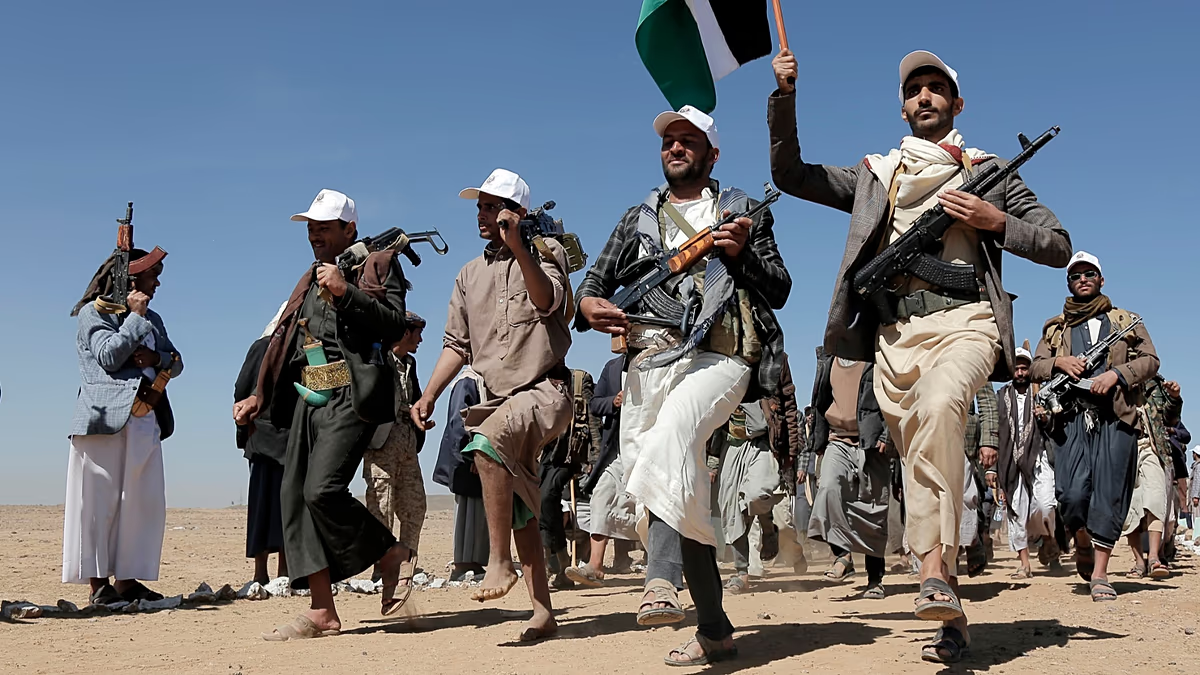


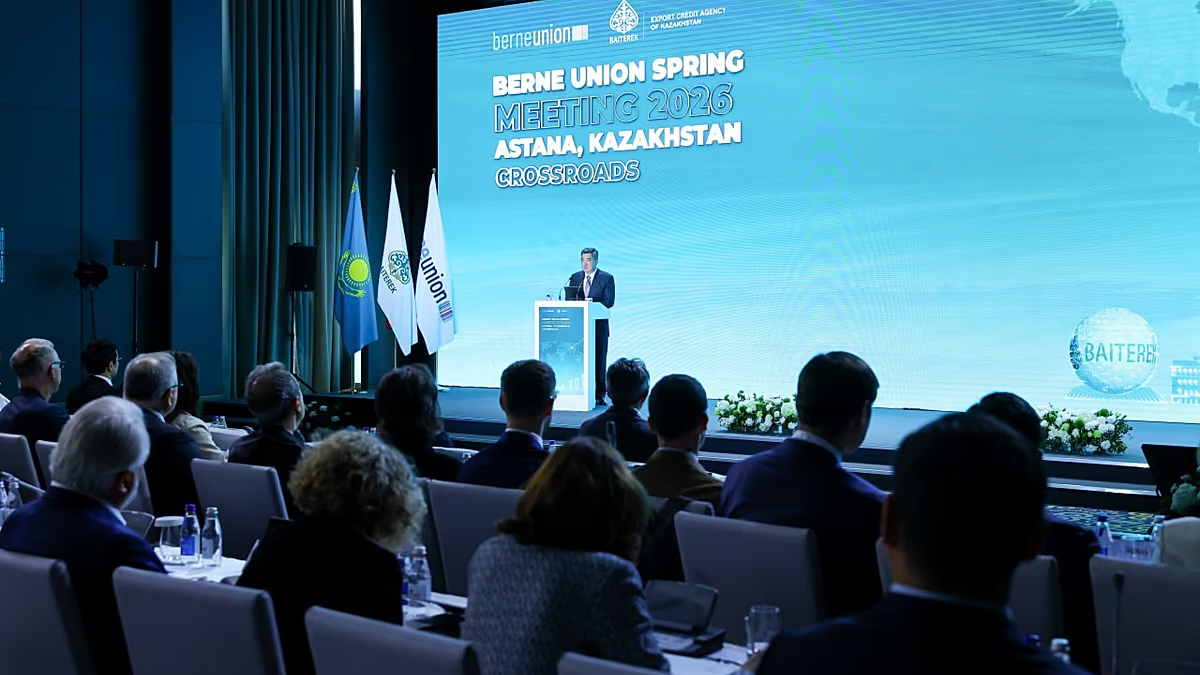
In a world grappling with heightened geopolitical instability, including the ongoing conflict in the Middle East, the global export credit and investment insurance industry is undergoing a subtle but significant shift. Traditionally, providers of these crucial financial instruments, which protect and fuel international trade and investment, are seeking to balance their portfolios by directing attention towards regions perceived as having lower conventional war risks. This strategic recalibration is bringing fresh focus to Central Asia, a historically pivotal but often overlooked crossroads of trade and resources. It is within this context that Kazakhstan has emerged as a proactive and compelling destination, successfully hosting the first-ever regional meeting of the Berne Union in Astana—a gathering of more than 70 of the world’s leading credit insurers—signaling a collective vote of confidence in the region’s potential.
Kazakhstan itself is actively cultivating this attractiveness through deliberate policy and measured economic transformation. Prime Minister Olzhas Bektenov credits a “structural transformation” of the nation’s economy for its improving investment climate, evidenced by a 14.4% rise in foreign direct investment and a record 13% increase in fixed capital investment. The country is not merely waiting for opportunity; it is creating frameworks to invite it. Initiatives like the newly introduced “Golden Visa” regime, aimed at attracting foreign investors and highly skilled professionals, demonstrate a commitment to integrating global talent and capital into its development story. This institutional push extends to its financial infrastructure, where the Development Bank of Kazakhstan and the national export credit agency are expanding their reach, opening offices in key overseas markets to support both domestic exporters and international investors, guided by the principle that such agencies “help reduce risks and attract investors.”
A cornerstone of Kazakhstan’s strategy to build lasting credibility in the international finance community is its concerted alignment with global standards. By working closely with the Organisation for Economic Co-operation and Development (OECD) to adopt its rigorous export credit frameworks—which govern transparency, risk assessment, environmental standards, and responsible state support—Kazakhstan is sending a clear message of reliability. This compliance, as noted by OECD official Silvia Gavornikova, makes the country a more dependable partner for international banks, insurers, and agencies seeking cross-border cooperation. It transforms the nation from a regional player into a credible participant within a global system that supports over €51 billion in trade annually, ensuring that its projects and partnerships meet the expectations of the world’s most discerning financial institutions.
Beyond institutional reforms, Kazakhstan’s inherent economic assets are capturing specific international interest. The global search for secure supplies of critical minerals—essential for everything from electronics to green technology—has converged with the country’s rich resource base. Berne Union President Yuichiro Akita noted that the growing appetite for insuring such investments makes this “a good time” to attract investors to Kazakhstan, a sentiment underscored by real-world interest, including from entities linked to efforts to diversify Western supply chains away from China. Akita framed this within the broader geopolitical landscape: “The geopolitical situation is really challenging… But Kazakhstan has the resources the world now needs. From an investment perspective, we want to work with Kazakh partners because the world needs partners.”
Kazakhstan’s ambitions extend far beyond raw materials, however, with a strategic vision to become a diversified trade hub. A new Trade Policy Concept aims to dramatically increase non-resource exports, targeting nearly €45 billion by 2030. A pivotal element of this vision is the development of the Trans-Caspian International Transport Route, or “Middle Corridor,” a multimodal artery linking China and Southeast Asia to Europe via Kazakhstan and the Caspian Sea. This corridor is central to strengthening transcontinental logistics and is being bolstered by major infrastructure projects. As Timur Onzhanov of the Baiterek holding stated, the task now is to present this “project pipeline” to export credit agencies and commercial banks, inviting them to provide the financial instruments that will turn blueprints into reality.
The Astana meeting culminated in tangible progress, with strategic agreements signed between Kazakhstan’s export credit agency and major international export-import banks. These agreements focus on practical collaboration: mutual reinsurance of export risks, co-financing of investment projects, and joint promotion of Kazakhstan’s non-resource exports in key markets like the Middle East and Europe. Thus, the gathering was more than a symbolic event; it was a catalytic moment that formalized partnerships. In a period of global uncertainty, Kazakhstan is positioning itself not merely as a passive beneficiary of shifting risk perceptions, but as an active, standards-aligned, resource-rich, and strategically located partner—a nation building the financial, logistical, and institutional frameworks to invite the world to invest in its future.