


In the shifting landscape of European climate policy, a coalition of seven EU member states has issued a firm and urgent call to Brussels, pleading for the preservation of strong carbon dioxide standards for cars and vans. Denmark, France, Luxembourg, the Netherlands, Portugal, Spain, and Sweden argue that any weakening of these emissions rules would pose a direct threat to the bloc’s foundational climate goals, its economic competitiveness on the global stage, and its long-term energy security. This appeal, detailed in an informal document, arrives at a critical juncture, following a significant political compromise last December that saw EU leaders ease a proposed ban on new internal combustion engine cars by 2035. Instead, the European Commission proposed a 90% reduction target for that year, a move that has left many climate advocates concerned about the dilution of ambition and the precedent it sets for future negotiations.
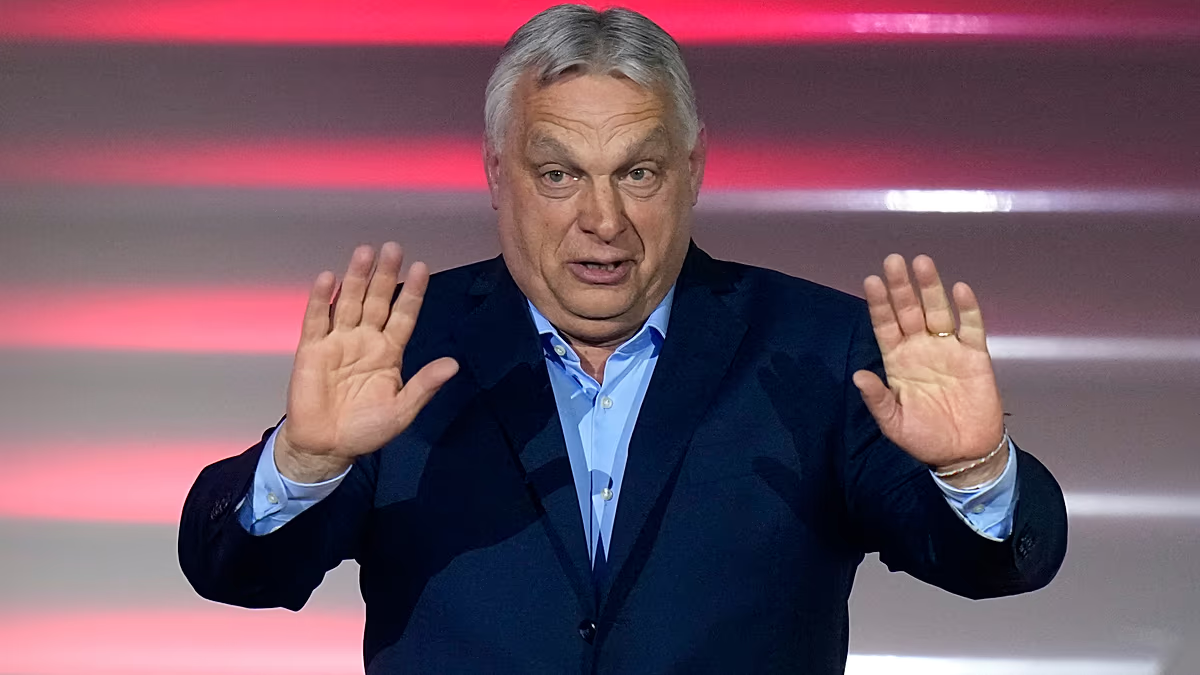
The backdrop to this plea is a deep political divide over the path to automotive decarbonisation. The initial push for a full combustion engine ban was notably revoked with the instrumental support of Germany and Italy, and championed by the centrist European People’s Party (EPP) in the European Parliament. Their central argument hinged on the principle of “technological neutrality,” advocating for member state flexibility to choose their own methods for cutting emissions while maintaining industrial competitiveness. EPP chairman Manfred Weber has been a vocal proponent of this approach, declaring the party had delivered on an election promise to eliminate the ban. He is actively seeking political compromises in the Parliament, a process that has raised alarms among the coalition of seven, who fear a further erosion of environmental standards in the final legislation.
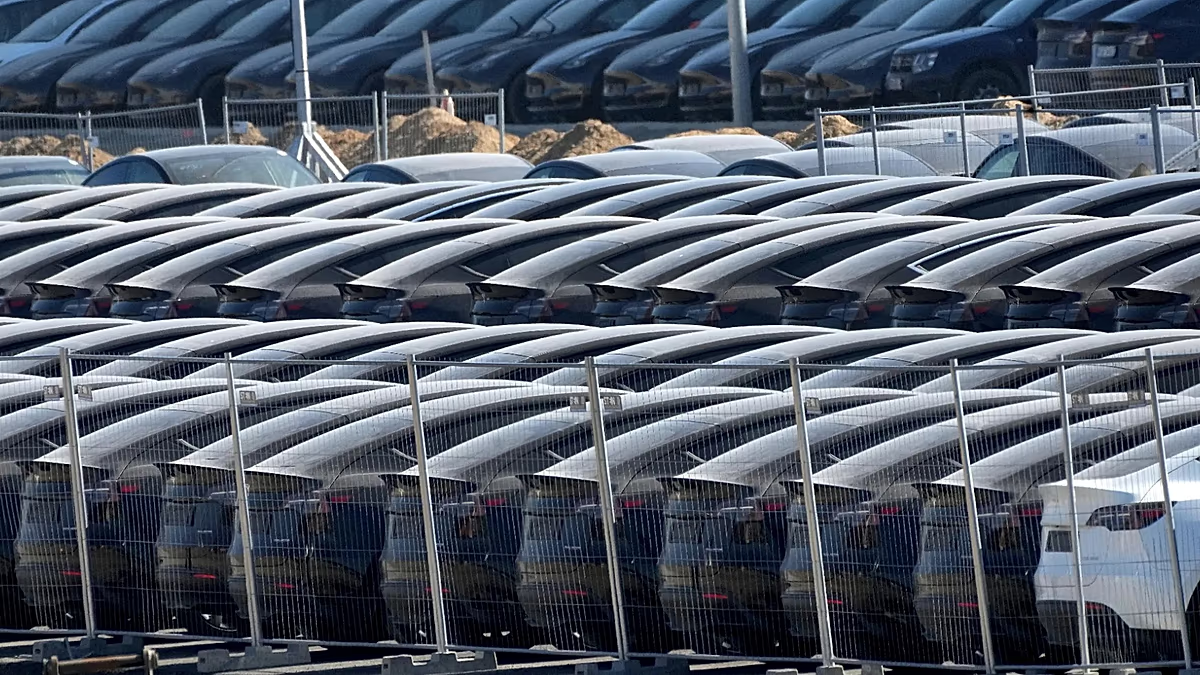
At the heart of the seven countries’ argument is a powerful recalibration of the electrification mission. They contend that the rapid transition to electric vehicles is no longer merely an environmental imperative but a pressing geopolitical and economic necessity. By reducing Europe’s overwhelming dependence on imported fossil fuels, a robust electric vehicle fleet acts as a shield against volatile global oil prices and the whims of geopolitical crises. This transition, they assert, is a “triple win”: it directly protects consumers from the pain of rising fuel costs, drastically improves air quality in cities, and remains the most viable pathway to achieving the EU’s binding climate targets. They point to surging EV sales—reportedly up 33% in the first quarter—as clear evidence that consumers are already embracing this future for practical, economic reasons.
However, the political winds in the European Parliament suggest the road ahead will be rocky. The draft report from the Parliament’s lead negotiator, Massimiliano Salini of the EPP, is viewed by the seven nations as a step backward, hinting at provisions that could relax emissions targets and grant manufacturers more lenient timelines for compliance. This has triggered a stern warning from the coalition capitals, who see such measures as a direct threat to the regulatory certainty required for long-term industrial planning. They argue that while limited, carefully designed flexibilities might be justified to manage the transition, any excessive concessions would cripple investor confidence and slow down the industrial transformation already unfolding across the continent’s automotive supply chain.
The seven nations are thus drawing a firm line in the sand, emphasizing that flexibility must not become a loophole. In their view, any concessions granted to automakers must be strictly conditional, temporary, and directly linked to verifiable environmental and industrial commitments. Their shared fear is that a diluted law would send a confusing signal to the market, undermining the billions of euros already invested in battery gigafactories, charging infrastructure, and new electric models. This uncertainty, they warn, would not only jeopardise Europe’s climate leadership but also cede strategic ground in the global race for clean technology dominance, ultimately harming the very economic competitiveness some claim to protect by slowing the transition.
Ultimately, this standoff represents a fundamental clash of visions for Europe’s industrial and environmental future. On one side, a powerful faction prioritises immediate industrial flexibility and technological choice. On the other, a dedicated coalition frames electrification as an urgent strategic pivot essential for security, affordability, and planetary health. As lawmakers enter final negotiations, the outcome will signal whether the European Union chooses to reinforce its green ambition with unwavering regulatory clarity or opts for a compromised path that risks derailing a critical transition. The plea from these seven countries is a stark reminder that the rules governing tomorrow’s roads will define Europe’s resilience, sovereignty, and ecological legacy for decades to come.