

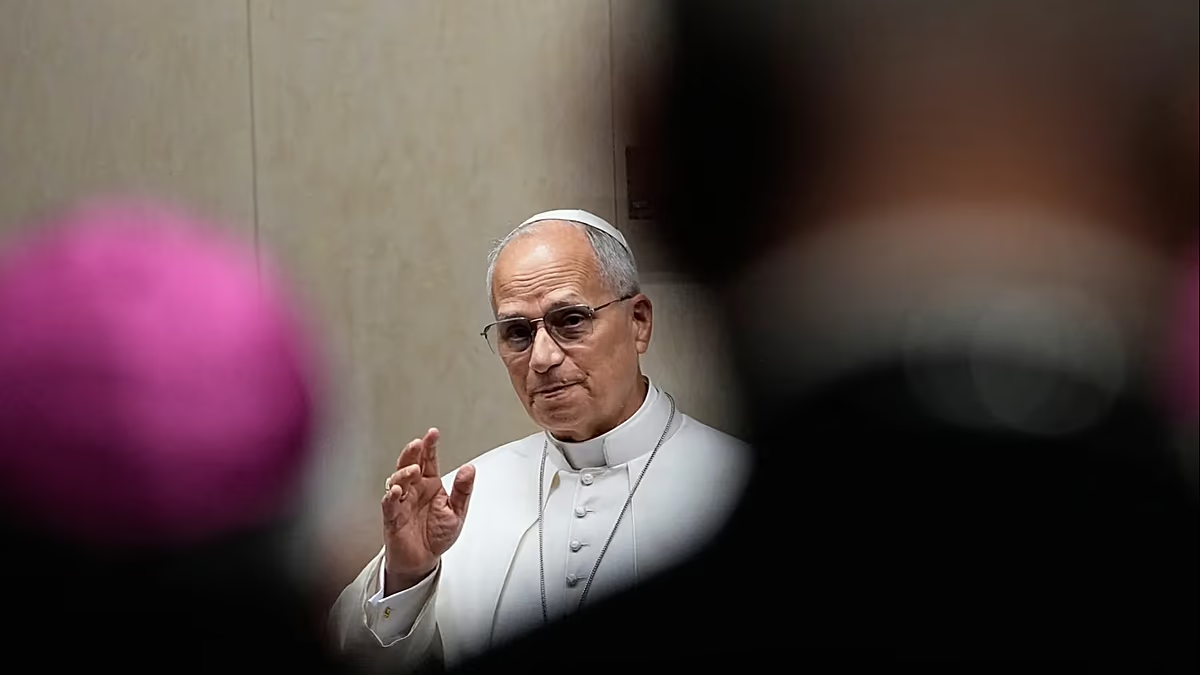
On Monday, Pope Leo XIV delivered a forceful condemnation of the sexual abuse of minors within the Catholic Church, labeling it a “scourge” and calling for a profound transformation towards a “culture of care.” Addressing a gathering of Spanish bishops in Madrid, he outlined a clear path forward, emphasizing “listening, truth, justice, reparation” and stronger prevention measures. His words underscored a core principle: “Every wounded person must be able to find sincere listening, welcome, protection and real paths to healing.” This speech set the stage for a private meeting with abuse victims scheduled for later that day at the Vatican’s embassy, a gesture intended to demonstrate a personal commitment to hearing survivors’ pain. However, the lead-up to this meeting was not without controversy, highlighting the deep-seated tensions surrounding the Church’s handling of the crisis.
Even as the Pope prepared for his meeting, representatives from some victim advocacy groups expressed significant disappointment and a sense of exclusion. Juan Cuatrecasas, spokesman for the association Infancia Robada (Stolen Childhood), voiced frustration outside the embassy, stating, “We are disappointed that the pope, instead of listening to a sufficiently large and solid representation of victims, prefers to leave us out.” He vowed to continue pushing for broader recognition, insisting, “We are going to keep pushing until the end, insisting that the Pope has to see us, has to hear us, we have a voice.” The Vatican, maintaining a stance of discretion, confirmed the meeting would occur but withheld further details out of “respect for the victims.” This tension reflects the immense scale of the scandal in Spain, where a 2023 ombudsman’s report estimated that around 200,000 minors have suffered sexual violence by clergy since 1940, a horrific legacy the Church is still grappling with.
The Pope’s visit and his strong words on the abuse crisis come amidst a slow and painful reckoning within the Spanish Church. For years, the hierarchy was marked by “reticence and opacity,” but recent pressure has led to concrete steps. In March of this year, the Spanish government led by Prime Minister Pedro Sánchez and the Catholic Church signed a landmark agreement to provide compensation to victims, a significant, if belated, move toward accountability. The Pope himself, speaking to journalists on his flight to Madrid, acknowledged that the scandal remains “still an open wound” for the institution globally. His direct address to the Spanish bishops, coupled with the planned victim meeting, represents an attempt to apply spiritual and moral pressure from the highest level to accelerate this culture change from one of secrecy to one of transparency and care.
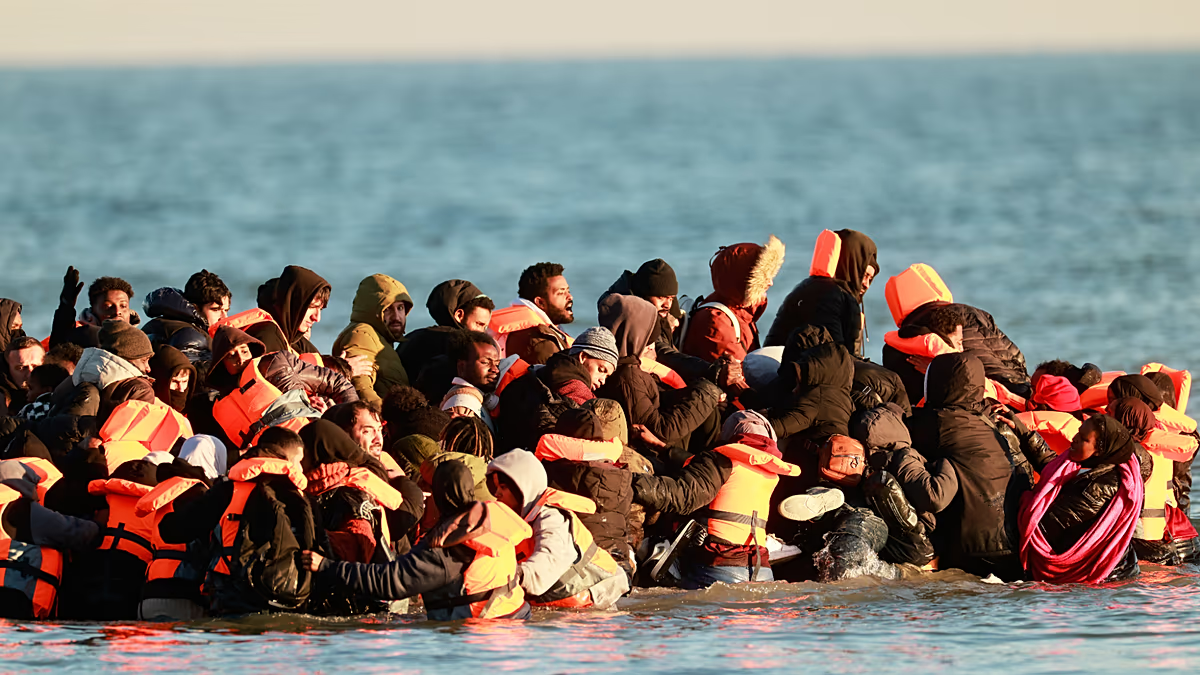
Earlier on the same day, Pope Leo XIV made history by delivering an unprecedented speech to the Spanish parliament, where he received a lengthy standing ovation. Expanding his message beyond the Church’s internal crises, he addressed pressing global issues, framing migration as a “tragic drama” requiring a coordinated global response. He advocated for “safe and legal pathways” for immigrants and stressed the need for “a respectful welcome and real opportunities for integration.” This message aligned with the relatively liberal immigration policies of Sánchez’s government, which nevertheless faces intense political pressure from conservative and far-right parties demanding stricter controls. The Pope’s upcoming trip to the Canary Islands—a major entry point for irregular migrants risking their lives on Atlantic crossings—will visibly reinforce his call to remember the human cost of migration.
In his parliamentary address, the Pope also touched upon other divisive social issues, urging lawmakers to defend life “from conception to its natural end.” This comment was heard in a nation where the left-wing government has legalized euthanasia under strict conditions and seeks to enshrine abortion rights in the constitution, illustrating the ongoing ideological clashes between the Church and secular governments. On foreign policy, he reiterated his consistent anti-war stance, calling for “patient dialogue” over conflict and a renewed arms race. “Weapons may impose a temporary silence but they can never build a genuine and lasting peace,” he stated, a position that has drawn criticism from figures like former U.S. President Donald Trump but which forms a cornerstone of his papacy’s focus on peacebuilding.
Pope Leo XIV’s visit to Spain thus wove together several critical threads of his papacy: the urgent, internal work of healing the Church from the wounds of abuse; the prophetic call for compassion in handling migration; and the diplomatic pursuit of global peace. By denouncing the “scourge” of abuse before the Spanish bishops and meeting with victims, he sought to model the “culture of care” he preached. By addressing parliament on migration and peace, he positioned the Church as a moral voice in the public square. The entire visit, from the historic parliamentary speech to the private, sensitive encounters with survivors, reflects a pontiff attempting to bridge deep divides—within his own flock and in the wider world—through a language of accountability, welcome, and dialogue.