



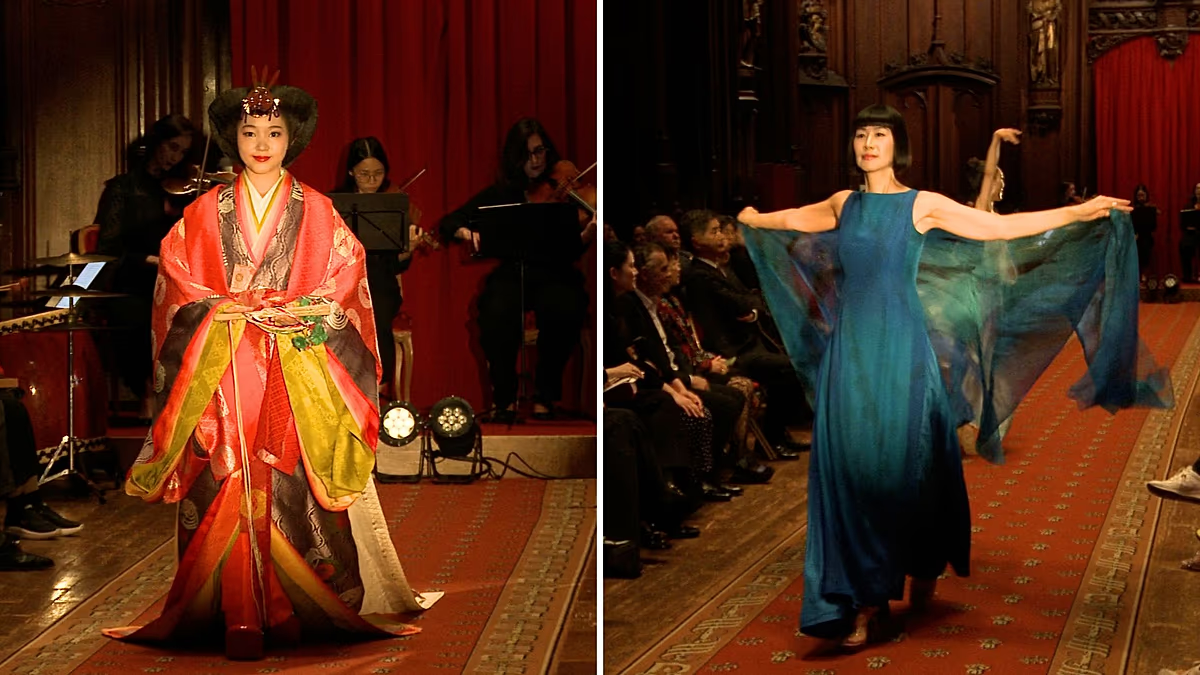
In the heart of Brussels, within the venerable Gothic walls of its 15th-century Town Hall, a powerful convergence of past and present recently unfolded. This event was not merely a performance but a celebratory cornerstone marking 160 years of diplomatic and cultural relations between Belgium and Japan. The ancient halls, steeped in European history, provided a striking and symbolic backdrop for “Amaterasu,” a contemporary performance piece that breathes new life into one of the most foundational myths of Japanese Shinto belief. This pairing of location and narrative beautifully underscored the enduring and dynamic nature of the two nations’ relationship, demonstrating how shared appreciation for artistry and story can bridge centuries and continents.
The production delves into the poignant legend of the sun goddess Amaterasu, a central deity in Japanese mythology. The story tells of a bitter conflict with her brother, the storm god Susanoo, whose violent actions drove Amaterasu into deep sorrow and retreat. She secluded herself within the celestial rock cave of Ama-no-Iwato, and with her light hidden away, the entire world was cast into an endless, desperate darkness. The other deities, realizing the catastrophe, devised a clever plan to coax her out. They assembled outside the cave, creating a raucous festival of laughter, vibrant dance, and enchanting music. Their collective joy and the dazzling reflection of a sacred mirror finally piqued Amaterasu’s curiosity. As she emerged to see the source of such merriment, light was restored to the world. This myth is not just a tale of celestial drama but a profound narrative about the universal human need for community, joy, and artistry to dispel darkness and despair.
The visionary behind this unique adaptation is dress designer and performance artist Eiko Kobayashi. Her concept was brilliantly simple yet deeply meaningful: to use the traditional kimono not merely as a garment, but as a canvas for storytelling and a vessel for memory. For Kobayashi, each kimono presented on the Brussels stage was a piece of wearable art, intricately connected to Japanese mythology and craftsmanship. The production, presented by the cultural non-profit Be-Japon, has achieved international acclaim, captivating audiences across twelve countries. It masterfully blends elements of high fashion, precise choreography, and narrative drama into a series of striking runway presentations, transforming a fashion show into a moving mythological tableau.
A particularly poignant moment in the Brussels performance highlighted the deep intentionality woven into every detail. The narrator explained to the audience the extraordinary provenance of the central costume embodying Amaterasu. It featured a linen jacket over a century old, overlaid with the world’s thinnest silk, sourced from Fukushima. This choice of material is profoundly resonant; it serves as a quiet but powerful tribute to the resilience and recovery of the Fukushima region following the 2011 earthquake, tsunami, and nuclear disaster. By adorning the sun goddess in this silk, the performance layers the ancient myth with a modern narrative of hope and regeneration, connecting the symbolic return of light to a community’s enduring spirit.
The event in Brussels was a single, luminous highlight within a much broader programme celebrating the rich, long-standing ties between Belgium and Japan. It stood as a testament to how cultural diplomacy, when rooted in mutual respect and artistic excellence, can foster deep and meaningful connections. The performance moved beyond simple retelling; it was an act of shared experience. Belgian audiences were invited not just to observe, but to feel the emotional weight of the myth, to appreciate the exquisite detail of the textiles, and to understand the contemporary relevance embedded within the ancient forms. In doing so, it strengthened the living bridge between the two nations.
In conclusion, “Amaterasu” in Brussels was far more than a theatrical show. It was a multifaceted cultural ceremony that honored history while speaking to the present. It celebrated a milestone in international relations through the universal language of myth and beauty. By reimagining the tale of the hidden sun goddess through the lens of wearable art and contemporary performance, Eiko Kobayashi and Be-Japon created a powerful metaphor for diplomacy itself: sometimes, it is through patience, creativity, and the collective creation of something beautiful that we can lure understanding and light back into the world. The echoes of the deities’ laughter and music in that ancient cave found a new home in a Belgian hall, proving that some stories—and the connections they forge—are truly timeless.