


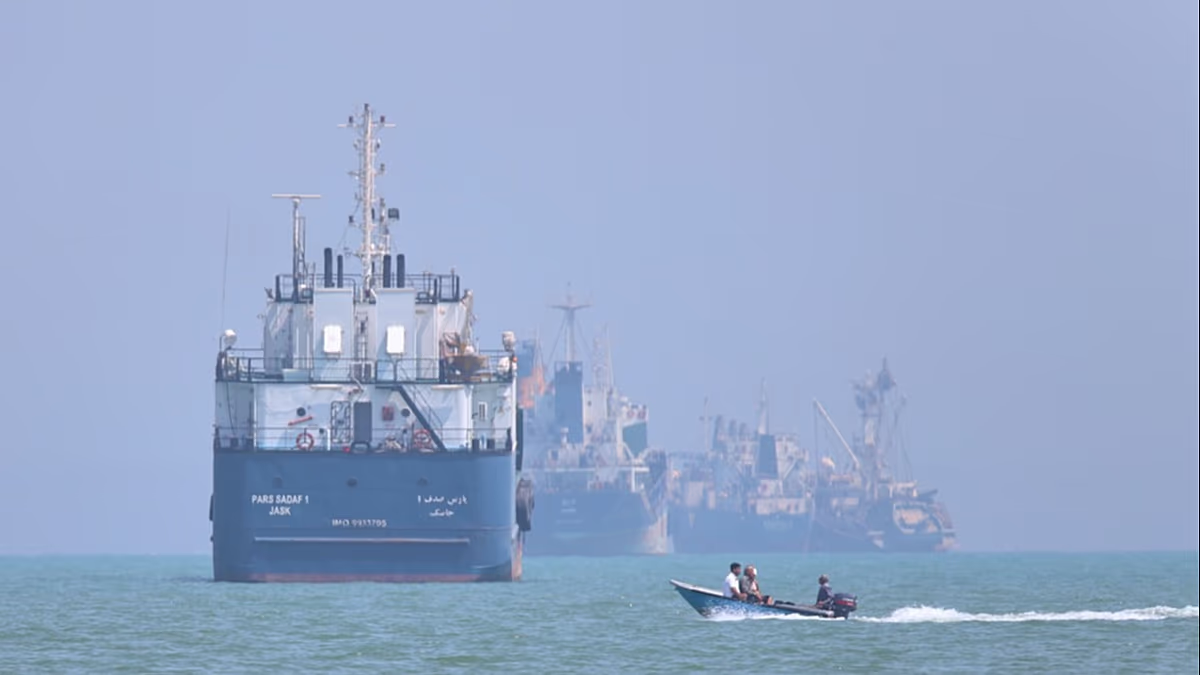
The shadow of conflict in the Middle East has begun to recede with the announcement of a tentative ceasefire between the United States and Iran, paving the way for the potential reopening of the critical Strait of Hormuz. Yet, even with the guns falling silent, the formidable task of restoring confidence to one of the world’s most vital maritime arteries remains. In response, a coalition of key US allies, spearheaded by France and the United Kingdom, has been developing a detailed plan for a defensive naval mission. Its core purpose is not to wage war, but to rebuild peace: to reassure commercial ship crews, cargo owners, and skittish insurance companies that the strait is once again safe for the uninterrupted flow of global trade. By proposing to clear explosive mines from the waters and potentially provide military escorts for merchant vessels, the mission aims to serve as a stabilizing bridge from a state of conflict back to one of routine, secure navigation.
This international initiative, quietly prepared over several months, gained public momentum at the recent G7 summit. French President Emmanuel Macron, who first suggested the concept in March, presented the plans to US President Donald Trump, detailing a rapid and capable deployment. French fighter jets could begin surveillance overflights almost immediately, Macron stated, to be followed within days by escort frigates and the nation’s formidable nuclear-powered aircraft carrier, the Charles de Gaulle, which is already positioned in the region. The United Kingdom, Germany, Japan, Italy, and later Canada all joined France in a collective statement endorsing the framework deal and committing to “play our part” in reopening the strait. They explicitly described their proposed contribution as “a strictly defensive and independent mission to reassure commercial shipping and conduct mine clearance operations,” underscoring its non-aggressive, reconstructive nature.
President Trump’s response, however, highlighted a potential divergence in perspective between the US and its allies. While welcoming the allied offer as not “a bad idea,” he expressed a more optimistic view of the immediate situation, stating he didn’t see a need for “much help” as the strait was “going to be open” under the new deal. He confirmed that some mines had already been located and that the waterway was “partially opened,” suggesting a belief that the problem was resolving itself. This contrast in stance—between the European-led push for a structured, physical security guarantee and a more minimalist American viewpoint—reflects the complex diplomacy of the post-conflict phase, where perceptions of risk and the necessary steps for normalization can vary significantly.
The technical heart of the proposed mission is the dangerous and delicate work of mine clearance. The strait’s waters could be littered with various types of explosives—rocket-propelled, anchored with cables, or sophisticated “influence” mines resting on the seabed, triggered by the sound, movement, or magnetic signature of a passing ship. Removing these invisible threats is a prerequisite for any lasting security. The UK’s Royal Navy has been particularly vocal in showcasing this specific expertise, recently demonstrating the capabilities of vessels like the RFA Lyme Bay, which is designed for such operations. This focus on de-mining shifts the mission’s posture from a show of force to a painstaking exercise in public safety, aimed at eradicating the lingering physical dangers of the war.
Ultimately, the fate of this multinational naval proposal hinges on a delicate balance of diplomacy and perceived necessity. President Macron carefully noted that the French deployment was conditional, stating, “Of course, all this supposes that it is desired and requested… Perhaps it will not be wanted and perhaps it will not be necessary.” This leaves the door open for regional stakeholders and the US itself to accept or decline the offer of assistance. The allied nations have positioned themselves not as imposers of a security solution, but as partners ready to provide a vital service: restoring the bedrock principle of “unconditional and unrestricted freedom of navigation” to a waterway that carries roughly one-fifth of the world’s seaborne oil.
In conclusion, the proposed mission represents a critical next chapter in the aftermath of the Iran war. It is an attempt to translate a fragile ceasefire on land into durable safety at sea. While political winds and diplomatic assessments will determine its final form, the plan itself underscores a fundamental reality of global commerce: for trade to truly recover, fear must be dispelled as decisively as the threats themselves. By focusing on the unglamorous but essential tasks of mine-hunting and convoy assurance, the allied nations are seeking to rebuild the invisible infrastructure of confidence, ensuring that the peace secured through negotiation is made real and reliable for every tanker and container ship that must pass through the narrow gates of the Hormuz Strait.