



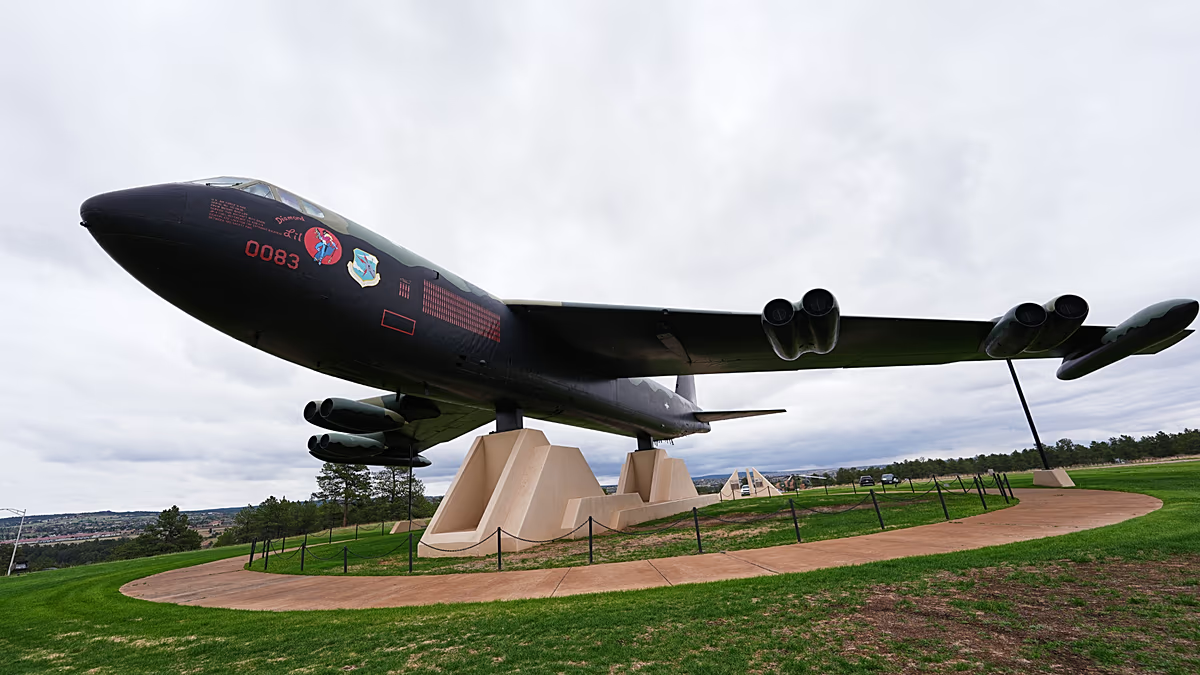
A stark silence fell over the Mojave Desert on Monday, broken only by the wail of emergency sirens. At approximately 11:20 a.m. local time, a hulking symbol of American military aviation, a B-52 Stratofortress bomber, crashed shortly after lifting off from the historic Edwards Air Force Base in California. The U.S. military swiftly confirmed the incident on its official channels, dispatching emergency crews to the sprawling desert site. In the immediate aftermath, a tense uncertainty hung in the dry desert air; there was no information regarding the fate of the crew. Each B-52 typically carries a team of five dedicated aviators—a pilot, copilot, weapon systems officer, navigator, and electronic warfare officer—whose lives were suddenly at the center of a developing crisis. The base itself, a legendary proving ground where Chuck Yeager first shattered the sound barrier, became the stage for a modern-day aviation tragedy, its vast, remote runways now the focus of a desperate rescue and recovery operation.
The news sent a ripple of concern through both military and civilian communities, casting a shadow over what should have been a routine training mission. The B-52 Stratofortress is no ordinary aircraft; it is a colossal, eight-engine titan, a veteran of the skies that has served the United States for over seven decades. Its distinctive silhouette is an icon of Cold War deterrence and modern strategic power, a plane designed to carry immense payloads across global distances. That such a venerable and heavily engineered machine could go down shortly after takeoff suggests a catastrophic and rapid failure, the specifics of which investigators will now painstakingly seek to unravel. The image of this giant faltering and falling onto the very desert landscape that has witnessed so many triumphs in aviation history is a poignant and jarring reminder of the inherent risks of flight, even for the most seasoned crews and meticulously maintained aircraft.
As the dust settled at the crash site, the human element of the story remained agonizingly unclear. Behind the stark military terminology and the factual reporting of the event are five individuals—each with families, friends, and colleagues awaiting news. The aviation community, particularly within the tight-knit strategic bomber force, is a familial one, and an incident like this reverberates with profound personal loss. The wait for information on casualties is a harrowing period for all connected, underscoring that beyond the headlines about hardware and strategy, these events are ultimately about people. The crews who operate these complex machines accept extraordinary risk as part of their duty, a sacrifice that comes into sharp, painful focus on days like this.
This accident also inadvertently brings to light the complex and sometimes perilous interplay between military and civilian aviation. The crash comes on the heels of another alarming incident nearly a year prior, when a civilian airliner over North Dakota was forced into a sudden, drastic maneuver to avoid a potential mid-air collision with a B-52. While the two events are not directly connected, they collectively highlight the challenges of managing shared airspace and the monumental consequences when something goes wrong. The North Dakota incident served as a warning about procedural or communication breakdowns; the Edwards crash now poses urgent questions about aircraft airworthiness and operational safety protocols. Together, they form a troubling pattern that military and aviation authorities will be compelled to examine rigorously.
In the coming days and weeks, the focus will shift from immediate response to meticulous investigation. Teams from the Air Force and likely the National Transportation Safety Board will descend upon the Edwards crash site, where every piece of debris will be cataloged and analyzed. They will scrutinize maintenance records, flight data and cockpit voice recorders if recovered, weather conditions, and crew communications. The goal will be to construct a minute-by-minute timeline of the flight’s final moments to answer the critical question: why did this happen? The findings will be crucial not only for providing answers to the grieving families but also for ensuring the ongoing safety of the remaining B-52 fleet, which is slated to remain in service for decades to come, a testament to its original design but also a demand for relentless vigilance.
For now, the world watches and waits for updates, as outlets like Euronews have noted they will provide. The story that began with a terse military statement is far from over. It will evolve into a narrative about human courage, technological vulnerability, and the relentless pursuit of safety in the face of known danger. The crash at Edwards Air Force Base is more than a news bulletin; it is a somber chapter in the long history of flight, a reminder that progress in the skies is often paved with sacrifice. The desert that once echoed with the sonic boom of breakthroughs now holds the silence of loss, awaiting the lessons that must inevitably rise from the wreckage.