

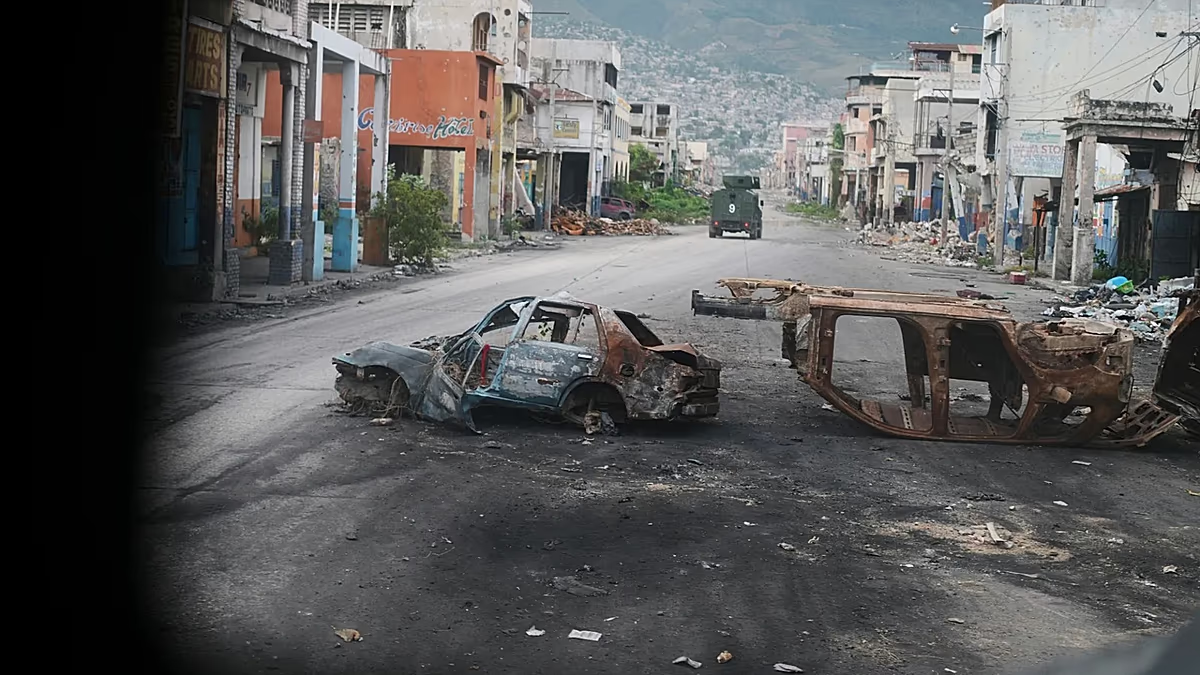
In the sun-scorched streets of Haiti, a silent war rages, claiming lives and shattering futures with terrifying regularity. The United Nations, in a stark update delivered on a Monday in mid-June 2026, laid bare the horrifying human toll of this conflict. Since the year began, gang violence has killed at least 2,300 people and injured another 1,100. Nearly 100 more have been snatched from their daily lives, vanishing into the terrifying world of kidnapping. These are not just statistics; they are fathers, mothers, children, and friends in a nation of 12 million people that has been spiraling deeper into chaos since the assassination of President Jovenel Moïse in 2021. Today, armed gangs wield de facto control over vast swaths of the capital, Port-au-Prince, operating with a sense of brutal impunity as they carry out killings, sexual violence, looting, and abductions.
Amid this bleak landscape, a clear and urgent call for justice and action was issued by UN Human Rights Chief Volker Türk. Addressing the opening of the 62nd session of the UN Human Rights Council in Geneva, Türk emphasized that tackling the pervasive culture of impunity is paramount. He urged Haitian authorities to expedite the work of judicial units to ensure that those responsible for these atrocities face consequences. His message underscored a fundamental truth: without accountability, the cycle of violence cannot be broken. The crisis, he stressed, demands not only a security response but a steadfast commitment to the rule of law and human rights, even in the face of overwhelming adversity.
The international community’s primary proposed solution to this security vacuum is the Gang Suppression Force (GSF). This new international initiative, approved by the UN Security Council the previous year at the urging of the United States, is tasked with the daunting mission of neutralizing the powerful gangs. It is designed to gradually replace the previous Multinational Mission to Support the Haitian Police (MMAS), which was widely seen as under-equipped and under-funded for the scale of the challenge. While the GSF represents a critical step, Türk was careful to insist that its operations must rigorously adhere to international human rights law. An initial deployment plan has been approved, working within the Security Council’s authorized ceiling of 5,500 troops and police officers, with plans to deploy in careful, phased stages.
This high-level focus on Haiti comes as the 47-member UN Human Rights Council convenes for its second regular session of 2026, a meeting set to run until early July. The inclusion of Haiti’s plight in Türk’s global update highlights the severity with which the international body views the situation. Further underscoring this point, UN Secretary-General António Guterres prepared for a personal, solidarity visit to the Caribbean nation. Scheduled for the Tuesday following the update, this trip, as explained by his spokesman Farhan Haq, is intended to place a human face on the crisis. Guterres aimed to meet directly with the men, women, and children whose lives have been irrevocably scarred by the unrelenting violence, bearing witness to their suffering and resilience.
Behind the official statements and deployment plans lies a nation in profound distress. The numbers cited by the UN—2,300 dead, 99 kidnapped—are not cold metrics but markers of a society under siege. Each figure represents a family plunged into grief, a community living in fear, and a collective trauma that will resonate for generations. The gangs’ control extends beyond mere territory; it is a stranglehold on normalcy, commerce, education, and hope. For the average Haitian, the simple acts of going to market, attending school, or traveling across town are fraught with peril. This is the grim daily reality that the Gang Suppression Force will enter, and that Secretary-General Guterres sought to acknowledge firsthand.
In conclusion, the UN’s mid-2026 assessment paints a picture of a nation at a critical crossroads. Haiti is caught between the brutal reality of gang dominion and a fragile, nascent international response. The path forward demands a dual approach: a robust and rights-respecting security initiative in the form of the GSF to restore immediate order, coupled with a sustained, unwavering push for judicial accountability to build long-term peace. As global leaders deliberate in Geneva and the UN chief stands in solidarity with victims, the world’s attention is once again focused on Haiti. The hope, however faint, is that this confluence of advocacy, planned action, and personal witness can catalyze a turning point, steering the country away from the abyss and toward a future where safety and justice are not mere aspirations, but a lived reality for its people.