


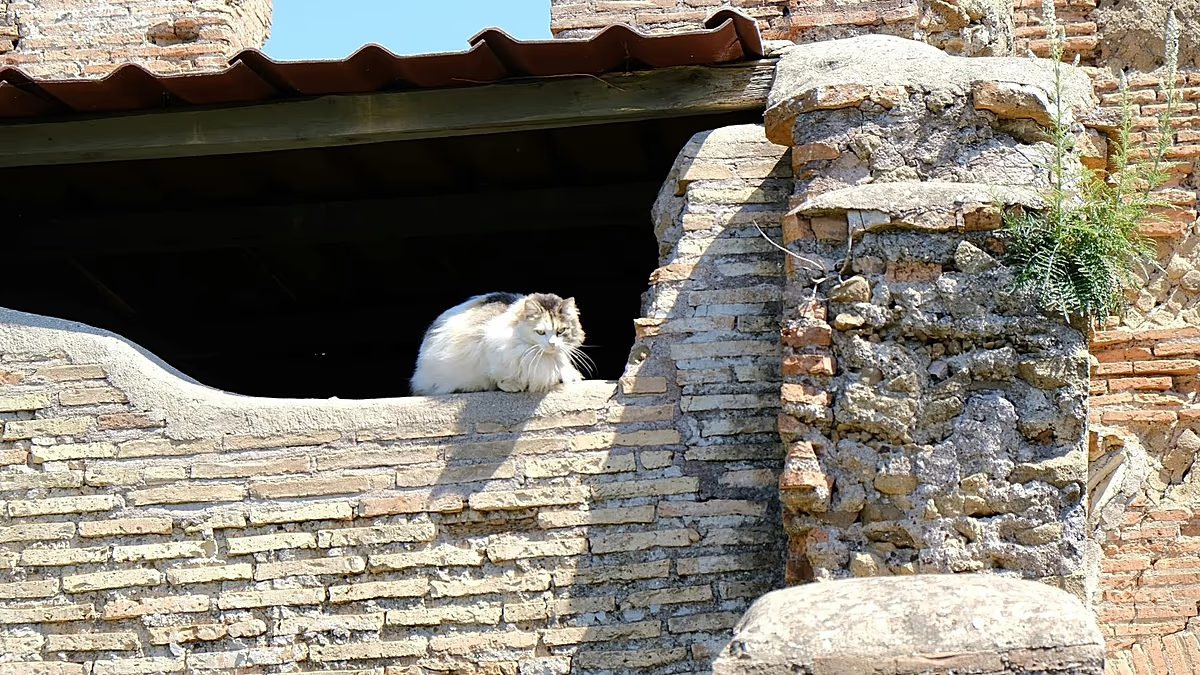
Of all the charming distractions Rome offers, from gelato to grand piazzas, there’s one unofficial resident that consistently steals the scene: the city’s cats. Many a traveler will confess, perhaps a little sheepishly, to having a camera roll disproportionately filled with photos of a lounging tabby at the Roman Forum rather than the ruins themselves. This phenomenon is no accident, as certain cities, like Istanbul, Kotor, and Rome, are world-renowned for their thriving feline populations. In the Eternal City, these cats aren’t just strays; they are cultural fixtures, often inhabiting the very archaeological sites that draw millions of visitors. Recognizing this unique intersection of history, fitness, and furry companionship, a local company has crafted a tour that brilliantly combines all three.
ArcheoRunning, which has offered guided running tours of Rome’s historic heart since 2016, has launched a dedicated “Cats of Rome” running tour. Founded and led by art historian Isabella Calidonna, this experience is designed for those who want to see the city awaken, away from the crushing midday crowds. The tour sets off in the serene, golden light of early morning, between 6 and 7 am, covering a gentle six-kilometer route that winds past ancient ruins which double as sanctuaries for established feline colonies. It’s a concept that celebrates slow travel—even while moving at a jog—encouraging participants to truly observe the details often missed in a standard rushed itinerary.
The journey begins poetically at the Temple of Isis and Serapis in Campo Marzio. This archaeological site is a fitting prologue, harkening back to ancient Egypt where cats were revered as sacred beings. From this point of historical homage, the run continues to the famed Area Sacra of Largo Argentina. This sunken square of Republican-era temple ruins is not only a significant archaeological site but also one of Rome’s most famous and cared-for cat colonies, where volunteers ensure the felines are fed, neutered, and healthy. The juxtaposition of millennia-old stonework with the quiet, daily lives of these creatures is a poignant reminder of the city’s continuous, layered existence.
After paying respects to the cats of Largo Argentina, the route challenges runners with a climb up Capitoline Hill, one of Rome’s famous seven hills. Here, the reward is a breathtaking panoramic view of the city’s sprawling historic center—a moment to catch your breath in both the physical and metaphorical sense. The descent then leads toward the iconic Colosseum, where the sheer scale of history is palpable. While not a primary cat colony site, the presence of cats in the surrounding greenery adds to the sense that life, in all its forms, persists amongst these grand monuments. The tour then pushes onward to its final destination.
The run concludes at the striking Pyramid of Cestius, a remarkable first-century BC tomb that stands as a testament to Rome’s fascination with Egyptian culture. This quiet corner near the Protestant Cemetery is another known haven for cats, offering a more tranquil and lesser-visited finale compared to the bustling Colosseum. As Calidonna describes, the tour is ultimately “for those who love getting lost, noticing details, and running slowly enough to truly see.” It’s an active, immersive experience that reframes sightseeing, prioritizing connection and observation over simply checking landmarks off a list.
With prices starting from €50 per person for a group of five, the “Cats of Rome” tour offers a uniquely “purr-fect” start to any Roman day. It cleverly caters to the traveler’s desire for authentic interaction, be it with the city’s profound history or its charismatic four-legged inhabitants. This tour doesn’t just show you Rome; it invites you to experience its rhythm and its hidden, soft-pawed charm at the most peaceful time of day. It acknowledges that sometimes the most memorable moments of travel are the unexpected, quiet connections—and in Rome, those connections often come with whiskers and a purr.