



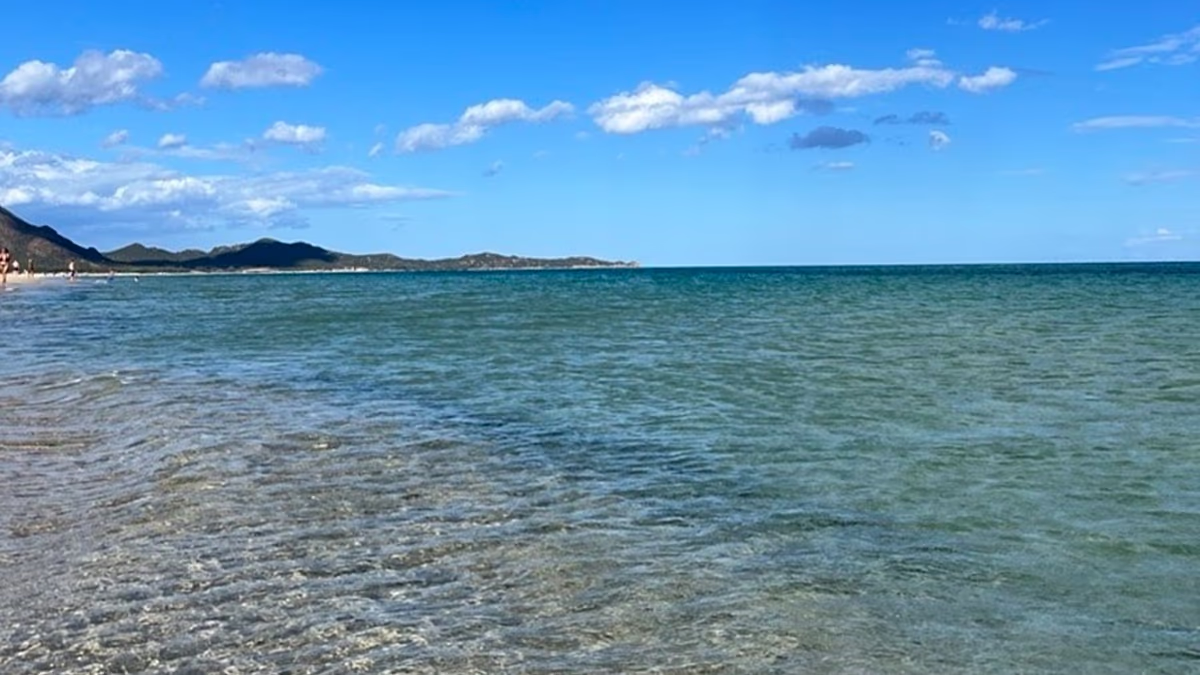
In a move that has ignited a fierce debate about environmental protection, public access, and the very nature of a beach holiday, the mayor of the Sardinian commune of Villasimius, Gianluca Dessì, has enacted a radical set of restrictions for the famed Punta Molentis beach. Effective from June to October 2026, the new rules are a direct response to a devastating fire that swept through the area in July 2025, endangering lives and ravaging the fragile coastal ecosystem. The mayor’s order frames these as “extraordinary measures” necessary to safeguard the protected habitats and ensure user safety, arguing that the human pressure on the site must be drastically reduced to allow recovery and prevent further degradation. At the heart of the controversy is a profound shift in philosophy: the beach is no longer being treated as an open public space for leisure, but as a delicate natural preserve requiring stringent visitor management.
The specifics of the ordinance are where the theoretical meets the practical, and where public frustration has found its focus. Access to Punta Molentis is now tightly controlled both by land and sea. By land, a daily cap of 70 vehicles is enforced, with no more than 150 people permitted on the beach simultaneously. Perhaps the most symbolic and divisive rule is the ban on beach umbrellas for most adults. Shade is now a privilege reserved strictly for family groups with children under ten and individuals over 65—one umbrella per qualifying group. For those arriving by boat, restrictions are even more meticulous: only 100 people at a time via authorized operators, a maximum stay of one hour, and a ban on disembarking with backpacks and cool bags. Furthermore, to protect the “geomorphological balance,” driving poles or stakes into the sand is prohibited, and a new entrance fee of 10 euros per person has been instituted.
Mayor Dessì has stood firmly behind these measures, portraying them not as punitive but as essential triage for a wounded landscape. He emphasizes that the goal is to keep human presence “within limits compatible with the current conditions of the beach,” a condition profoundly altered by the fire. The local police are tasked with enforcing these rules through three daily inspections, ensuring compliance with access hours and the strict caps on numbers and equipment. For the administration, this represents a necessary, science-based approach to conservation, a move to prioritize long-term ecological health over short-term tourist convenience. The entrance fee, while unpopular, is framed as part of this management strategy, theoretically helping to fund the oversight needed for such a strict regime.
However, on the ground and across social media, the reaction from residents and prospective visitors has ranged from bewildered anger to biting satire. The Facebook page of the Villasimius municipality became a forum for protest, with comments highlighting the perceived absurdity and inequity of the rules. “So to put up an umbrella do I have to hire a child?” asked one user, capturing the sense of bureaucratic surrealism. Another joked, “To come to the beach with an umbrella I either bring my grandfather with me or I have to have a baby between today and tomorrow.” The sentiment is one of a freedom being revoked—the simple, timeless pleasure of finding a spot on the sand and creating a small patch of shade for the day now legislated against for a majority of adults.
Beyond the umbrella ban, deeper concerns about fairness and transparency have been raised. Some locals have called for a boycott, rejecting the commodification of what was once a freely accessible natural treasure. Others have taken a more pragmatic stance, demanding accountability for the new revenue stream. If people are to pay 10 euros for access, they argue, it is “only fair” that the funds be visibly reinvested into local infrastructure—repairing the dilapidated dirt roads leading to the beaches or installing necessary lighting—rather than simply disappearing into municipal coffers. This highlights a tension at the core of many conservation efforts: the public is often more willing to accept sacrifices if they trust that the resulting benefits are tangible and shared.
The situation in Villasimius is a microcosm of a global dilemma playing out in beautiful, over-loved places worldwide. It pits immediate human enjoyment and traditional rights of access against the urgent need for environmental stewardship. Is Punta Molentis a public beach or a natural museum? Can its ecosystem survive unfettered visitation? The mayor’s drastic answer is to impose a form of curated, limited access that reshapes the very experience of being there. Whether this model represents a responsible precedent for sustainable tourism or an overreach that unfairly restricts public space is the question fueling the controversy. As summer approaches, the world will be watching to see if the serene sands of Punta Molentis become a symbol of successful conservation or a testament to the fractious conflict between loving a place to death and regulating it into a different kind of existence.