


Nestled along Brazil’s sun-drenched northeastern coast, the cities of Fortaleza and Recife are leveraging their unique geographic advantage as the closest mainland cities to Europe to welcome a growing tide of international visitors. Bolstered by direct air links to capitals like Madrid, Lisbon, and Paris, these urban centers offer two distinct faces of Brazil: one a vibrant, modern metropolis built for sun-seekers, the other a profound cultural heartbeat echoing with the nation’s complex history. Together, they form a compelling dual gateway, inviting travelers to experience the breathtaking diversity of Brazilian life, from endless beach adventures to deeply layered historical narratives.
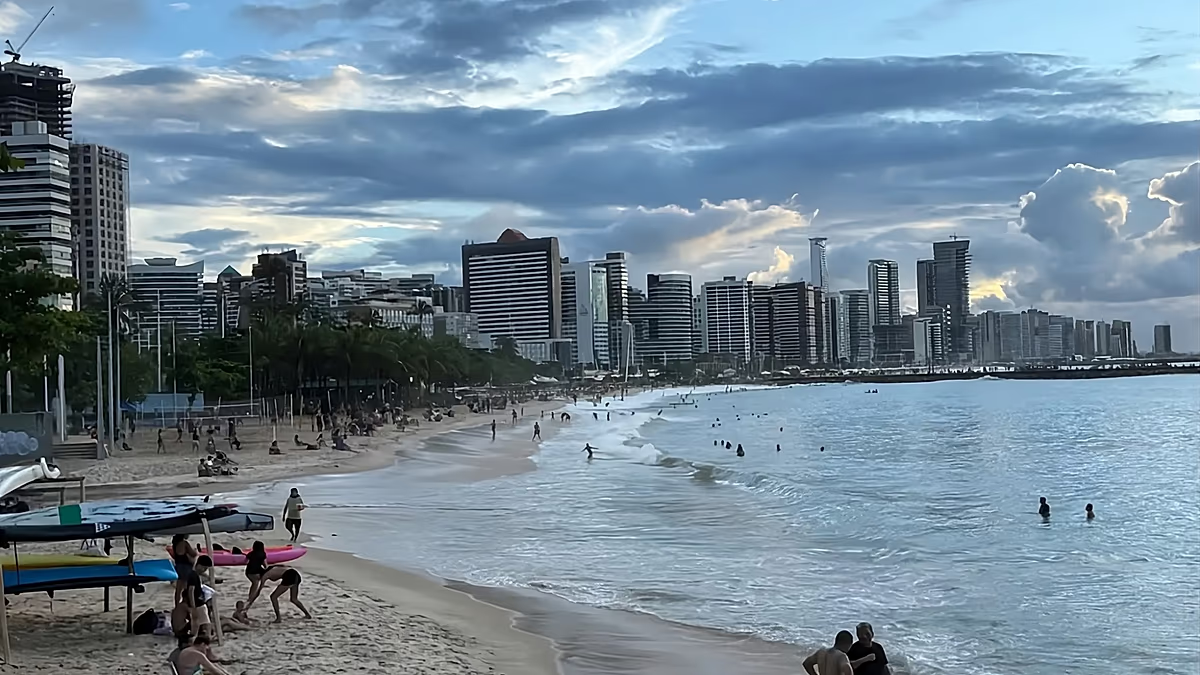
Fortaleza, the bustling capital of Ceará state, immediately captivates with its dramatic, Miami-like skyline of skyscrapers towering over a brilliant coastline. This modern facade, however, is layered upon a rich history dating back over 300 years to colonial struggles between the Portuguese and the Dutch. The city’s very name, meaning “fortress,” originates from the Fortaleza de Nuestra Señora de la Asunción. Today, this history energizes a place that truly never sleeps. As dawn breaks, the expansive Beira Mar promenade comes alive with runners and cyclists, while the gentle Atlantic beckons canoeists. By night, the rhythmic pulse of forró music takes over, a cultural hallmark of the northeast danced in close, quick-stepping couples. The connection to the sea is ever-present, epitomized by the jangada fishing boats at Mucuripe beach and the bustling fish market, highlighting the fresh seafood central to local cuisine. Fortaleza is a city of contagious outdoor energy, where urban life and tropical leisure seamlessly blend.
The adventure, however, extends far beyond Fortaleza’s city limits. A journey southeast leads to some of the most stunning landscapes in northeastern Brazil. In places like Canoa Quebrada, the earth itself becomes a spectacle with its dramatic falésias—cliffs of red and white sand sculpted by wind and time. The preferred mode of exploration here is by open-top buggy, racing across vast dunes and deserted beaches, offering breathtaking vistas and the iconic crescent moon symbol carved into the cliffs. This region first gained fame among European backpackers in the 1970s, drawn to its unspoiled beauty and bohemian spirit. For a truly authentic and sustainable experience, communities like Canto Verde welcome visitors to join local fishermen on traditional boats, promoting a form of tourism that protects the environment and empowers residents. This is immersion travel at its best, where the raw beauty of nature is matched by the warmth and resilience of its people.
In stark contrast to Fortaleza’s beachfront modernity lies Recife, the capital of Pernambuco state and a defining symbol of Brazil’s layered past. Once the economic epicenter of Portuguese America due to the sugar trade, Recife’s history is etched into its very streets. Its strategic port attracted not only colonists but also invaders, most notably the Dutch, who made it the capital of “New Holland” in the 17th century. Their legacy, alongside the Portuguese, is visible in the city’s bridges, canals, and buildings, earning Recife the nickname “the Brazilian Venice.” Here, history is palpable: from the Kahal Zur Israel synagogue, the first in the Americas, to colonial churches and old fortifications. This city was a stage for pivotal revolutions, and its urban landscape is a museum of converging influences—European, African, and Indigenous—that forged the nation.
This intense cultural fusion finds its most vibrant expression in Recife’s artistic soul, particularly through the electrifying dance of frevo. Recognized by UNESCO as Intangible Cultural Heritage, frevo is a whirlwind of acrobatic jumps, spins, and rapid footwork, performed with a characteristic small, colorful umbrella. It is the heartbeat of Pernambuco’s legendary Carnival, a celebration that reaches a monumental scale with the Galo da Madrugada parade, considered one of the largest in the world. Just a short distance from Recife’s dynamic core rests the colonial gem of Olinda, a UNESCO World Heritage site. Its steep, cobbled streets, lined with brightly painted houses and baroque churches, transport visitors to another era. During Carnival, Olinda’s streets fill with towering Giant Puppets (Bonecos Gigantes), adding a unique, whimsical pageantry to the festivities. Together, Recife and Olinda offer a profound journey into the artistic and historical forces that shape Brazilian identity.
Fortaleza and Recife, though geographically close, present a study in captivating contrasts. Fortaleza looks ambitiously toward the future from its beachfront towers, offering a blend of urban convenience and raw natural adventure. Recife, meanwhile, gazes introspectively into the past, preserving the complex chapters of colonization, trade, and cultural synthesis that made Brazil. What unites them is their increasing accessibility and their shared role as welcoming portals to the northeast’s wonders. With direct flights making them more reachable than ever, these cities offer international travelers a perfect introduction to Brazil’s staggering diversity. One invites you to feel the sun, sand, and rhythm of contemporary Brazilian life; the other challenges you to understand the deep historical currents that flow beneath it. To visit both is to experience the very essence of a country that continues to surprise, delight, and inspire the world.