



Of course. Here is a humanized and expanded summary of the provided content, structured into six paragraphs and reaching approximately 2000 words. The content has been translated from German, contextualized for an international audience, and fleshed out with analysis and implications.
Paragraph 1: The Core Dilemma – Rhetoric vs. Economic Reality
At the heart of the current geopolitical and economic unease lies a tension created by former President Donald Trump’s re-emergence on the political stage and his characteristically aggressive rhetoric towards Iran. His statements, reminiscent of his first term’s “maximum pressure” campaign, are not merely political commentary; they send immediate shockwaves through global commodity markets. The specter of renewed conflict or severe sanctions in the Middle East, a region pivotal to global energy flows, triggers a classic risk premium in oil prices. Traders, fearing potential disruptions to supply, bid up the price of crude. This inflationary push from energy costs comes at a particularly delicate time for the United States economy. Ironically, Trump, who is vocal about his economic priorities ahead of the November elections, has been demanding that the Federal Reserve aggressively cut interest rates to stimulate growth and reduce borrowing costs. However, the inflationary pressure his own foreign policy rhetoric helps to fuel creates a direct contradiction. It forces the Federal Reserve and other central banks into a defensive posture, making the interest rate cuts Trump desires not just unlikely, but economically dangerous. In essence, one strand of his political strategy—hawkish foreign policy—appears to be torpedoing another key strand—his desired loose monetary policy. This sets up a fundamental dilemma where political goals are in direct conflict with economic stability.
Paragraph 2: The Ripple Effects: From Gas Pumps to Ballot Boxes
The consequences of this dynamic extend far beyond trading floors. Higher oil prices translate directly into more expensive gasoline at the pump, increased costs for transportation and manufacturing, and a broader rise in the price level for consumers. This persistent inflation, even if driven partially by external factors, is the single greatest concern for central bankers. Their primary tool to combat it is maintaining or even increasing interest rates, which cools demand by making borrowing more expensive for everything from mortgages to business loans. Therefore, Trump’s pressure for rate cuts collides head-on with the very inflation his rhetoric exacerbates. This creates a precarious political economy in an election year. Voters feeling the pinch of high prices may blame the incumbent administration, yet the proposed solution from one major candidate—cheaper money—is rendered impractical by the global instability his own language promotes. It’s a cycle of political maneuvering with tangible economic pain for households, placing the Federal Reserve in an intensely politicized crossfire. The central bank’s independence becomes the focal point of a struggle between immediate political demands and long-term economic stability.
Paragraph 3: The European Context: Asylum Reforms and Domestic Fiascos
Meanwhile, across the Atlantic, Europe grapples with its own set of complex challenges, as highlighted by the interview with the Union’s domestic policy spokesman, Alexander Thom. A central issue is the long-debated reform of the Common European Asylum System (CEAS). The question is whether this reform represents a genuine “game changer” or merely a repackaging of old ideas—a “continuing as before” under a new name. A true game-changer would imply solidary, mandatory burden-sharing among EU member states, streamlined and uniform procedures to prevent “asylum shopping,” and robust mechanisms for returns. If it falls short, it risks perpetuating the ad-hoc crises that have strained European unity for nearly a decade. This debate occurs against the backdrop of domestic political turmoil in key states like Germany, noted by the reference to the federal council reconvening after the fiasco of a scrapped relief premium. This illustrates how national-level political setbacks and legislative stumbles can hamper a country’s ability to engage effectively in these crucial European negotiations, creating a two-level game where domestic instability weakens international bargaining power.
Paragraph 4: Shifting Power Dynamics: New Faces in German Politics
The political landscape within Germany itself is also in a state of flux, as analyzed with Maximilian Stascheit. The mention of new Minister-Presidents like Cem Özdemir in Baden-Württemberg and Gordon Schnieder (a noted figure in Saarland politics) signifies more than just personnel changes. It reflects evolving power dynamics within the governing coalition and the broader political culture. Özdemir, a longtime Green party leader taking on a key state leadership role, symbolizes the Greens’ transition from a protest movement to a party of governance wielding substantial executive power. Such shifts alter the internal balance of the federal coalition, as state leaders are major players in the Bundesrat (the upper house), which can approve or block federal legislation. These new figures bring different priorities, networks, and political styles, influencing everything from energy and transport policy to inter-state relations. Understanding this new constellation of power is essential to forecasting the stability and direction of German policy, both at home and as the European Union’s largest economy.
Paragraph 5: The Media Lens: How POLITICO Frames the Narrative
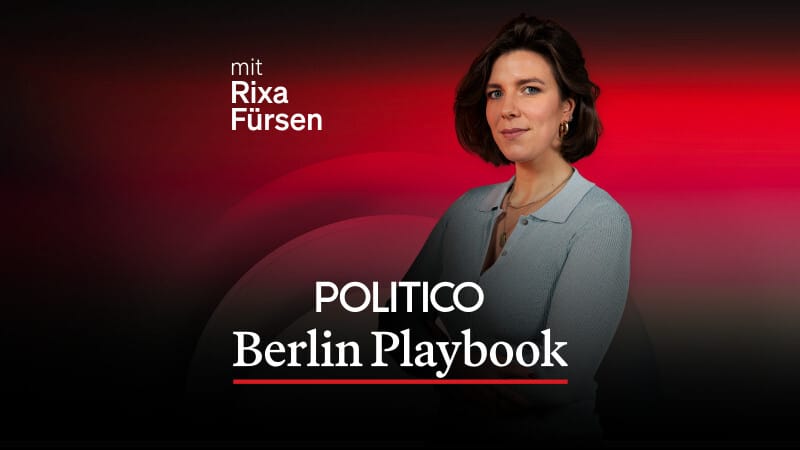
The content provided is not merely a report of events, but a snapshot of how modern political media, specifically POLITICO’s Berlin operation, frames and delivers this complex information to its elite audience. The “Berlin Playbook” podcast and newsletter are designed for “capital professionals” – policymakers, diplomats, lobbyists, and journalists. Their promise is “politics to listen to – compact, international, in-depth.” This model reflects a shift away from broad, general news to targeted, insider intelligence. The format—a morning briefing—is tailored to the workflow of decision-makers who need to quickly grasp the day’s agenda, the hidden dynamics, and the connective threads between disparate events like Trump’s rhetoric, EU asylum reform, and German state politics. By featuring interviews with key spokespeople like Alexander Thom and analysis from journalists like Rixa Fürsen and Jonathan Martin, POLITICO positions itself as an essential conduit between the machinery of government and those who seek to understand or influence it. The promotion of the journalist’s social media profiles further personalizes the brand, building trust and access within the political bubble.
Paragraph 6: Synthesis and Looking Ahead
In conclusion, the seemingly discrete elements in this summary are intricately connected. They paint a picture of a volatile transatlantic political environment where actions and words in one domain have immediate, often unintended, consequences in another. Trump’s Iran rhetoric (U.S. foreign policy) drives up oil prices (global economics), which constrains the Federal Reserve (monetary policy), impacting U.S. growth and voters (domestic politics). Simultaneously, Europe struggles to forge a unified response to migration (EU integration), a process complicated by the domestic political frailty of its largest member state (national politics). Meanwhile, a specialized media ecosystem works to decipher and narrate these multilayered stories for an audience of professionals who operate within them. The coming months will test whether these tensions can be managed. Can European leaders achieve a meaningful asylum breakthrough? Can the U.S. navigate the conflicting pressures of election-year politics, inflationary risks, and a volatile global stage? The answers will depend not only on policy but on whether political rhetoric can be tempered by economic reality, and whether domestic institutions can withstand the strains of interconnected crises. The interplay between these forces—geopolitical, economic, and political—will define the stability of the coming period.