



Skopje: A City Sculpted by Earth and Ambition
Nestled near the volatile seam where the African and Eurasian tectonic plates meet, Skopje’s very existence has been a dialogue between destruction and rebirth. Its history is etched by seismic catastrophes, most devastatingly in 1963 when an earthquake leveled over eighty percent of the city. This tragedy, however, forged an extraordinary chapter of global unity, earning Skopje the poignant nickname “the city of international solidarity.” Aid poured in from 78 nations, even bringing together American and Soviet troops in a rare moment of cooperation. The city that rose from the rubble was a testament to modernist, brutalist architecture—a practical, starkly beautiful symbol of resilience. Yet, Skopje’s spirit of reinvention is relentless. Decades later, the controversial “Skopje 2014” project attempted another radical transformation, draping the city in neoclassical facades, erecting a forest of statues, and installing galleons on the Vardar River in a bid to reclaim a lost, though often historically ambiguous, grandeur. This bold venture earned the capital a more cynical moniker as Europe’s “capital of kitsch,” setting the stage for its next act: its designation as a European Capital of Culture for 2028.
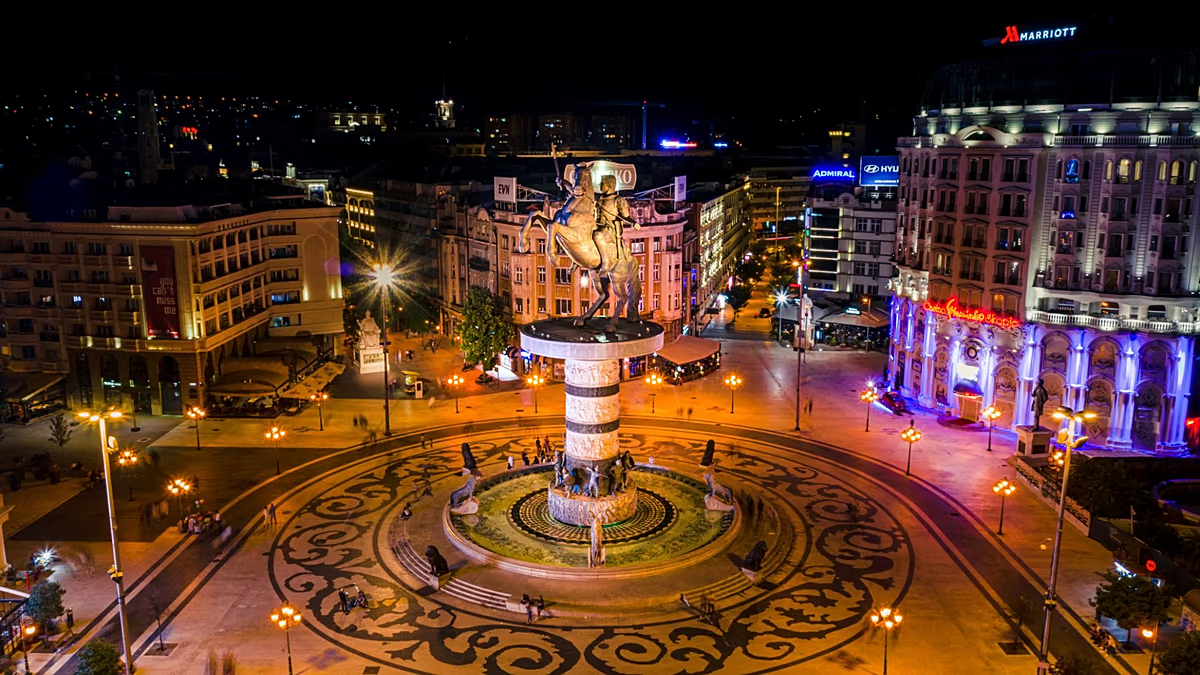
The heart of modern Skopje beats in Macedonia Square, dominated by the colossal “Warrior on a Horse” statue—universally recognized as Alexander the Great. This monument stands as a powerful symbol of the nation’s complex identity and its recent history, its base now bearing a plaque acknowledging ancient Hellenic heritage following the historic Prespa Agreement with Greece. The Vardar River acts as the city’s spine, separating the old from the new, with bridges narrating the timeline. The ancient Stone Bridge whispers of the Ottoman era, while the ornate, statue-lined Art Bridge and Bridge of Civilisations are flamboyant children of the 2014 project. Crossing into the Čaršija, or Old Bazaar, is to step into a living museum. This labyrinthine district, flourishing since the 12th century under Byzantine and Ottoman rule, hums with the energy of artisans, spice vendors, and coffee shops. Here, history is repurposed: the old Daut Pasha Baths now house the National Gallery, and caravanserais like the Kapan Han host restaurants serving savory burek and other traditional fare.
To understand the forces that shaped North Macedonia beyond geology, one must visit the Museum of the Macedonian Struggle. Through dramatic dioramas and artifacts, it charts the arduous path toward independence from the Ottoman Empire through the Balkan Wars and beyond. Not far away, the shattered clock tower of the Old Railway Station, forever frozen at 5:17 am, marks the moment the 1963 earthquake struck. This haunting relic now shelters the Museum of the City of Skopje, chronicling urban life from antiquity to today. For those captivated by the city’s post-earthquake architectural language, a guided tour of its brutalist landmarks is essential. Structures like the formidable Macedonian Academy of Sciences and Arts reveal a raw, monumental beauty often overlooked in the city center, offering a profound contrast to the baroque flourishes of its newer constructions.
For a taste of local life, the bustling Green Market is indispensable. Here, the air is rich with the scent of fresh produce, spices, and sizzling street food like tavče gravče (Macedonian baked beans). To gain perspective, ascend to the Skopje Fortress, a sixth-century sentinel built upon Roman ruins, offering panoramic views. Higher still, on the slopes of Mount Vodno, the Church of Saint Panteleimon shelters breathtaking Byzantine frescoes renowned for their rare, emotionally charged depictions. While the iconic Millennium Cross towering above was inaccessible by cable car during this visit, its presence hints at future explorations. Just a short journey from the urban landscape lies the breathtaking Matka Canyon, a sanctuary of emerald water and sheer cliffs where hiking trails and boat trips to submerged caves like Vrelo offer a perfect natural retreat.
Skopje’s culinary scene mirrors its cultural tapestry. The Old Bazaar remains the soul food district, ideal for sampling classics like ajvar (red pepper relish) and hearty meat dishes. The bohemian Debar Maalo quarter, with its cozy restaurants and bars, is the place to unwind with a glass of robust local Vranec wine. While traditional cuisine is a must, the city’s vibrant dining culture also includes unexpected gems like Matto Napoletano, a globally acclaimed pizzeria that speaks to Skopje’s evolving, cosmopolitan palate. Reaching this dynamic capital is increasingly convenient, with direct flights via several airlines, or through scenic overland routes from neighboring Balkan capitals like Sofia or Tirana.
As Skopje prepares for its 2028 cultural spotlight, it remains a city of compelling contradictions—where ancient Ottoman pathways meet grandiose neo-classical plazas, and where brutalist concrete coexists with baroque bronze. It is a place still processing its layers of trauma and ambition, making it endlessly fascinating. Future visits promise the reopened cable car to the Millennium Cross, journeys to the UNESCO-protected shores of Lake Ohrid, and the unfolding programs of its Capital of Culture year. For the thoughtful traveler, Skopje offers not a polished postcard, but a living, breathing lesson in history, identity, and the indefatigable human drive to rebuild, reimagine, and ultimately, to endure.