

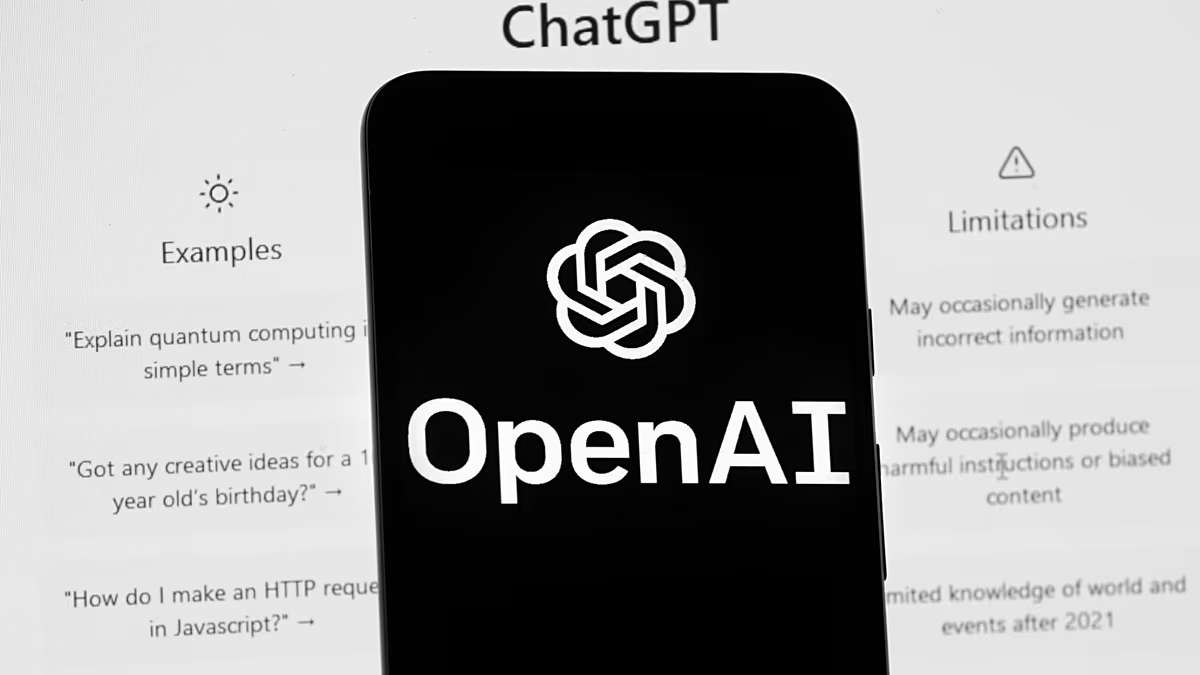
OpenAI, the pioneering force behind the revolutionary ChatGPT, has announced a significant strategic move: the establishment of a new office in Madrid, Spain. This decision, revealed in late 2026, marks a deliberate step in the company’s ongoing expansion across the European continent. The core mission of this new Spanish hub will be to foster deeper collaboration with local businesses, public institutions, pioneering developers, and academic research centers. By planting its flag in the Spanish capital, OpenAI is signaling a commitment to move beyond a remote, transactional relationship and instead build a grounded, participatory presence within one of Europe’s most vibrant markets. This follows a clear pattern of international growth, as the company has already established similar operational bases in key European cities including London, Paris, Brussels, and Munich, weaving a network designed to support and drive regional innovation.
The choice of Spain is far from incidental. In its announcement, OpenAI explicitly highlighted its view of Spain as one of Europe’s most dynamic and rapidly evolving technology and artificial intelligence ecosystems. The company has observed a tangible and growing enthusiasm for AI adoption across the Spanish economy, with businesses of all sizes increasingly integrating AI tools into their core processes and customer services. This fertile ground presents an ideal opportunity for OpenAI. The new office will serve as a bridge, allowing the company’s experts to work side-by-side with Spanish partners to tailor solutions, address specific challenges, and ensure its powerful models—like GPT-4 and beyond—are leveraged effectively and responsibly. It’s a shift from simply providing a global tool to cultivating local partnerships.
This expansion is about more than just business development; it’s a two-way street for knowledge and progress. For Spanish researchers, startups, and public administrations, having direct access to OpenAI’s team means unparalleled opportunities for collaboration on cutting-edge projects. Imagine Spanish healthcare researchers working with OpenAI to refine diagnostic models, or urban planners in Madrid collaborating to create AI simulations for smarter city management. The office will act as a conduit for this exchange, potentially accelerating Spain’s own ambitions to be a leader in ethical and applied AI. For developers, it promises more localized support, workshops, and resources, empowering them to build the next generation of AI-driven applications on a world-class platform.
The opening of the Madrid office is a telling chapter in the broader story of OpenAI’s evolution. Founded in 2015, the company catapulted from a specialized research lab to a household name following the public release of ChatGPT in late 2022. That moment ignited a global conversation about AI’s potential and perils. Now, in its second decade, OpenAI is maturing its strategy, moving from viral growth to sustainable, rooted expansion. Establishing physical offices across Europe reflects an understanding that trust, governance, and innovation are best nurtured through direct, regional engagement. It’s a recognition that to truly shape the future of AI in a way that aligns with diverse societal values, you must have a real presence within those societies.
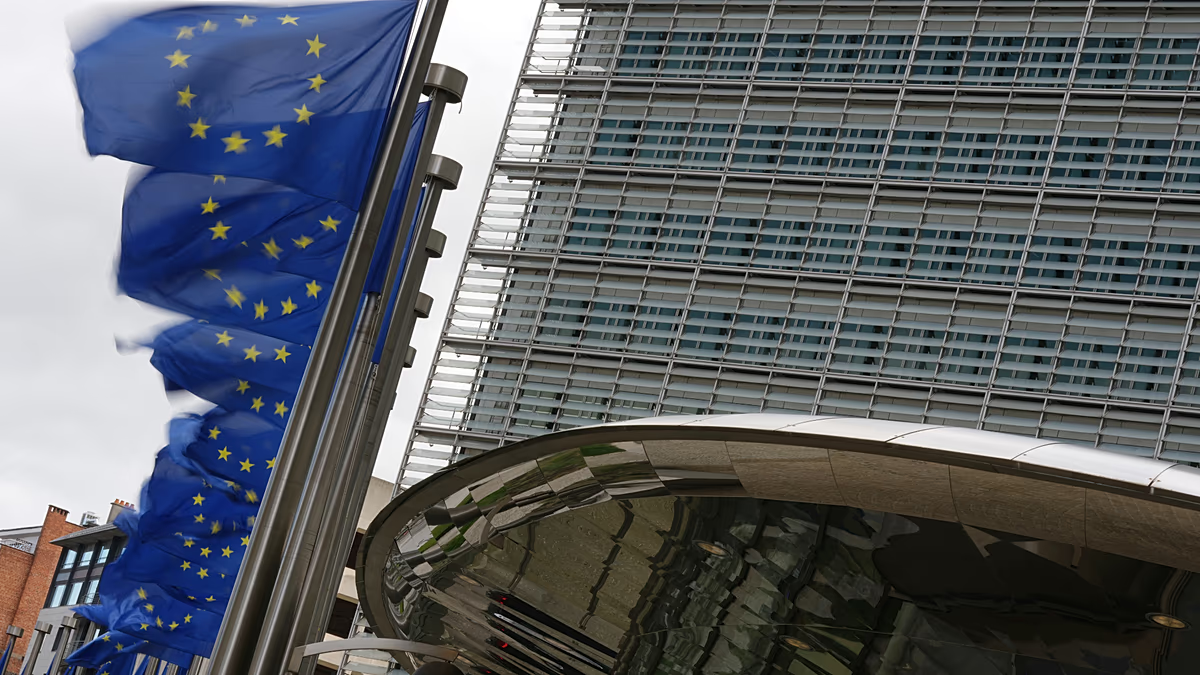
Of course, this growth does not happen in a vacuum. OpenAI’s expansion into Spain will undoubtedly influence and be influenced by the European Union’s robust and evolving regulatory framework for artificial intelligence, notably the AI Act. Having a team on the ground in a major EU capital will be crucial for navigating this complex landscape, engaging in dialogue with regulators, and ensuring compliance. It positions OpenAI to not only respond to European regulations but to actively participate in the continent’s foundational conversation about balancing innovation with safety, transparency, and human-centric values. The Madrid office, therefore, becomes both a business node and a diplomatic channel.
In conclusion, OpenAI’s announcement is more than a corporate real estate headline. It is a strategic investment in a relationship. By choosing Madrid, the company is acknowledging Spain’s rising tech stature and betting on the creativity of its people. For Spain, it represents a vote of confidence and an invitation to co-create at the forefront of a technological transformation. As this new hub opens its doors, its success will be measured not just in commercial partnerships, but in the quality of the collaborations it sparks—the research published, the solutions developed, and the meaningful dialogue it fosters about building an AI-augmented future that benefits Spanish society and, by extension, the wider world. This move solidifies a simple truth: the future of global AI will be built through local connections.