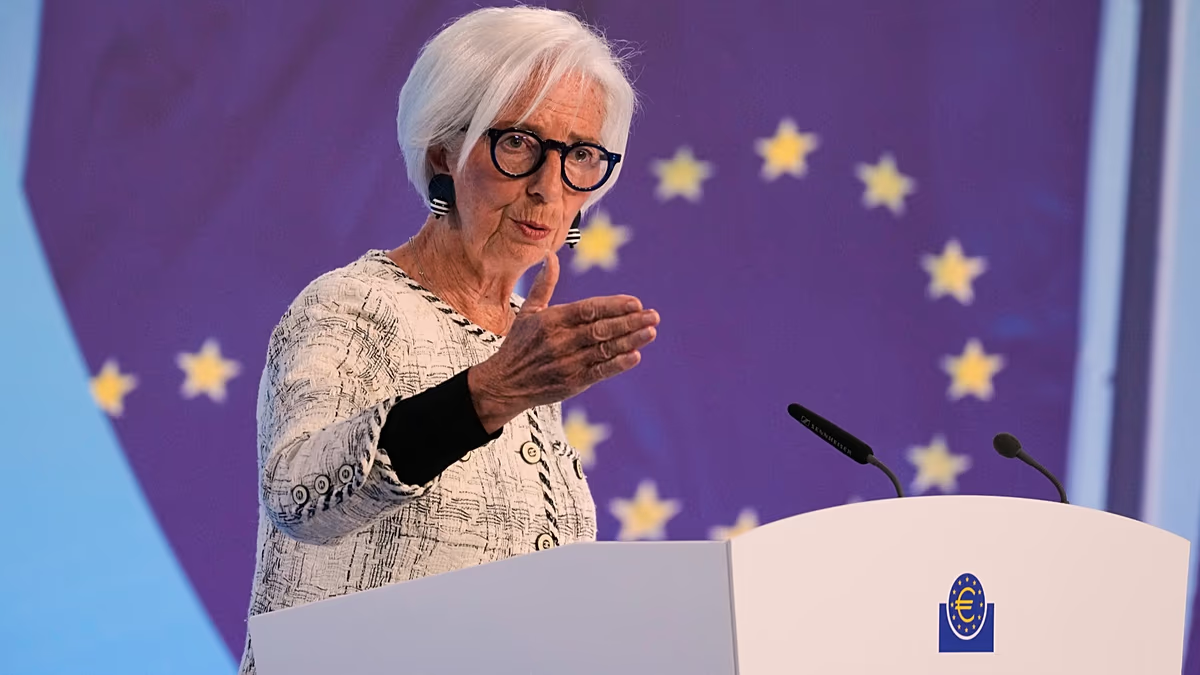
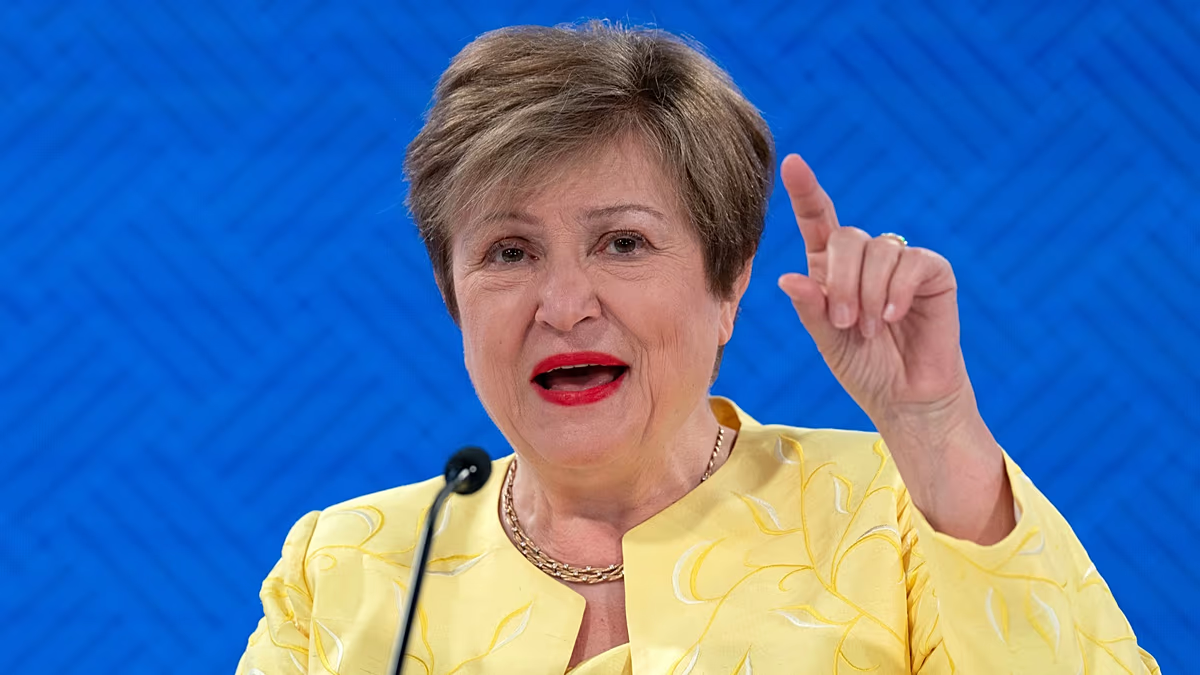



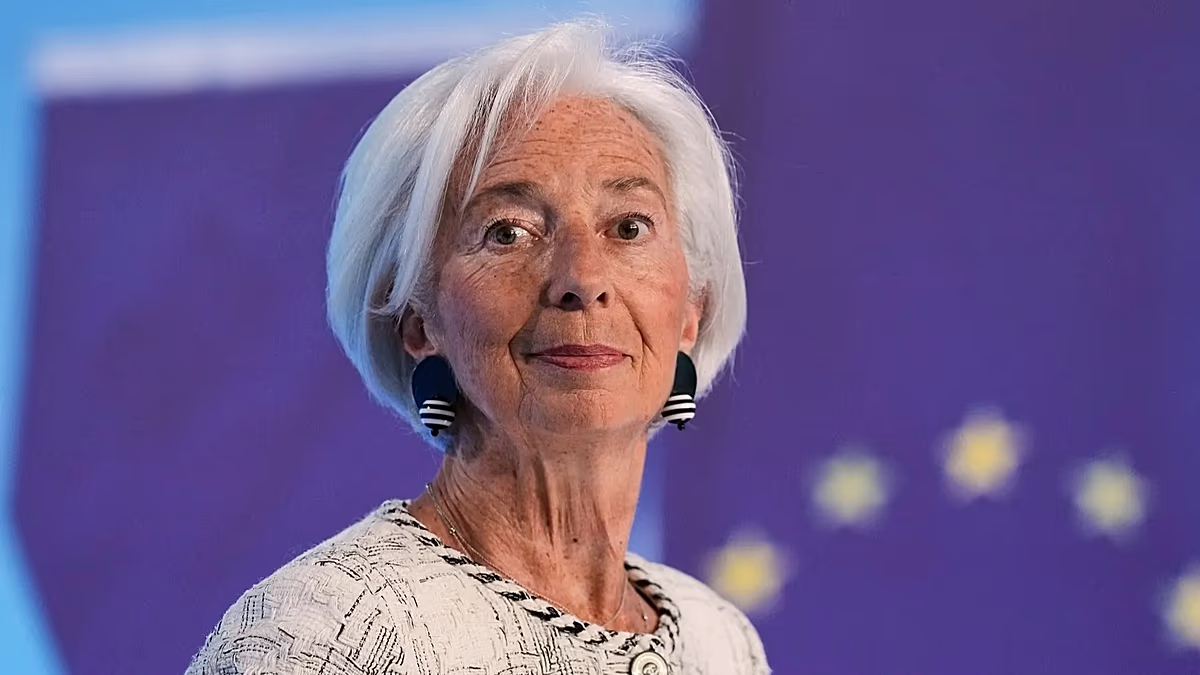
In a significant shift of monetary policy, the European Central Bank (ECB) has announced its first interest rate increase in three years, a move President Christine Lagarde robustly defended as necessary and prudent. The quarter-point hike, the first since 2023, marks a decisive end to a period of easing and is a direct response to renewed inflationary pressures stoked by geopolitical turmoil. Lagarde framed the decision not as a reaction to a single, certain outcome, but as a strategic move deemed “robust across a range of scenarios” developed by the bank to map the potential economic fallout from the ongoing conflict in the Middle East. This conflict, which began in February of this year, has triggered a dangerous rerun of recent history, with disruptions to key shipping lanes like the Strait of Hormuz sending oil and gas prices soaring and delivering a severe shock to European economies reliant on energy imports.
The context for this decision is an increasingly troubling economic landscape for the Eurozone, one that echoes the painful period of “stagflation” witnessed in the 1970s. Data reveals an economy caught in a vice: inflation climbed to 3.2% in May, driven primarily by a startling 10.9% surge in energy costs, while the overall EU economy contracted by 0.2% in the first quarter of the year. This combination of rising prices and stalling growth presents a profound dilemma for policymakers, threatening to erode consumer confidence and business investment. Official forecasts now predict a slowdown in GDP growth for 2026, with only a modest recovery the following year, while inflation is expected to remain stubbornly above the ECB’s 2% target. It is against this grim backdrop that the ECB felt compelled to act, prioritizing the containment of inflation before it becomes entrenched in public expectations and wage negotiations.
To navigate the extreme uncertainty, the ECB’s decision was informed by three distinct short-term scenarios for the coming years, ranging from mild to severe. In the most optimistic view, energy prices would normalize quickly, allowing inflation to fall below target by 2027 and growth to recover more robustly. The adverse scenario, however, assumes continued energy price rises and stronger spillover effects, leading to higher inflation and weaker growth. The severe scenario paints the bleakest picture: a persistent energy shock would cause growth to slow dramatically. Lagarde emphasized that by raising rates now, the ECB is taking a pre-emptive stand that holds across all these potential futures, aiming to anchor price stability regardless of how the crisis evolves. Her core argument is that clear, decisive action today prevents a much more painful and disruptive battle against runaway inflation tomorrow.
However, this textbook monetary response has drawn sharp criticism, particularly from those who argue it addresses the symptom rather than the root cause of Europe’s economic vulnerability. Critics, such as Calvin Vella of the NGO Positive Money Europe, contend that higher interest rates do nothing to lower the actual price of oil and gas; instead, they make the crucial investments in renewable energy—the ultimate solution to energy dependence and price volatility—more expensive to finance. This, they warn, risks a damaging paradox: the policy intended to ensure price stability may simultaneously slow the green transition, undermine Europe’s long-term energy security and industrial competitiveness, and exacerbate inequality by tightening credit and potentially impacting employment and wages. The critique highlights a fundamental tension between short-term monetary tightening and the long-term structural investments the continent desperately needs.
In her remarks, President Lagarde acknowledged this very tension, implicitly agreeing with her critics on the end goal if not the immediate means. She underscored that structural reforms and accelerated investment in renewables at the expense of fossil fuels are “more vital than ever” for enhancing the euro area’s growth potential and resilience. Her defense suggests the ECB views its rate hike as a necessary, stabilizing foundation upon which this vital transition can securely proceed. The logic is that by forcefully demonstrating a commitment to price stability, the bank provides a predictable economic environment in which businesses and governments can confidently plan and execute long-term investments in clean energy, without the distorting and corrosive fear of rampant inflation.
Ultimately, the ECB’s difficult choice underscores the unenviable position of central bankers in a world of recurring supply shocks. With the war in the Middle East casting a long shadow, the bank has chosen to prioritize its primary mandate of price stability, betting that securing the monetary foundation is the first step to weathering the storm and enabling future growth. The debate now shifts to whether this medicine, while potentially robust across economic scenarios, might have unintended side effects that hinder Europe’s broader strategic objectives of securing its energy independence and competitive edge. The path forward will require a delicate balance, where the ECB’s monetary discipline must be seamlessly complemented by ambitious and coordinated fiscal and industrial policies from European governments to truly build a more stable and sovereign economic future.