


A Call for Fiscal Prudence in a Shock-Prone World
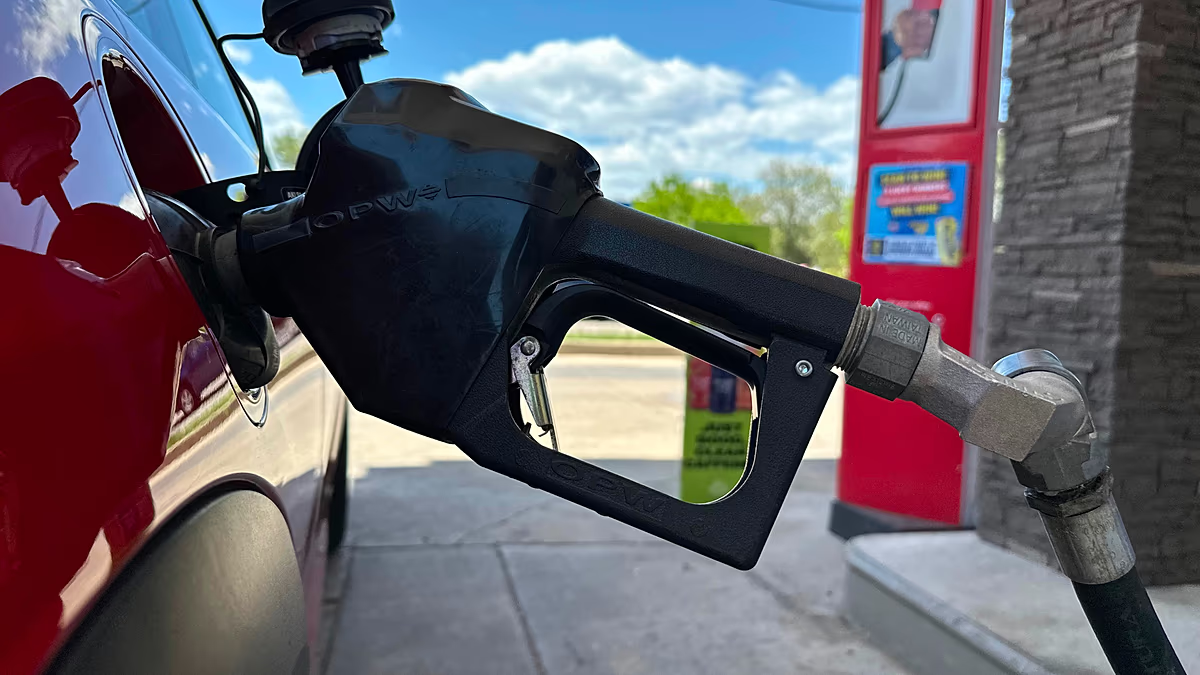
In a sobering annual assessment of the euro area economy, the International Monetary Fund (IMF) has issued a clear warning to European governments: the era of expansive fiscal support to cushion economic shocks must give way to a period of disciplined budget consolidation. The context for this advice is the ongoing energy crisis, exacerbated by geopolitical turmoil in the Middle East, which continues to strain economies heavily reliant on imported oil and gas. With inflation rising and growth slowing, the IMF argues that further relaxation of the European Union’s fiscal rules would be a dangerous misstep, undermining the credibility of the financial framework and placing public debt on an unsustainable trajectory. This stance places the fund at odds with political leaders in several member states who are pressing for more budgetary flexibility to protect their citizens and businesses from soaring energy costs.
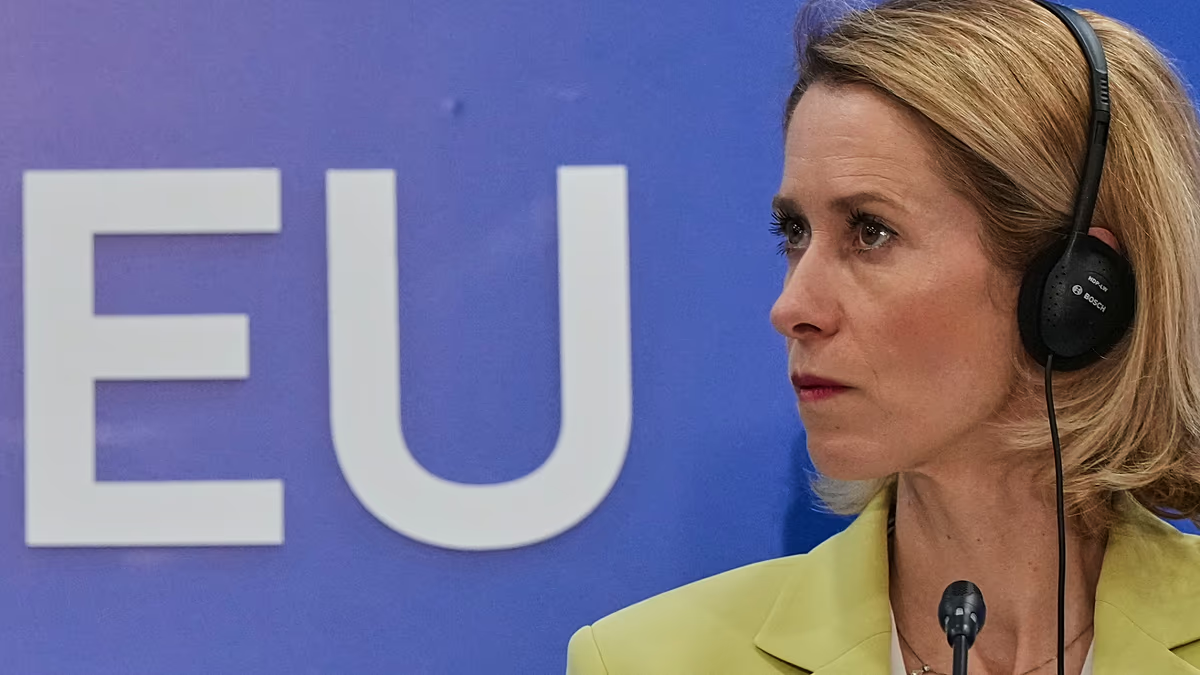
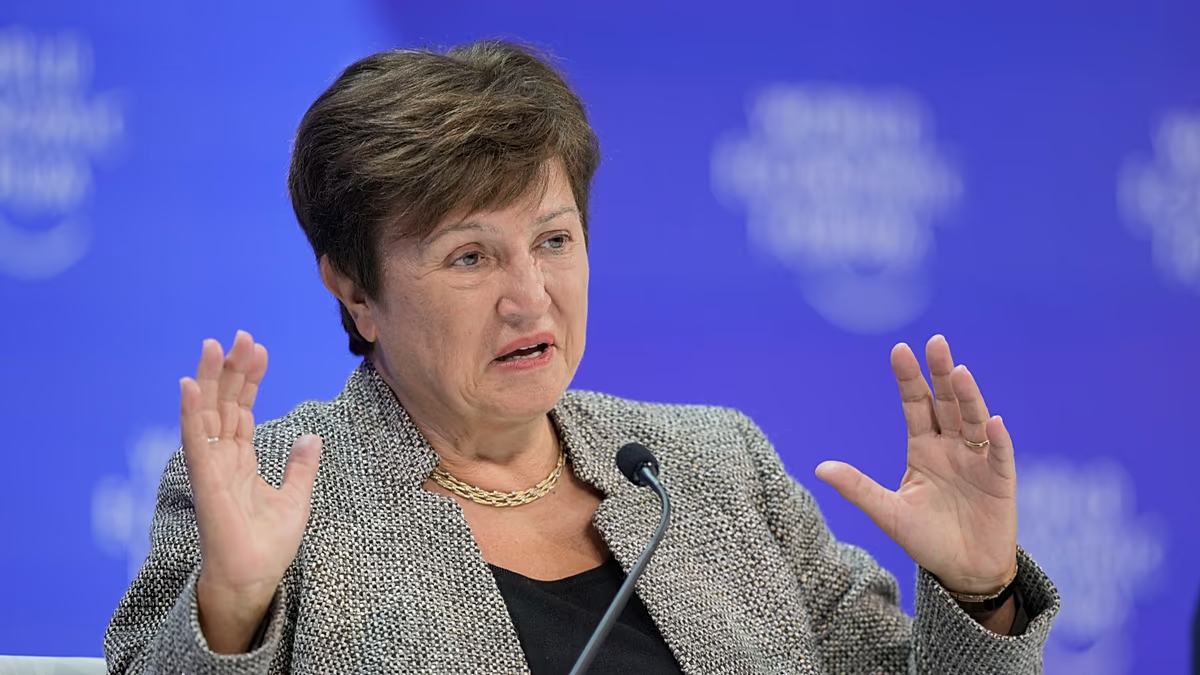
The core of the IMF’s argument is that the world has entered a period of persistent instability, a “more shock-prone world,” as Managing Director Kristalina Georgieva described it. The COVID-19 pandemic was followed swiftly by the energy shock stemming from the war in Ukraine, and now further conflict threatens stability. While governments rightly deployed massive fiscal resources to “defend consumers and businesses” during these successive crises, a problematic expectation has been created—that public support will automatically materialize with every new shock. The IMF cautions that this approach is no longer viable. With more potential shocks on the horizon, policymakers must be strategic and conservative with scarce public resources, preserving their capacity to respond to future emergencies rather than exhausting it on the current one.
This call for restraint is meeting significant political resistance, particularly from nations carrying high levels of public debt. Italy, under Prime Minister Giorgia Meloni, has been a leading voice demanding greater flexibility within the EU’s fiscal rules. In late May, Meloni directly petitioned European Commission President Ursula von der Leyen for more leeway to address the energy crisis. The European Commission’s response has been measured, offering only minimal room to maneuver within the existing framework. It has indicated that a small fraction (0.3%) of a budget allowance already earmarked for defense spending could be redirected toward energy initiatives. This tepid concession underscores the growing tension between the immediate political pressures to provide relief and the longer-term imperative of fiscal sustainability championed by institutions like the IMF and the European Central Bank.
The IMF has explicitly endorsed the European Commission’s cautious stance and directed pointed advice toward high-debt countries. It emphasizes that “structural fiscal adjustment over the medium term remains imperative.” For the euro area as a whole, excluding Germany, the fund recommends a significant improvement in the structural primary balance—essentially, the government’s budget excluding interest payments and temporary factors—amounting to about 3 percentage points of GDP between 2025 and 2031. Crucially, it notes that countries with high debt levels, like Italy, need to go even further, achieving an additional 1.3 percentage points of adjustment on top of existing plans. This is not a call for simplistic austerity but a recognition that the current fiscal path is unsustainable and must be corrected through deliberate, credible planning.
Achieving this necessary fiscal consolidation will require more than just across-the-board spending cuts. The IMF outlines a nuanced strategy that combines several approaches: reprioritizing expenditure away from less critical areas, improving the efficiency of public spending to get better value for money, and tackling difficult structural reforms, such as to entitlement programs. Alongside these measures, governments must pursue growth-enhancing reforms—for instance, in labor markets or digital infrastructure—that can boost economic output and, consequently, tax revenues. This comprehensive package is designed to stabilize debt without crippling growth, aiming to build more resilient economies that are better equipped to withstand future shocks without resorting to emergency deficit spending.
In conclusion, the IMF’s message is a challenging one for European leaders. It is a plea to look beyond the immediate political cycle and the urgency of the current energy crisis to secure long-term economic stability. The fund acknowledges the severity of the shocks facing Europe but argues that the most responsible defence is a credible commitment to fiscal discipline. By beginning the hard work of budget consolidation now, particularly in high-debt nations, euro area countries can rebuild their fiscal buffers, restore policy credibility, and ensure they have the capacity to protect their citizens when the next inevitable crisis arrives. The path forward demands difficult choices, but the alternative—a continuous relaxation of rules in response to every shock—risks a far more severe reckoning with debt dynamics in the future.