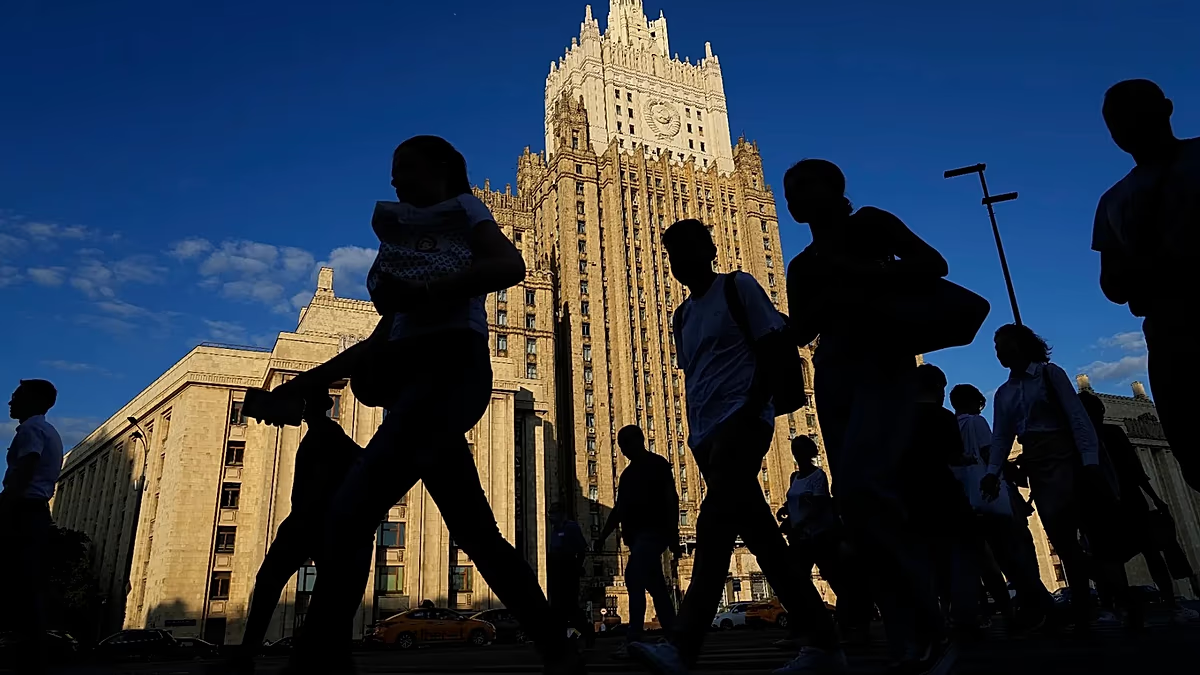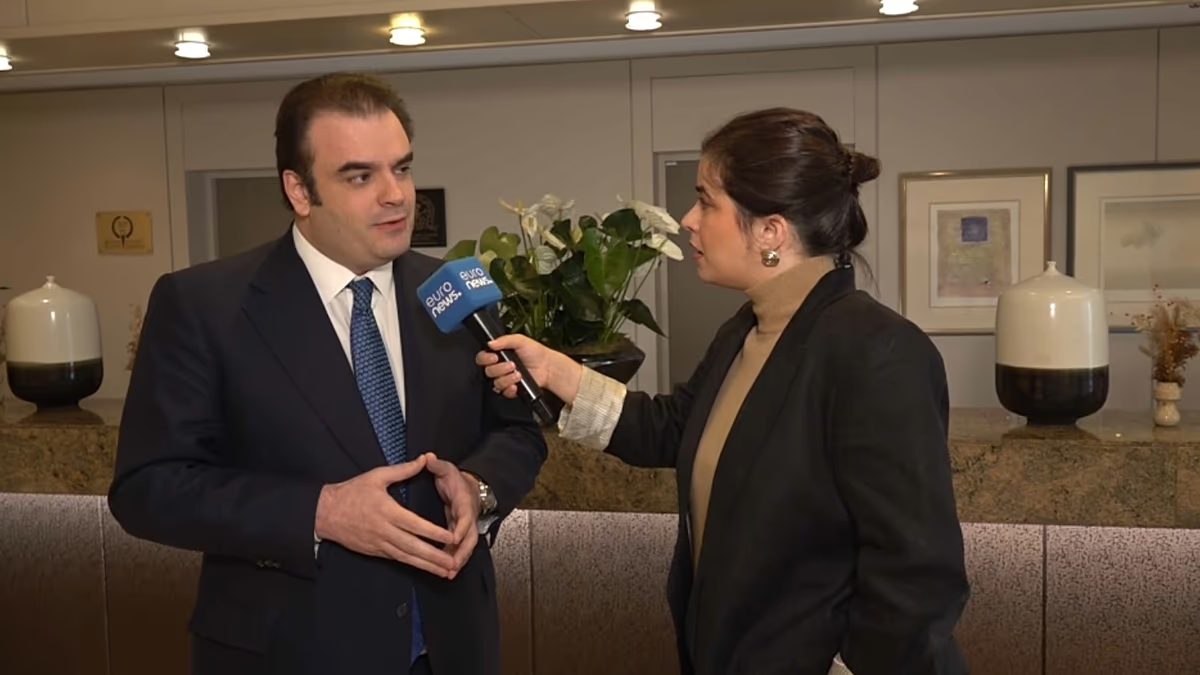


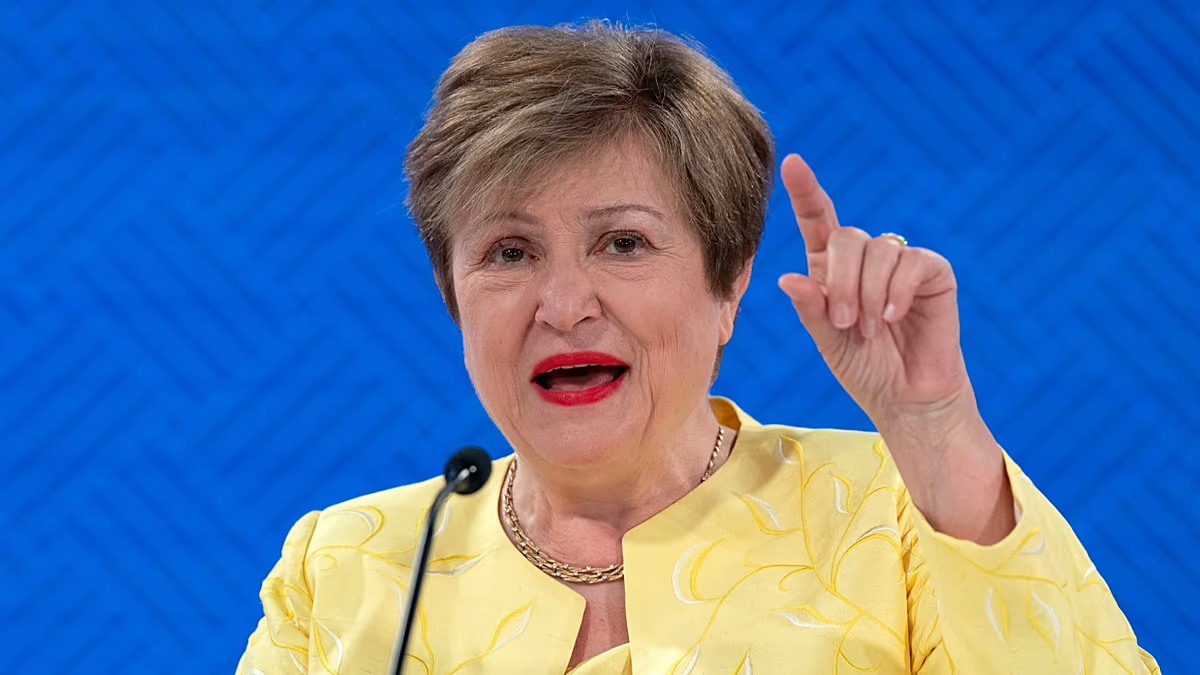
For two years, the global economic narrative surrounding Russia has been one of surprising, if grim, resilience. Following its full-scale invasion of Ukraine, the nation’s pivot to a wartime economy—channeling immense resources into military production—propelled a period of stronger-than-anticipated performance, defying early forecasts of imminent collapse. However, according to Kristalina Georgieva, the Managing Director of the International Monetary Fund (IMF), this phase is now decisively ending. In an interview with Euronews, Georgieva presented a sobering assessment, arguing that Russia’s economic situation is fundamentally weakening. While superficial indicators like a recent uptick in growth projections for 2026 might suggest stability, she cautioned that these figures mask a deeper and more troubling reality of long-term degradation.
Georgieva was explicit in dismissing the notion that temporary reprieves, such as higher global oil prices, can remedy Russia’s structural ailments. She acknowledged that elevated hydrocarbon revenues provide “a breather,” allowing the state to catch its financial breath. However, this windfall is not fueling a new wave of productive investment or stimulating broader economic vitality. Instead, Georgieva explained, these funds are being used almost exclusively to “rebuild buffers,” referring to the nation’s severely depleted financial reserves. This is a defensive move, not an offensive one. It signifies an economy in conservation mode, desperately shoring up its foundations after the immense fiscal drain of the war, rather than one building for a prosperous future.
To grasp the true state of affairs, one must look beyond headline growth numbers, which the IMF now projects at a modest 1% for Russia—a sharp slowdown from its pre-war potential of 1.6%. Georgieva pointed to other critical indicators that paint a picture of an economy under severe strain. Inflation remains stubbornly high, a symptom of overheated military spending and supply-chain disruptions. To combat this, the Central Bank of Russia has been forced to maintain interest rates at punishing levels, around 15%. This strangles credit for businesses and consumers alike, creating a high-cost environment that stifles organic, civilian-sector growth. The combination of slowing growth and high inflation points to an economy experiencing stagnation, not sustainable development.
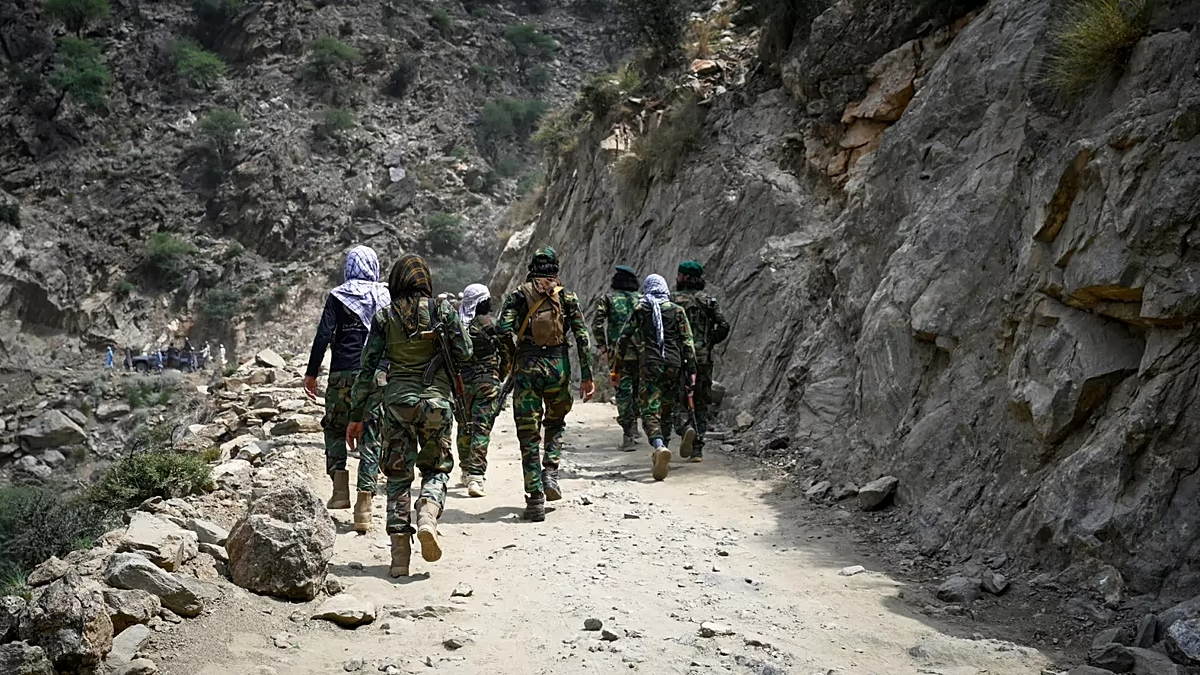
The IMF chief outlined three profound, long-term wounds that have crippled Russia’s economic prospects. The first and most tragic is the human cost. A country already grappling with a pre-existing demographic decline has now suffered catastrophic losses and the emigration of hundreds of thousands of its young people. “A country that was in a demographic decline to begin with now lost so many young people for a terrible reason,” Georgieva stated. This represents not just a humanitarian disaster but an economic one, depleting the future workforce, consumer base, and innovative potential of the nation for a generation, creating a gap that cannot be easily filled.
The second crippling factor is the comprehensive impact of international sanctions, which Georgieva argued “bite a lot on the technology front.” This is most acutely felt in the very sector that provides the Kremlin’s financial lifeblood: oil and gas. Without access to Western technology, expertise, and specialized equipment, Russia faces “a tremendous problem with lack of technological renewal.” This restricts its ability to explore new, complex fields, maintain existing infrastructure, and ultimately expand production capacity. The energy sector, the historic pillar of the Russian economy, is thus slowly being undermined, threatening the sustainability of the revenue stream that funds the state and its war machine.
Finally, Georgieva pointed to the intangible but critical loss of Russia’s global “standing.” This diminished position translates into concrete losses: severed ties with global financial systems, broken supply chains, and the isolation of its academic and professional classes from international collaboration. She poignantly noted the opportunity cost for a generation: “just think of the young Russians that could have built relations with Europeans and others and did not because of the war.” This isolation stifles the exchange of ideas and innovation that drives modern economies. In conclusion, Georgieva’s summation was stark: “on the whole, Russia is coming crippled.” The picture she paints is not of an economy about to implode overnight, but of one undergoing a deep and systemic corrosion—a nation sacrificing its long-term future for the exigencies of a protracted war, emerging from it profoundly weakened in human capital, technological capacity, and global integration.