


In the complex and often contentious arena of European migration policy, a significant and controversial shift is taking place. The European Union, through its migration chief Magnus Brunner, has declared that it sees no alternative but to engage in direct talks with the Taliban government in Afghanistan regarding the repatriation of failed asylum-seekers. This planned meeting in Brussels, which has yet to be finalized as Taliban officials await visa approvals, represents a stark pragmatic turn. The EU Commission is explicitly pursuing this dialogue as part of a broader crackdown on irregular migration and an effort to increase deportation rates, all while maintaining that it does not formally recognize the Taliban administration. This delicate, some would say contradictory, position underscores the immense pressure European institutions feel to manage migration, even when it leads to negotiations with a regime whose values are fundamentally at odds with those enshrined in the EU.
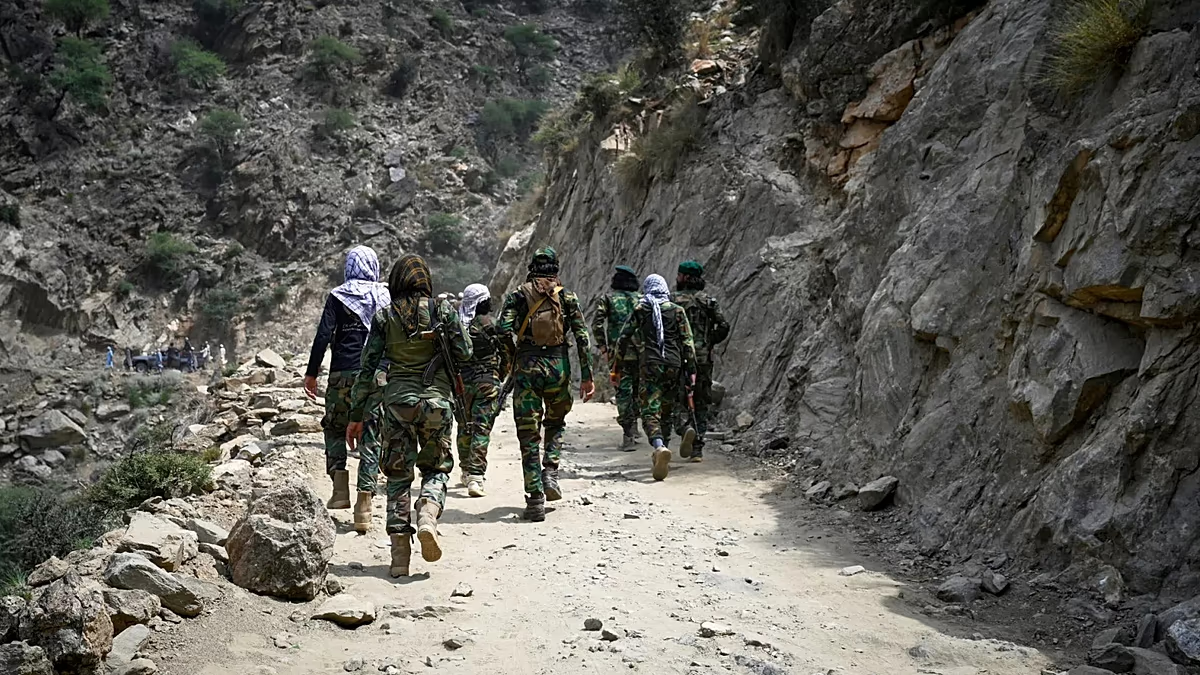
The proposal has ignited a fierce ethical and legal firestorm in European capitals. Critics argue that such talks, regardless of the technicalities of recognition, legitimize a government that has systematically dismantled human rights since its return to power in 2021. The Taliban’s rule is characterized by a brutal enforcement of its interpretation of Islamic law, most devastatingly for women and girls. Women are confined to their homes without access to public life, and girls are denied education beyond the age of twelve. Returning individuals, even those denied asylum, to such conditions is seen by human rights organizations as a profound betrayal of the EU’s foundational principles. Furthermore, Afghanistan remains gripped by a severe humanitarian crisis, with widespread hunger and economic collapse, raising urgent questions about the safety and morality of forced returns.
Despite these grave concerns, the political momentum within Europe is powerfully driving the agenda forward. A hardening of public opinion on migration, which has fuelled significant gains for far-right parties across the continent, has pushed governments toward a more uncompromising stance. With the number of new arrivals decreasing, the focus in Brussels has pivoted sharply to the other end of the process: improving the rate of returns for those whose asylum claims are rejected. Data reveals the scale of the issue; between 2013 and 2024, EU countries received approximately one million asylum applications from Afghans, granting protection to about half that number. This leaves a substantial population in limbo, and for many member states, repatriation is viewed as a necessary component of a credible migration system.
The practical appetite for this action is clear from within the bloc itself. In a revealing display of consensus, around twenty of the EU’s twenty-seven member states expressed interest last year in returning certain migrants to Afghanistan, particularly those with criminal convictions. Some nations have already moved unilaterally; Germany, for instance, has deported over one hundred Afghans with criminal records since 2024. This creates a powerful collective impetus for the EU Commission to act as a coordinator, seeking a framework agreement with the de facto authorities in Kabul that could streamline what are currently difficult and ad-hoc deportation processes. The political calculation is that engaging directly, however distasteful, is more effective than a state of non-communication.
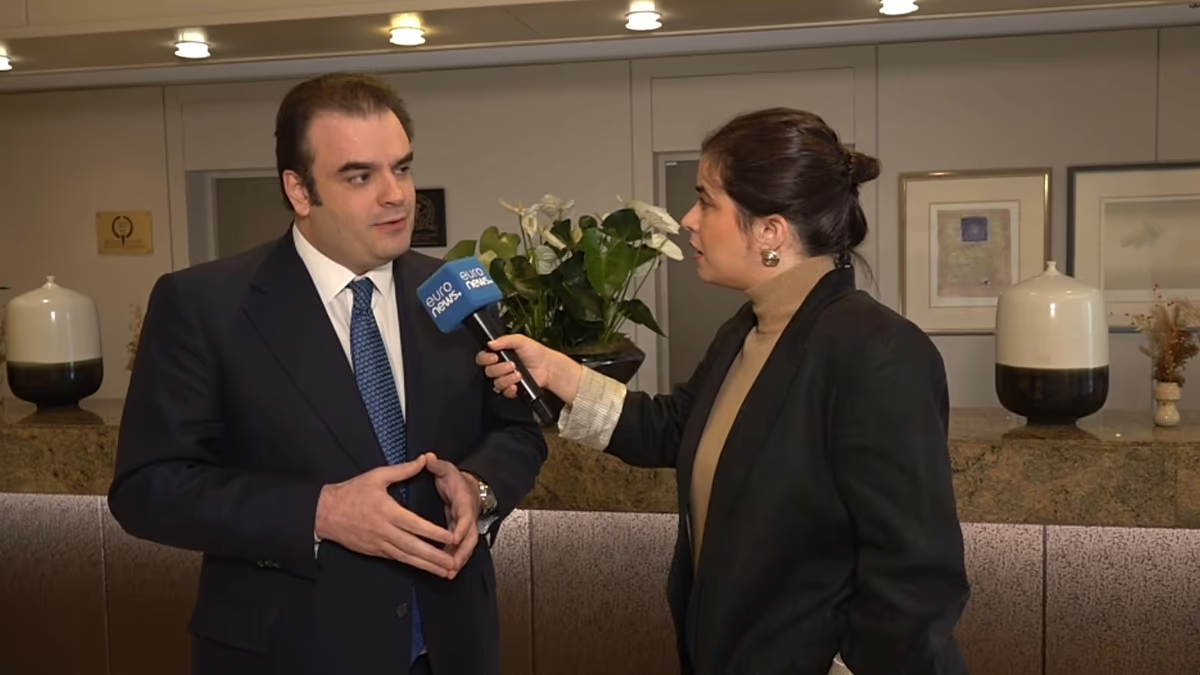
Officials like Commissioner Brunner are navigating this moral tightrope by insisting that dialogue is a practical tool, not an endorsement. He argues that speaking to Taliban officials is essential to “improve the situation for Europeans, but also for asylum applicants,” suggesting that structured returns could be managed more humanely than the current reality. The Belgian government, which would host the meeting, has been provided with the names of the expected Taliban delegates for security vetting, though formal visa applications have not yet been submitted. This procedural dance highlights the awkwardness of the entire endeavor—treating the Taliban as operational partners on migration while simultaneously condemning their governance and denying them diplomatic recognition.
Ultimately, this proposed dialogue between Brussels and Kabul forces a painful examination of where pragmatic border management ends and the compromise of core values begins. The EU stands at a crossroads, caught between the urgent demand from its citizens for controlled migration and its own professed commitment to human rights and dignity. Proceeding with these talks may offer a short-term mechanism to address deportation logjams and appease domestic political pressures, but it risks normalizing a regime that oppresses half its population. The outcome of this dilemma will define not only the fate of thousands of Afghan migrants but also the character of a European Union grappling with the difficult balance between its ideals and the realities of a tumultuous world.