



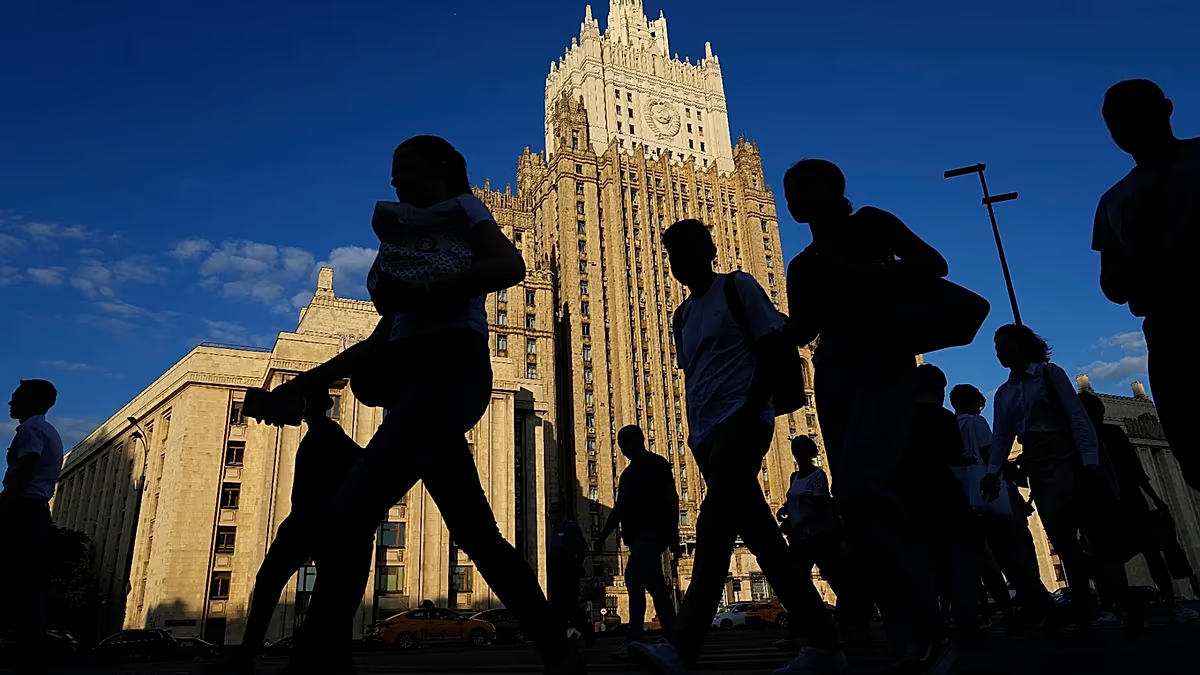
In a notable diplomatic exchange, ambassadors from France, Germany, and the United Kingdom convened with senior Russian officials in Moscow. The meeting, held at Russia’s Foreign Ministry, followed a high-profile summit in London where the leaders of those three nations met with Ukrainian President Volodymyr Zelenskyy. This London gathering had been a show of solidarity, with the European leaders endorsing Kyiv’s urgent plea for direct negotiations with Russia to halt a devastating conflict now in its fifth year. The dispatch of these senior envoys to Moscow represented a tangible, if cautious, step to translate that support into diplomatic action, carrying the collective weight of three of Europe’s major powers directly to the Kremlin’s doorstep.
The discussions, led by Russia’s Deputy Foreign Minister Mikhail Galuzin, concluded with starkly divergent interpretations of the dialogue. The French Ambassador, Nicolas de Riviere, offered a brief but positive initial assessment to waiting reporters, describing a “good discussion” and promising a joint statement. This glimmer of diplomatic civility was swiftly extinguished by the Russian narrative. Foreign Ministry spokeswoman Maria Zakharova publicly denounced the ambassadors’ mission, accusing them of promoting a “dead-end Zelenskyy formula.” She framed the Western position as fundamentally dishonest, arguing that while European leaders “pretend” to call for peace, their actions—such as escalating weapons shipments to Ukraine—reveal a true intent to pursue militarization and continue the war indefinitely.
Moscow’s official readout of the meeting was unsparing, labeling the policies of France, Germany, and the UK as “destructive.” Russian officials charged that these nations sought to prolong the conflict “on behalf of and at the expense of” their own European citizens, framing the war as a proxy battle orchestrated from afar. This stance aligns with President Vladimir Putin’s recent rejection of Zelenskyy’s offer for direct talks, a proposal the European trio had explicitly backed. In London, UK Prime Minister Keir Starmer, French President Emmanuel Macron, and German Chancellor Friedrich Merz had united around the Ukrainian position, advocating for the current frontline to serve as a baseline for negotiations. The chasm between these two proposed starting points—dialogue versus dictated terms—remains vast and seemingly unbridgeable.
The very occurrence of this ambassadorial meeting is itself significant, reflecting a fragile and complex diplomatic landscape. Throughout the years of full-scale war, direct talks between European ambassadors and Russian authorities have been exceedingly rare; more typically, envoys are summoned to receive formal protests. This initiative, therefore, suggests a tentative, behind-the-scenes exploration of whether any diplomatic channel remains viable. It occurs against a backdrop of growing, though controversial, discussions within parts of Western Europe about the necessity of re-engaging Moscow to find an exit from the bloodshed, which has become Europe’s most severe security crisis since the Second World War.
Further complicating the peacemaking tableau is the shifting focus of global powers and Russia’s clear preference in negotiation partners. Broader U.S.-led efforts to broker an end to the conflict have stalled and have been increasingly sidelined by international attention on other crises, such as the war involving Iran. The Kremlin has consistently signaled that it views the United States, not Europe, as the decisive actor, having historically shown a preference for dealing directly with the American administration. This dynamic effectively sidelines the European Union’s major players, despite their being Kyiv’s most steadfast military and financial supporters, and creates a frustrating paradox where those most invested in Ukraine’s defense are structurally excluded from the negotiation process Moscow desires.
Ultimately, the Moscow meeting underscores the profound stalemate and the deeply conflicting narratives that define this war. For France, Germany, and the UK, the engagement was a necessary, principled effort to test the waters for a negotiated peace based on Ukraine’s territorial integrity. For Russia, it was an opportunity to condemn Western hypocrisy and reassert its own conditions, which effectively demand Ukrainian surrender. The ambassadors departed having delivered their message, but the fundamental impasse remains intact: one side seeks a peace through dialogue from a position of strength, while the other demands a peace through capitulation. As the conflict grinds on, such diplomatic encounters, however fraught, reveal the enduring struggle to find a path off the battlefield, even as the prospects for a just and lasting resolution appear as distant as ever.