


A Rising Toll in the Gulf of Oman
The strategic waters of the Gulf of Oman have become a stage for a dangerous and escalating confrontation. For months, rival blockades imposed by the United States and Iran have turned this vital global shipping artery into a zone of tension, where commercial vessels increasingly find themselves caught in the crossfire. The human and economic costs of this standoff are mounting by the week, as demonstrated by a recent series of forceful interceptions by American military forces. In the latest incident, a US aircraft struck a tanker flagged to Guinea-Bissau, targeting its engine room with Hellfire missiles after its crew failed to comply with orders. This event, occurring in the early hours of the morning off the coast of Oman, marked the ninth such disabling strike by US forces since their blockade began in mid-April.
A Pattern of Enforcement and Tragedy
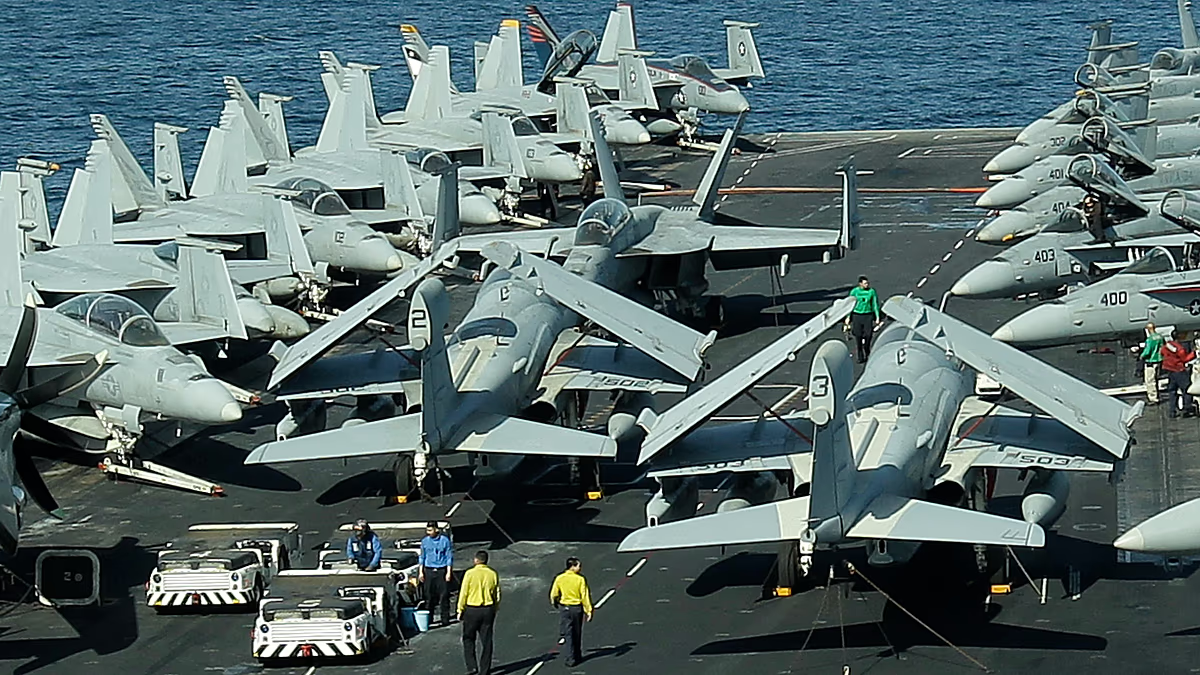
This attack was not an isolated event, but part of a clear and deadly pattern. Just the day before, a similar strike targeted the Palau-flagged MT Settebello, an action that culminated in profound tragedy. Following that engagement, three Indian crewmembers were reported missing. The Indian government subsequently summoned the senior US diplomat in New Delhi to lodge a strong protest, a diplomatic move that was followed by the grim confirmation that the three missing sailors had lost their lives. These men, who were simply doing their jobs aboard a commercial vessel, became casualties of a geopolitical conflict far beyond their deck. Earlier in the same week, another Palau-flagged tanker, the MT Marivex, was disabled by a US F-18 fighter jet in the Gulf. The consistent justification from US Central Command (CENTCOM) is that these strikes are last-resort measures taken only after crews repeatedly fail to heed directions.
The Stakes of the Strategic Strait
The backdrop to these clashes is a fierce struggle for control over one of the world’s most critical maritime chokepoints. The Strait of Hormuz, which feeds into the Gulf of Oman, is a conduit for about a fifth of the world’s seaborne oil. Tehran initiated a blockade of cargo ships through this waterway in late February, a move seen as a powerful economic and strategic lever. In response, the United States established its own comprehensive blockade, restricting all Iranian vessels and ports while permitting what it deems humanitarian aid to pass. The US military states that since April, it has successfully redirected 135 compliant ships and allowed 42 humanitarian vessels through. This high-stakes game of naval enforcement is playing out amidst a wider regional conflict, turning commercial tankers into potential targets or instruments of state policy.
The Human Element Amidst the Conflict
Beyond the statements from military commands and foreign ministries, real human dramas are unfolding on the waves. When the UK Maritime Trade Operations centre reported a tanker fire northeast of Sohar, Oman, it was a dry notation of an emergency. The reality was far more visceral: a ship ablaze, with the Omani navy scrambling to evacuate its 20 crew members, as noted by security firm Vanguard. Each “vessel” in these reports is a workplace and a temporary home for sailors from around the globe, whose lives are suddenly upended by missiles and munitions. The death of the three Indian nationals is a stark reminder that the abstract terms “blockade” and “enforcement” have lethal consequences. These incidents resonate far beyond the Gulf, causing anguish in families from Mumbai to Manila and raising urgent questions about the safety of civilian maritime workers in conflict zones.
A Path Forward Shrouded in Uncertainty
The current trajectory suggests a worrying escalation, with no clear diplomatic off-ramp in sight. Each strike risks retaliation, miscalculation, or a deeper entanglement. The blockades themselves are crippling the normal flow of energy and trade, with global economic implications. While the US frames its actions as a necessary enforcement of international norms and a counter to Iranian aggression, the loss of innocent lives complicates this narrative and fuels international criticism. For its part, Iran shows no sign of relenting on its own maritime restrictions. The situation has created a cycle where every intercepted ship raises tensions, and every casualty hardens positions, making the prospect of a peaceful resolution seem increasingly distant.
The Imperative for De-escalation
The continuing clashes in the Gulf of Oman represent a fuse burning at the heart of global energy security and regional stability. The repeated strikes on commercial tankers, justified as enforcement actions, are accumulating a sobering toll in lives, diplomatic capital, and economic disruption. As the blockades persist, the risks only grow—not just of further tragic accidents or intentional strikes, but of a broader conflict that could engulf the region. The international community faces a pressing imperative to advocate for de-escalation and dialogue. Without a concerted effort to find a political solution, the waters of the Gulf will remain perilous, where the next missile fired could tip a fragile balance into a much wider and more devastating storm. The lives of sailors and the stability of global markets depend on steering away from this collision course.