



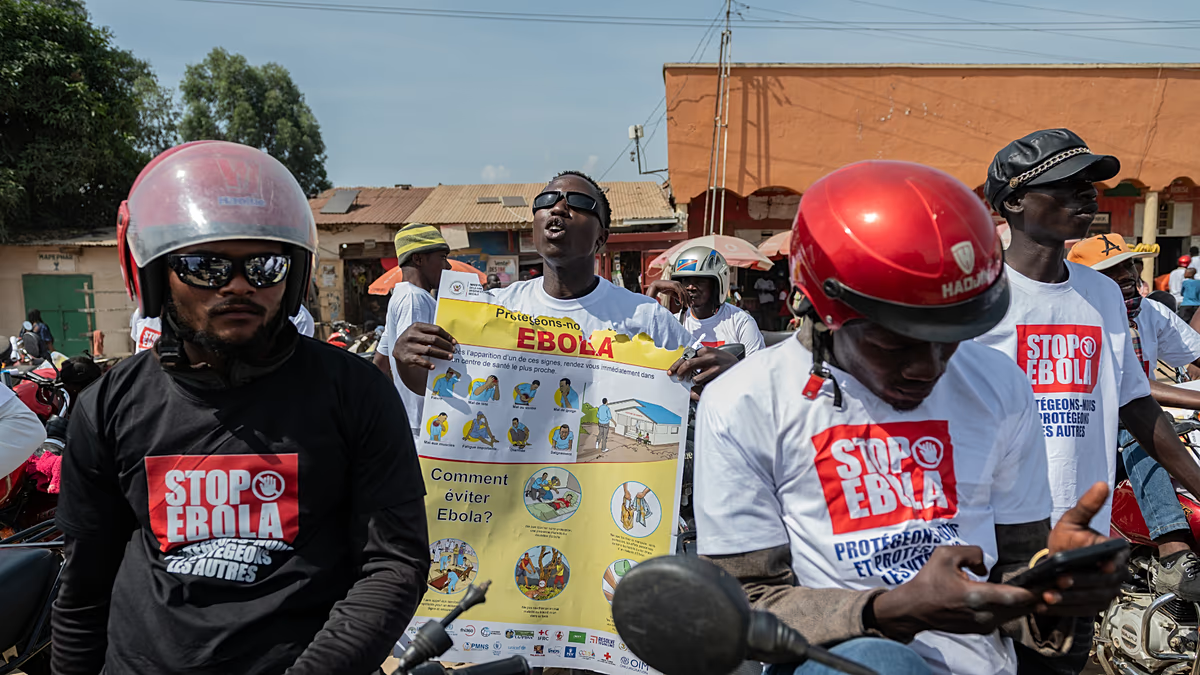
In the eastern reaches of the Democratic Republic of Congo, where conflict and hardship are familiar companions, a different kind of convoy recently took to the dusty streets. This was not a military column, but a hopeful, rumbling procession of dozens of motorcycle taxi drivers—the lifeblood of local transport. On a recent Wednesday, these men, who typically weave through traffic focused on fares, transformed into ambassadors of public health. Their mission was vital: to combat a tide of dangerous misinformation and breathe new urgency into the fight against Ebola, a deadly outbreak that has plagued the region for years. Their very presence on this awareness campaign was a powerful signal, aimed at cutting through community fatigue and skepticism to deliver a simple, life-saving message: this disease is real, and we must all take it seriously.
The visual statement they made was unmistakable. Clad in uniform white T-shirts emblazoned with the urgent imperative “Stop Ebola,” the riders became a moving billboard for solidarity. They navigated the towns of Bunia and Rwampara in Ituri province, the epicenter of the outbreak, their familiar motorcycles now adorned with banners carrying clear, practical advice on prevention. This transformed the ubiquitous moto-taxi from a mere vehicle into a tool for community education. Seeing these trusted local figures, whose daily work connects them to countless families, championing such a cause adds a profound layer of credibility. It grounds the abstract threat of a virus in the recognizable faces of neighbors, making the warnings tangible and personal in a way that distant official announcements often struggle to achieve.
This grassroots initiative did not emerge in a vacuum; it was a collaborative effort forged with the support of the World Health Organization (WHO). WHO officials joined the riders, side-by-side, blending international expertise with local influence. This partnership is crucial, as the battle against Ebola in eastern Congo is fought on two fronts: one against the virus itself, and another, perhaps more stubborn, against deep-seated fear and mistrust. Years of conflict and instability have eroded public faith in authorities, creating fertile ground for rumors that deny the disease’s existence or peddle false cures. By embedding their message within a community-driven campaign, WHO experts could directly counter this persistent skepticism, using the drivers’ trusted voices to amplify factual public health guidance.
The choice of motorcycle taxi drivers as messengers was a stroke of strategic genius. These individuals are the connective tissue of their communities, possessing an unmatched understanding of the social landscape. They hear the whispers in the markets, the concerns at roadside stalls, and the fears in the neighborhoods they serve. This intimate knowledge allows them to tailor conversations, address specific local doubts, and model protective behaviors—like hand hygiene and safe burial practices—for their passengers and peers. Their advocacy represents a form of peer-to-peer education that is far more persuasive than top-down directives. When a driver you know and rely on explains why you should cooperate with contact tracers or visit a treatment center, the advice carries a weight that official posters cannot.
Ultimately, this campaign highlights a fundamental truth in global health: defeating an epidemic requires more than just medical supplies and vaccines; it demands winning the trust and active participation of the community. The moto-taxi drivers’ ride was not merely a symbolic gesture but a practical intervention to bridge the dangerous gap between healthcare systems and the people they serve. In a region weary from crisis, their visible, united stand works to rekindle a sense of collective responsibility. It reminds everyone that protection is a shared endeavor, built on simple, proven actions and mutual vigilance.
As the engines faded and the riders returned to their daily rounds, the hope is that their message continues to resonate. Their journey through Ituri province was a powerful demonstration of local agency and resilience. By leveraging the most familiar elements of daily life—the sound of an approaching motorcycle, the face of a trusted driver—the campaign seeks to embed Ebola prevention into the very fabric of the community. It is a testament to the idea that the most effective solutions often come not from the outside in, but from the inside out, powered by the very people most determined to safeguard their homes and families.