


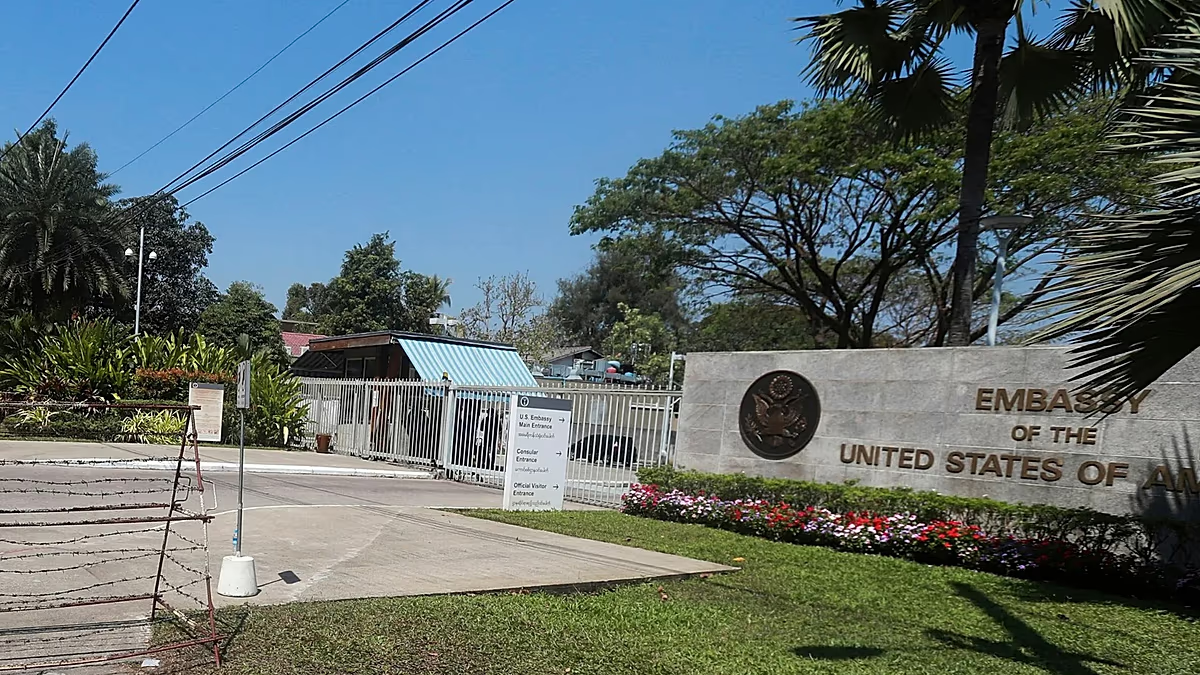
The diplomatic community in Yangon has been shaken by the news that an American diplomat has been found dead in the city. On Wednesday, the U.S. State Department formally confirmed the “death of a US government employee” who was assigned to the embassy there, but provided no further details out of respect for the family’s privacy. This tragic event has cast a pall over the already tense environment in Myanmar, a nation struggling under the weight of ongoing internal conflict. The silence from official channels has only amplified the unease, leaving colleagues and fellow diplomats to grapple with the unsettling news amidst an atmosphere of profound uncertainty.
According to members of the diplomatic community in Myanmar, who spoke anonymously due to the sensitivity of the matter, the diplomat was discovered deceased approximately two weeks ago at the Sakura Residence & Hotel. This facility, known for its long-term rentals, is a common residence for international visitors, including diplomats and businesspeople, and is situated a short distance from the American Embassy itself. The fact that such an incident could occur in a place considered a secure haven for foreigners has sent ripples of concern through the expatriate population. The familiar surroundings of the hotel have now become the focal point of a grim investigation.
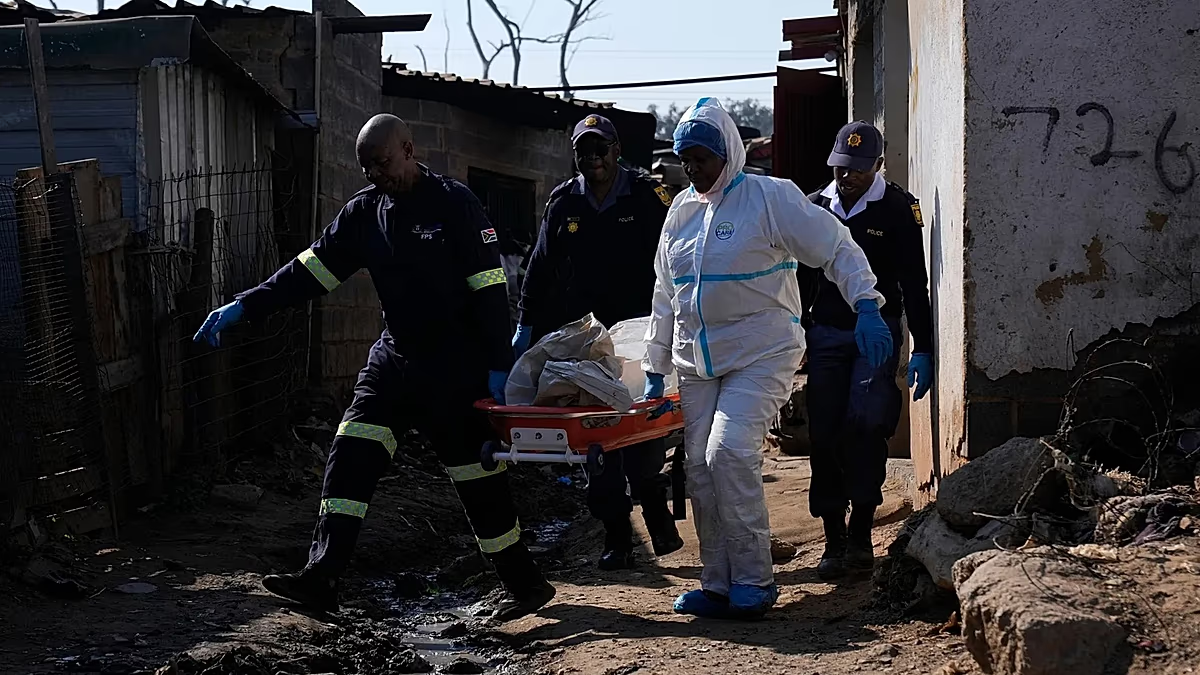
The circumstances surrounding the death have taken a more serious turn, as these same sources indicate that local police are treating the case as a possible homicide. In a significant development, they report that authorities have taken a Thai woman into custody in connection with the investigation. This detail introduces a complex international dimension to the tragedy, implicating citizens from two different Southeast Asian nations and a representative of the United States. The nature of their relationship or the events that led to this point remain shrouded in mystery, central questions that the investigation must now seek to answer.
Navigating this investigation is fraught with difficulty, given Myanmar’s current political landscape. The country has been embroiled in intense fighting since the military seized power in 2021, with a devastating civil war now raging between the military-led government and a broad alliance of ethnic minority militias and pro-democracy forces. In such an environment, transparency is often in short supply. This has been borne out by the uniform reluctance of local authorities to comment; the police station responsible for the area refused to address the case, and the manager of the Sakura hotel also declined to provide any statement.
This wall of silence extends beyond Myanmar’s borders. The Thai Embassy in Yangon and Thailand’s Foreign Ministry have both refused to confirm whether they are providing consular support to the detained suspect or to offer any information at all. Similarly, American officials in Thailand and at the U.S. Embassy in Myanmar have directed all inquiries back to the State Department in Washington. This coordinated, cautious posture from all involved governments underscores the diplomatic delicacy of the situation. Each nation is likely conducting its own parallel assessment, weighing the imperative for justice against the complexities of international law and bilateral relations in a volatile host country.
Ultimately, this incident is more than a solitary tragedy; it is a stark reminder of the precarious realities facing diplomatic personnel stationed in unstable regions. Behind the official titles and diplomatic protocols, individuals and families are living their lives in often challenging conditions. The death of this American diplomat underscores the very real, human risks that can persist even within the relative sanctuary of a diplomatic compound or a trusted hotel. As the investigations proceed behind closed doors, the community in Yangon is left mourning a colleague, while the world waits—hoping for clarity, justice, and a renewed recognition of the human cost woven into the fabric of international relations.