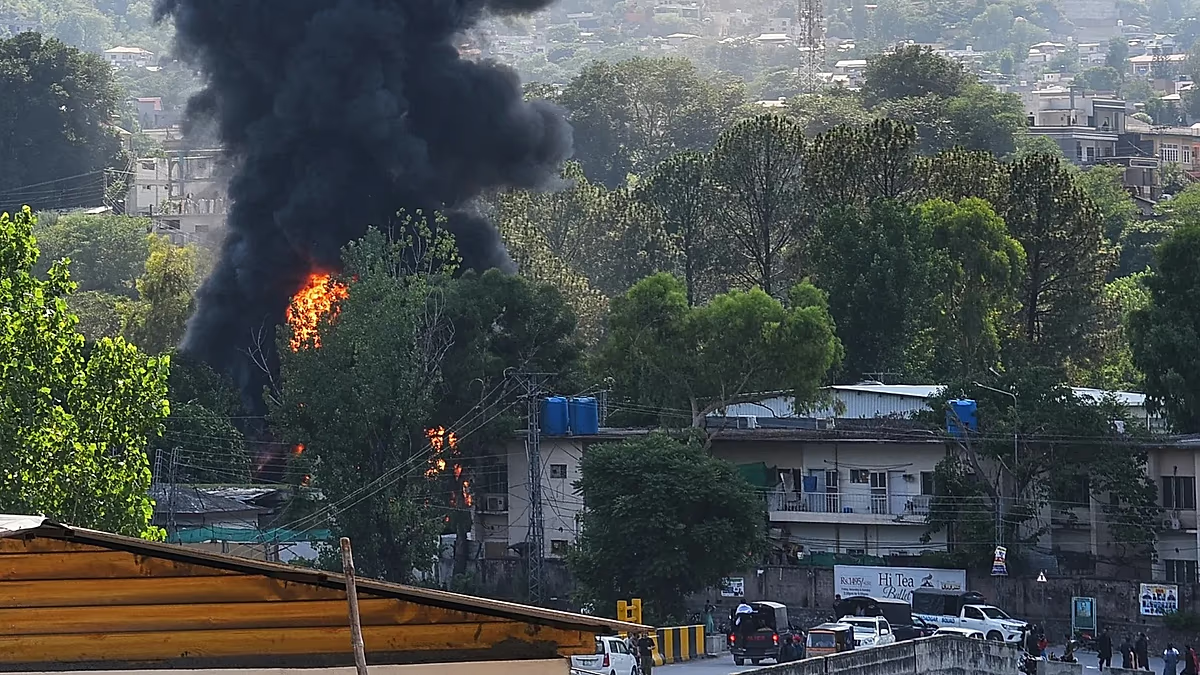


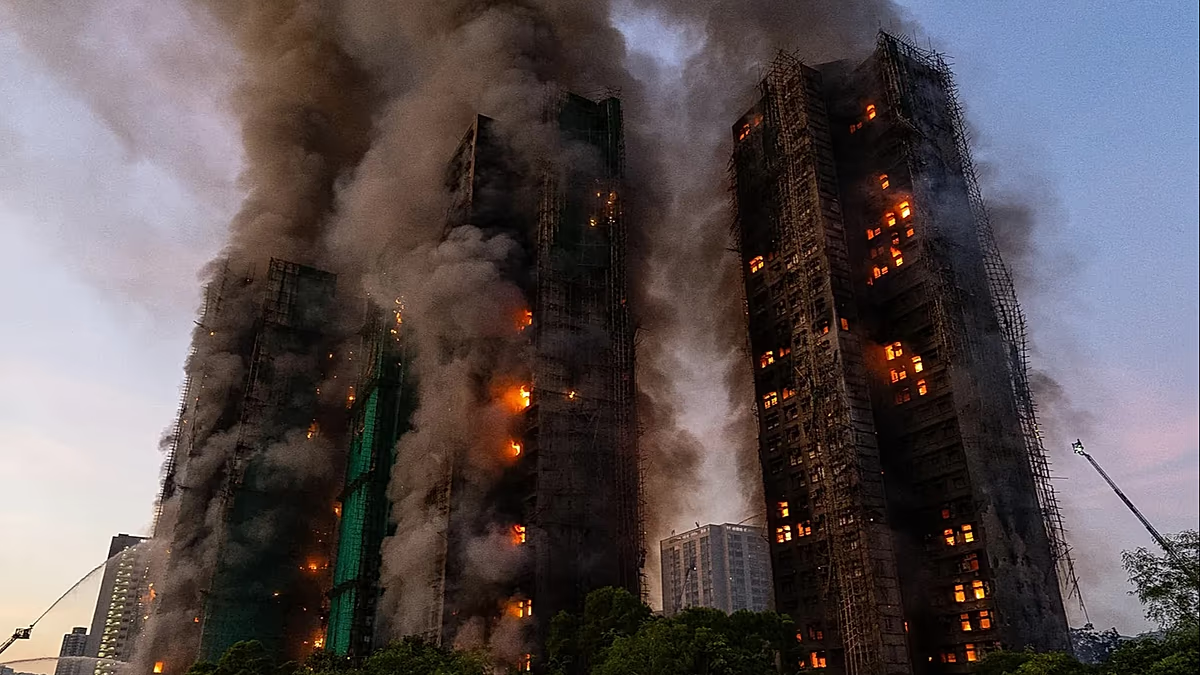
In late November of last year, a catastrophic fire tore through the Wang Fuk Court public housing estate in Hong Kong, claiming 168 lives and leaving thousands homeless. It was a tragedy that shook the city to its core, marking the deadliest residential building fire the world has witnessed in over four decades. Following a painstaking, months-long investigation, Hong Kong authorities have now taken a decisive legal step. On Wednesday, several individuals and companies were formally charged with manslaughter in connection with the blaze, a move that underscores the profound search for accountability in the wake of such immense loss.
The details that emerged from the official probe paint a harrowing picture of systemic failure. An independent committee heard that on the day of the fire, nearly every critical fire safety mechanism had broken down. Fire alarm systems in seven of the estate’s eight high-rise blocks had been deactivated, a critical lapse that “greatly shortened the time for residents to evacuate.” Furthermore, required fire-retardant safety netting was absent in many areas, and windows were covered with flammable foam boards—conditions that likely acted as a deadly accelerant, allowing flames to rapidly invade homes. The official investigation concluded that the initial spark was likely an ignited cigarette, which set combustible materials alight. However, it was the chain of human decisions and neglect that transformed a small flame into an inferno.
The charges reveal a focus on the roles played during a renovation project at the estate. According to court documents, the directors of both the construction contractor and the consulting firm overseeing that renovation, along with an inspector and the companies themselves, now face manslaughter charges. In total, seven individuals have also been charged with related financial crimes, including money laundering and tax evasion. A representative from Hong Kong’s Independent Commission Against Corruption (ICAC), which worked with police on the case, stated that 35 people had been arrested. Hazel Law, a principal ICAC investigator, framed the tragedy as a moral failure, suggesting it was “caused by individuals acting in their own self-interest… with complete disregard for the safety of residents’ lives and property.”
In a somber court appearance, the defendants acknowledged that they understood the serious charges against them. The formal manslaughter accusation states that they “unlawfully” killed the 167 residents and one firefighter who perished. The legal process is now set to move forward, with the cases adjourned until September. This marks the beginning of a long and closely watched judicial journey, one that the bereaved families and a horrified public will follow, seeking not just punishment but also answers and a measure of justice for the lives abruptly and violently ended.
Beyond the immediate legal proceedings, the Wang Fuk Court fire has ignited a city-wide reckoning over building safety, regulatory oversight, and corporate responsibility. The fact that such a devastating loss of life could occur in a modern, major global city has prompted urgent questions about how multiple layers of protection could fail simultaneously. The tragedy has exposed potentially dangerous gaps between policy, enforcement, and on-the-ground practice, particularly in aging housing stock undergoing maintenance or renovation. It stands as a stark, painful reminder that safety protocols are only as strong as the human commitment to uphold them.
As Hong Kong mourns, the path ahead involves both judicial accountability and societal healing. The thousands of residents who lost their homes and all their possessions continue to grapple with the trauma and dislocation, now living in temporary accommodations. The manslaughter charges represent a crucial step in affirming that such a disaster must be met with the full force of the law. Ultimately, the legacy of this fire must be a transformative one—compelling stricter enforcement, unwavering diligence, and a renewed cultural priority on resident safety to ensure that a catastrophe of this magnitude can never happen again. The memory of the 168 lives lost demands nothing less.