


Paragraph 1
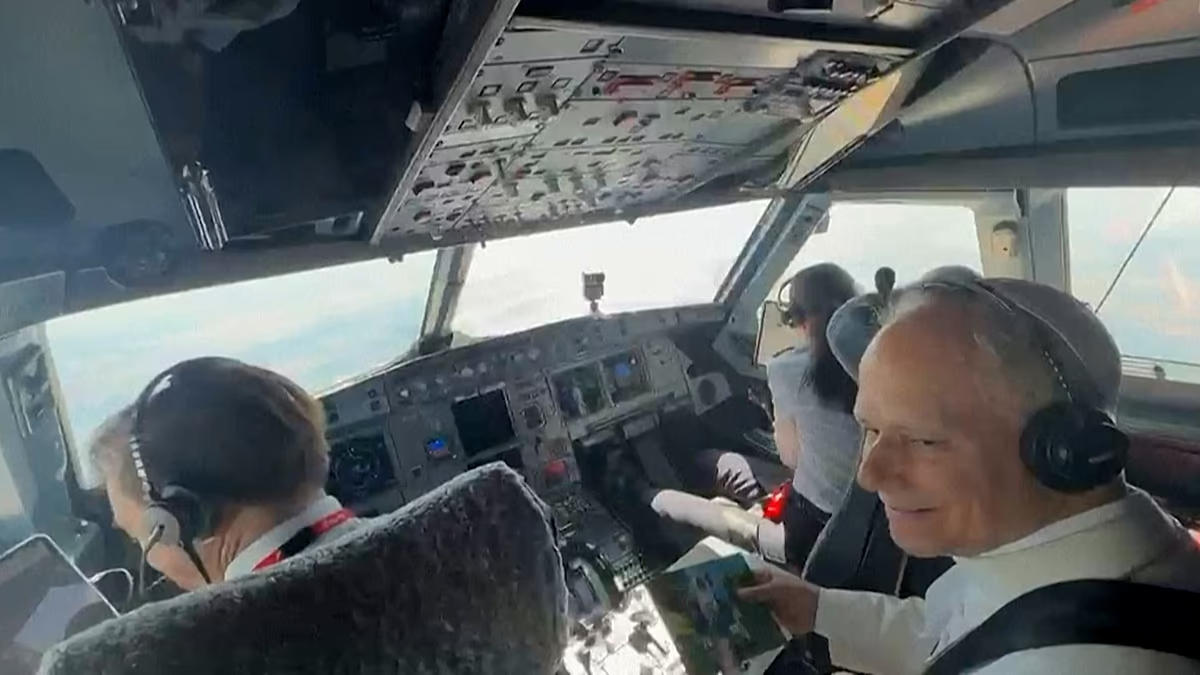
The journey began not with a grand pronouncement, but with the familiar hum of an aircraft cabin. Pope Leo, traveling on an Iberia flight from Rome to Barcelona, engaged in the simple, human interactions that define any shared voyage. As released images show, he was not a distant figure sealed away in a private suite, but a passenger among others. He conversed with the pilots in the cockpit, shared words with the crew, and addressed fellow travelers from the front of the aircraft, his presence transforming the ordinary space of a commercial flight into a moment of connection. This personal touch set the tone for his visit: one of encounter and closeness, rather than mere ceremony.
Paragraph 2
As the aircraft approached Spanish soil, its passage was marked by a symbolic gesture of honor and welcome. A fighter jet escorted the pope’s plane, a vivid, soaring salute from the nation below. Upon landing in Barcelona, this aerial welcome was mirrored by a profound one on the ground. Thousands of faithful had gathered, their collective anticipation palpable, to greet the pontiff as he stepped onto the tarmac. This seamless transition from the intimate space of the flight to the vast, expectant crowds highlighted the dual nature of such a visit: it is both a private journey and a public event, woven together by threads of reverence and excitement.
Paragraph 3
The core of the pope’s mission in Barcelona was anchored to one of the most extraordinary spiritual and architectural projects in human history: the Sagrada Família Basilica. Designed by the visionary Antoni Gaudí over a century ago, this basilica is more than a monument; it is a living poem in stone, a work of faith that has grown slowly and organically, captivating millions of visitors each year with its sublime beauty. Pope Leo’s task was to bless its newly completed central tower, which now crowns the structure as the tallest church in the world. This act was not merely administrative; it was a profound moment of consecration, linking the enduring legacy of Gaudí’s dream with the present spiritual leadership of the Church, and sanctifying a space that already serves as a universal beacon of hope and artistry.
Paragraph 4
Beyond the basilica, the pope’s schedule in Catalonia was crafted to engage the community in its fullness. His program included public prayers, offering a collective space for devotion, and meetings specifically with young people, recognizing their vital energy and the future they embody. The culmination would be a major mass in the Catalan capital, a gathering expected to draw immense crowds for shared worship and reflection. These events underscore that a papal visit is a tapestry of different encounters—with sacred art, with the public body of the faithful, and with specific generations—all aimed at nourishing the spiritual life of the local community.
Paragraph 5
After his time in Barcelona, Pope Leo’s Spanish journey would extend to a final stop in the Canary Islands before his return to the Vatican. This itinerary reflects the deliberate scope of his visit: engaging with both the mainland’s historic, metropolitan centers of faith and the distinct community of the islands, geographically set apart in the Atlantic. Each location offers a unique context and spiritual needs, and by including the Canary Islands, the visit acknowledges the diverse fabric of the Spanish Catholic community, ensuring the pastoral message reaches varied shores.
Paragraph 6
In totality, this visit by Pope Leo to Spain can be seen as a multifaceted pastoral tapestry. It blended the humility of personal interaction—seen in his airplane conversations—with the grandeur of public ceremony. It honored past genius, as in the blessing of Gaudí’s masterpiece, while actively engaging the present and future through meetings with the youth and the public. From the escorted flight to the gatherings in Barcelona and the onward travel to the Canaries, each element served to bridge distance, both physical and spiritual, reinforcing the Church’s presence as one of both deep historical roots and living, contemporary engagement.