

In a stark reminder of a geopolitical struggle that has spanned generations, the Cuban government has leveled a serious accusation against the United States, one that directly impacts the most vulnerable. Officials in Havana stated that the stringent US oil blockade is now crippling humanitarian efforts, specifically preventing the United Nations from distributing 170 containers of vital aid. These containers, filled with supplies worth millions of dollars, are sitting idle, unable to reach Cubans in need due to a critical shortage of fuel required for their transportation. This development marks a distressing escalation, illustrating how international sanctions can have cascading effects, ultimately thwarting the work of global aid organizations striving to operate on the island. The situation underscores a bitter reality: economic pressure tactics often exact their heaviest toll not on governments, but on innocent civilians caught in the crossfire.
The roots of this current crisis trace back to a deliberate policy shift by the Trump administration, which set its sights on intensifying pressure to end communist rule in Cuba. A pivotal move was the severing of oil supplies from Venezuela, Cuba’s traditional supplier, coupled with threats of sanctions against any other nation attempting to fill the void. This strategic chokehold has had devastating consequences, plunging Cuba into its worst economic and energy crisis in decades. The daily life for ordinary Cubans has become a grueling test of endurance: parts of the capital, Havana, suffer power outages lasting up to 30 hours, while basic necessities like food, clean water, and medicine grow scarcer by the day. The US administration justifies this pressure by framing Cuba, a neighbor just 90 miles off the coast of Florida, as a significant national security threat, even musing about the possibility of a “friendly takeover.”
The human cost of this protracted crisis is becoming increasingly and tragically clear, drawing condemnation from international observers. The UN’s High Commissioner for Human Rights, Volker Türk, has issued a powerful call for the US sanctions to be “lifted immediately,” highlighting devastating downstream effects. He pointed to the unacceptable reality that children are dying because doctors lack access to essential medical supplies and medicines blocked by the embargo. This statement from a top UN official reframes the issue from a political stalemate to a profound humanitarian emergency. It challenges the world to consider the moral implications of policies that, regardless of their intended political targets, result in preventable suffering and loss of life among a civilian population.
From Cuba’s perspective, the recent tightening of US sanctions is not merely economic warfare but a potential prelude to something more sinister. Ambassador Lianys Torres Rivera, Cuba’s top diplomat in Washington, articulated this fear, arguing that US actions—such as sanctioning Cuban leaders and indicting former President Raúl Castro—are a “pretext.” The aim, she claims, is to manufacture a narrative of threat to persuade the American public to support a military intervention. In emotional remarks, she defended Castro as a “sacred symbol of the revolution” and framed the current climate as “a war without bombs.” This rhetoric reveals a state of deep siege mentality, with Cuban officials vowing fierce resistance to any attempt to change their government by coercion or force, asserting that they are prepared to defend themselves if attacked.
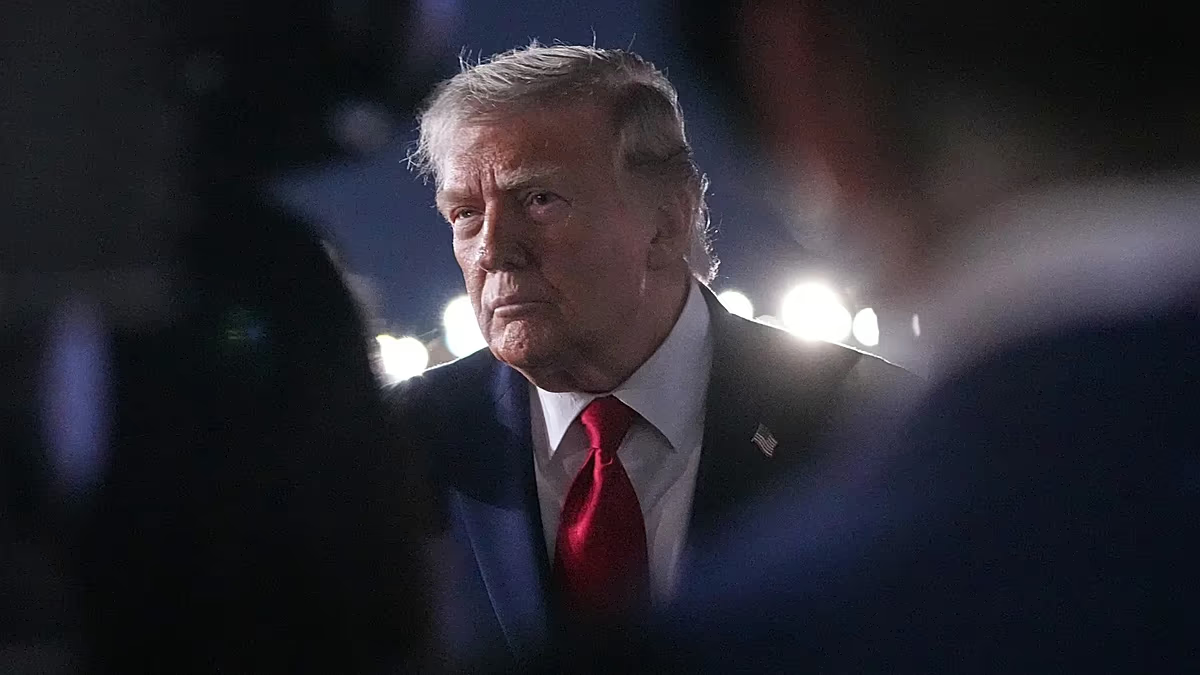
The US administration, for its part, steadfastly rejects the premise that it bears responsibility for Cuba’s deepening turmoil. President Trump, Secretary of State Marco Rubio, and other officials consistently deflect blame onto Cuba’s own socialist economic policies, arguing that the island’s failures are inherent to its political system. While they have not explicitly ruled out military action, they have presented their current strategy as one of maximum pressure, ostensibly to compel reforms from the Cuban government. This creates a perilous standoff, where one side sees coercive measures as a justified tool for democratization, and the other sees them as an act of aggression that justifies a rallying cry for national unity and resistance.
Ultimately, the situation presents a tragic impasse with no easy resolution in sight. The original article, sourcing reports from major news agencies, paints a picture of two entrenched narratives colliding, while the well-being of millions of ordinary Cubans hangs in the balance. The blockage of UN aid is a potent symbol of how geopolitical conflict can paralyze humanitarian action. Whether viewed as a necessary pressure campaign or an unjust collective punishment, the effects are undeniably concrete: darkness in homes, empty pharmacy shelves, and aid shipments that cannot complete their final, crucial miles. The path forward remains shrouded in uncertainty, dependent on whether diplomatic channels can eventually prioritize human need over a decades-old cycle of recrimination and hostility.