


Across the European Union, a quiet crisis is deepening, one that strikes at the very heart of the concept of home and security. According to the European Union Agency for Fundamental Rights (FRA), headquartered in Vienna, soaring housing costs are systematically placing the fundamental right to adequate housing out of reach for a growing number of citizens. This is not merely an economic issue, but a profound challenge to human dignity and social stability. The FRA’s annual report paints a stark picture of a continent where the dream of a stable, affordable home is becoming an insurmountable obstacle for millions, transforming housing from a basic need into a source of widespread anxiety and insecurity. This erosion of housing security serves as a critical test for the EU’s commitment to upholding the rights and well-being of all who reside within its borders.
The scale of this affordability crisis is captured in cold, hard figures that translate into daily struggles for families and individuals. Data from Eurostat reveals that between 2015 and 2024, house prices across the EU skyrocketed by a staggering 53%, while rents climbed by nearly 17%. FRA Director Sirpa Rautio underscores the human consequence behind these percentages, noting that soaring costs mean “more and more people cannot afford their homes and risk becoming homeless.” While over two-thirds of EU residents are homeowners, this security is not shared equally; less than half of those living below the poverty line own their homes, exposing a deep and troubling inequality. This financial pressure creates a precarious reality where a single missed payment or unexpected bill can trigger a downward spiral towards destitution.
Certain groups are bearing the brunt of this crisis with particular severity, threatening to stifle the potential of an entire generation and further marginalize the most vulnerable. Young people, striving to establish their independence and build futures, find themselves trapped in a cycle of high rents, insecure tenancies, and the distant prospect of homeownership. As Director Rautio states, they face hardships that “undermine their access to the basic right to adequate housing.” Alongside them, other vulnerable groups, including low-income families, migrants, refugees, and asylum seekers, confront compounded barriers, often with little protection against unfair eviction or discrimination. The FRA is emphatic that the right to adequate housing, enshrined in international law, applies universally to everyone, yet for these populations, the promise of this right feels particularly hollow.
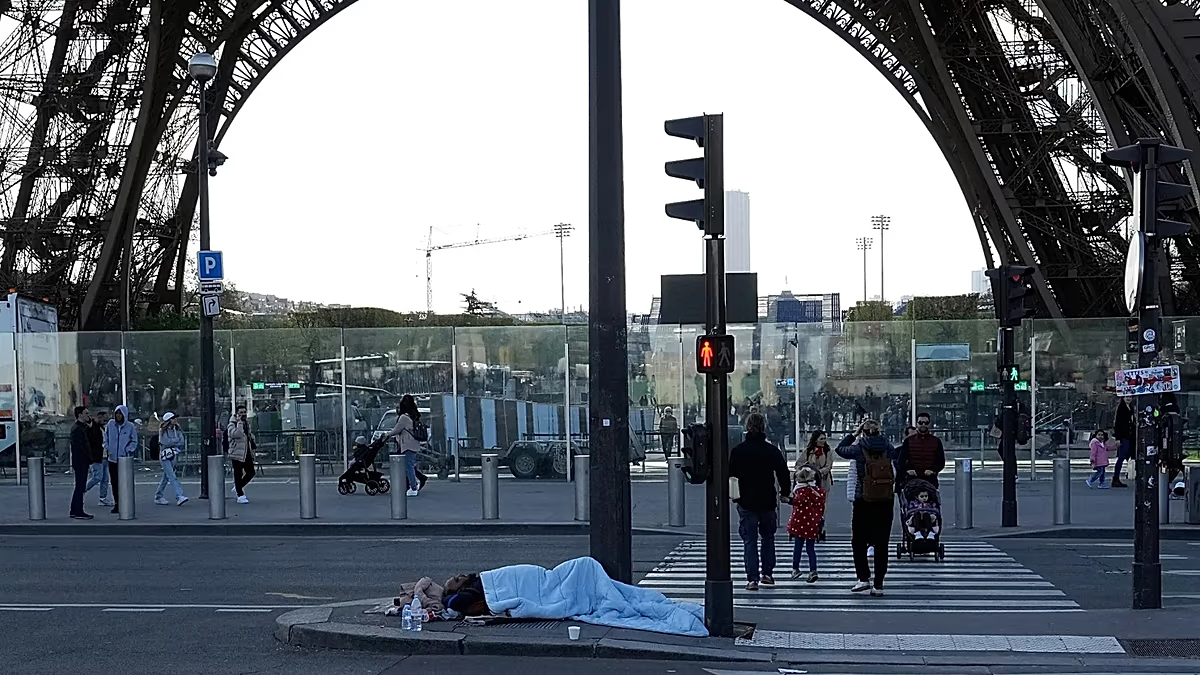
The most devastating outcome of this systemic failure is the visible and heartbreaking rise in homelessness. The FRA reports that, according to estimates from the European Federation of National Organisations Working with the Homeless (Feantsa), nearly 1.3 million people were experiencing homelessness in the EU in 2025. This figure is not an abstract statistic but represents individuals and families living on streets, in shelters, or in temporary, inadequate accommodation. This rise is a direct indictment of the gap between legal frameworks and on-the-ground reality. The EU and its member states are bound by international agreements that require them to prevent homelessness and improve access to affordable housing, yet the numbers continue to grow, signaling a policy shortfall of monumental proportions.
In response to this escalating emergency, the FRA is calling for a fundamental shift in policy, advocating for a robust, rights-based approach to housing. This means designing laws and interventions that explicitly center on the human right to housing, going beyond market-driven solutions. Effectively addressing homelessness, the agency argues, requires stronger legal protections against forced evictions, enhanced safeguards for people in vulnerable situations, and proactive measures to increase the supply of genuinely affordable and social housing. This approach frames housing not as a commodity but as a cornerstone of personal security and social participation. Without such a foundational commitment, the FRA warns, growing housing insecurity will inevitably leave ever more people exposed to the trauma of homelessness.
This domestic crisis unfolds against a backdrop of intense global instability, which further strains Europe’s social fabric and its capacity to respond. Director Rautio notes that the EU is “increasingly tested in upholding rules-based governance and fundamental rights” amid geopolitical turmoil and security threats. “The unpredictable international environment and ongoing wars are having an impact here at home — not least on people’s sense of safety and wellbeing,” she observes. This interconnection is crucial; economic pressures from global events exacerbate housing unaffordability, while domestic insecurity fueled by homelessness and inequality can, in turn, weaken societal resilience. The FRA’s report, covering all 27 EU member states plus several accession countries, ultimately presents a unified challenge: to recognize that ensuring the fundamental right to housing is not only a moral imperative but also essential for fostering the stable, cohesive, and secure societies needed to navigate an uncertain world. The stability of Europe itself may well depend on its ability to guarantee a safe place to call home for all its people.