



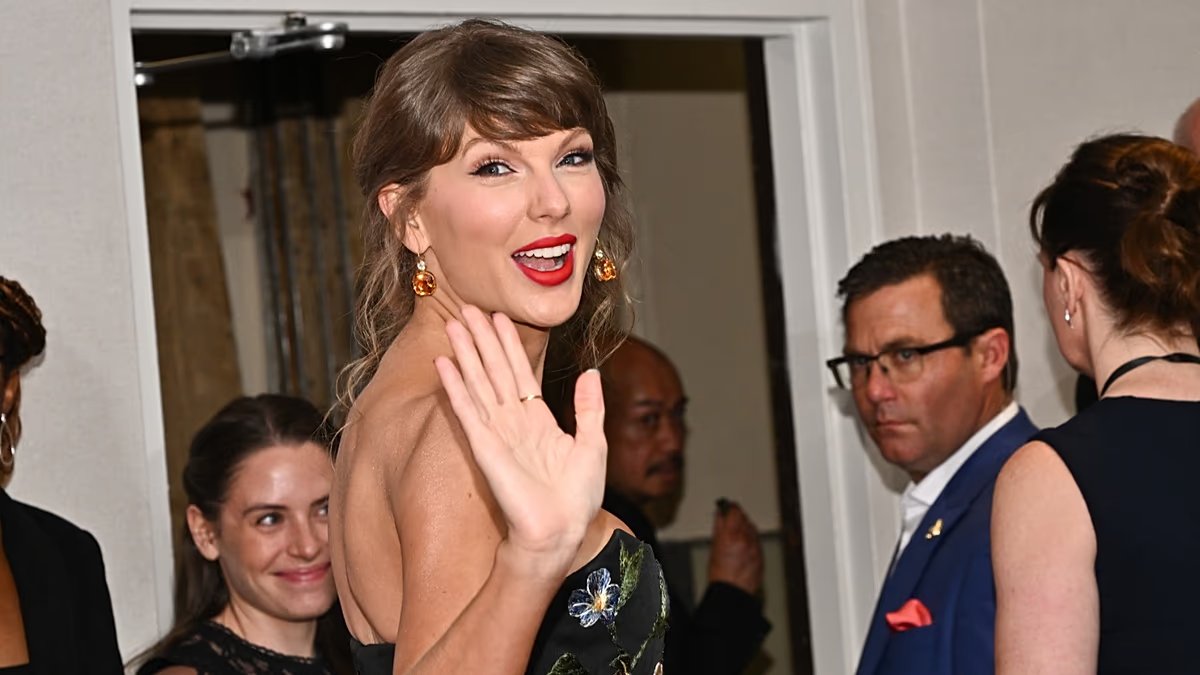
In a landmark moment for both her career and the broader recognition of songwriting artistry, Taylor Swift has been inducted into the Songwriters Hall of Fame, becoming the youngest woman ever to receive this prestigious honor. The induction rules stipulate that an artist must have a notable catalog of work spanning at least twenty years from their first commercial release. Swift’s debut single, “Tim McGraw,” arrived in June 2006, marking the beginning of a journey that has now culminated in this historic accolade. Over those two decades, she has crafted a remarkable body of work comprising twelve studio albums that seamlessly weave through country, pop, and folk, earning her fourteen Grammy Awards, including a record-breaking four for Album of the Year. This induction is not merely a personal milestone; it serves as a powerful testament to the enduring impact and craft of the songwriter, elevating the often unseen architects of our musical landscape.
The ceremony at the Marriott Marquis Hotel in New York was a night of profound emotion and reflection for Swift. Introduced by a surprise video message from filmmaker Steven Spielberg, who spoke eloquently about how songs “imprint on our souls,” Swift was visibly moved as she addressed the star-studded audience. Holding back tears, she expressed an unwavering gratitude, particularly toward her family, who sacrificed their own lives to support her dreams by relocating from Pennsylvania to Nashville. In her speech, she highlighted the intuitive, untaught nature of her craft, saying, “It was instinctual. No one taught me how to do it.” This moment capped an extraordinarily vibrant week for the 36-year-old superstar, who had been seen just days earlier celebrating exuberantly at Madison Square Garden during a historic NBA Finals game, illustrating the whirlwind of her life at the pinnacle of global fame.
Swift’s induction brought renewed public attention and excitement to the ceremony, underscoring her unique role in shaping contemporary pop music through her lyrical storytelling. While she is the youngest woman to join the Hall, the record for the youngest ever inductee remains with Stevie Wonder, whose legendary career began when he was just thirteen. Swift’s inclusion was a standout moment in a evening rich with honors, sharing the stage with fellow inductees like Kiss members Gene Simmons and Paul Stanley, the prolific songwriter-producer Christopher “Tricky” Stewart, the iconic Alanis Morissette, and veteran singer-songwriter Kenny Loggins. The event itself was a celebration of diverse musical genius, bridging genres and generations, and reaffirming the central, critical role of the songwriter in creating the soundtrack of our lives.
The gala opened with a spirited performance by Tamar Braxton, paying tribute to one of the new inductees, Christopher “Tricky” Stewart. Braxton performed Beyoncé’s anthemic “Single Ladies (Put a Ring on It),” one of the many cultural touchstones Stewart has crafted. His catalog is a map of modern pop history, including seminal hits like Rihanna’s “Umbrella,” Mariah Carey’s “Touch My Body,” and Justin Bieber’s “Baby.” Introduced by songwriter and producer Dallas Austin, who praised Stewart’s work with artists like Boyz II Men and Madonna, Stewart’s contribution was framed as a series of “cultural moments.” In his acceptance speech, Stewart offered heartfelt thanks to God, his family, the artists he collaborated with, and his mentors, specifically highlighting the influence of Grammy-winning producer Antonio “L.A.” Reid and the legendary Babyface, whom he aspired to emulate.
Another significant honor of the night was bestowed upon British singer-songwriter RAYE, who received the Hal David Starlight Award. This award recognizes gifted young songwriters who are making a notable impact on the industry. In her speech, RAYE ended with a powerful and pointed statement on industry economics, asserting that songwriters deserve a fair share of master royalties. Her remark underscored a recurring and crucial theme of the evening: the advocacy for the financial rights and recognition of the writers behind the music. The ceremony, therefore, served not only as a celebration of past achievements but also as a platform for addressing the future and ensuring that the creators who pen the songs are valued and compensated appropriately for their indispensable contributions.
Ultimately, the 2026 Songwriters Hall of Fame induction ceremony was a multifaceted event honoring artistic legacy, personal sacrifice, and cultural influence. From Taylor Swift’s instinctual, generation-defining narratives to Tricky Stewart’s rhythm-driving pop productions, the night illuminated the profound connection between songwriter and listener. As these artists were celebrated, the underlying message resonated clearly: songs are the vessels of memory, emotion, and identity, and those who craft them are the true architects of our shared human experience. The event reminded us that behind every anthem that unites a stadium or every ballad that comforts a solitary heart, there is a writer whose vision and vulnerability make that moment possible.