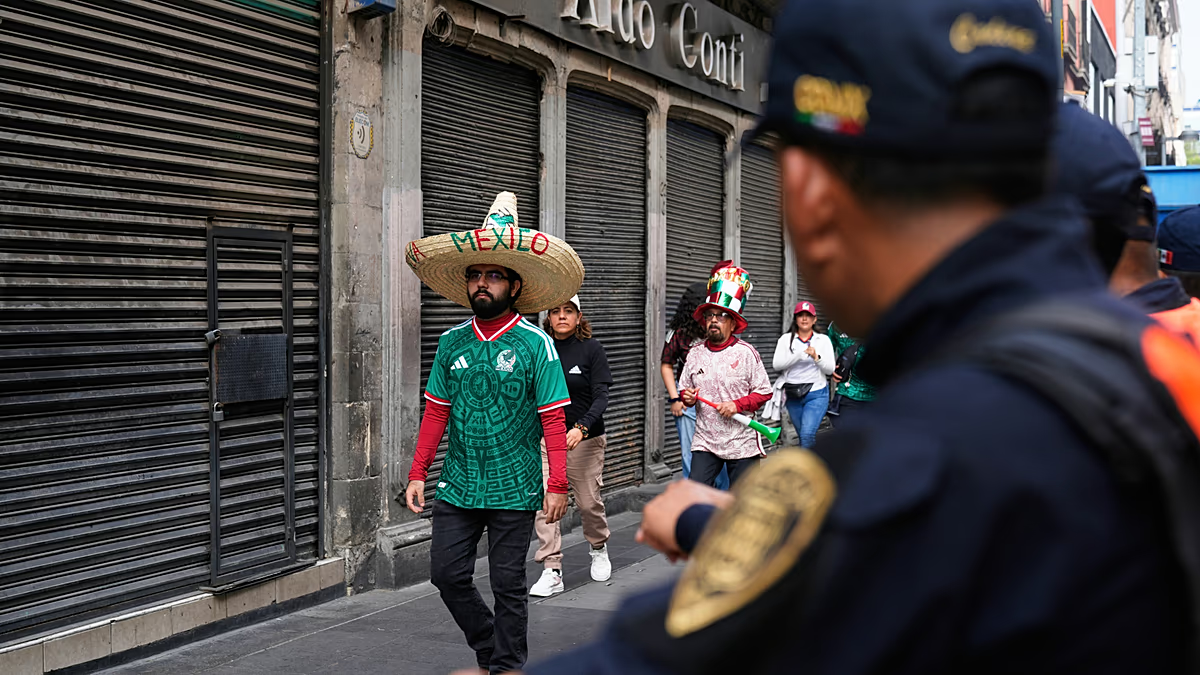
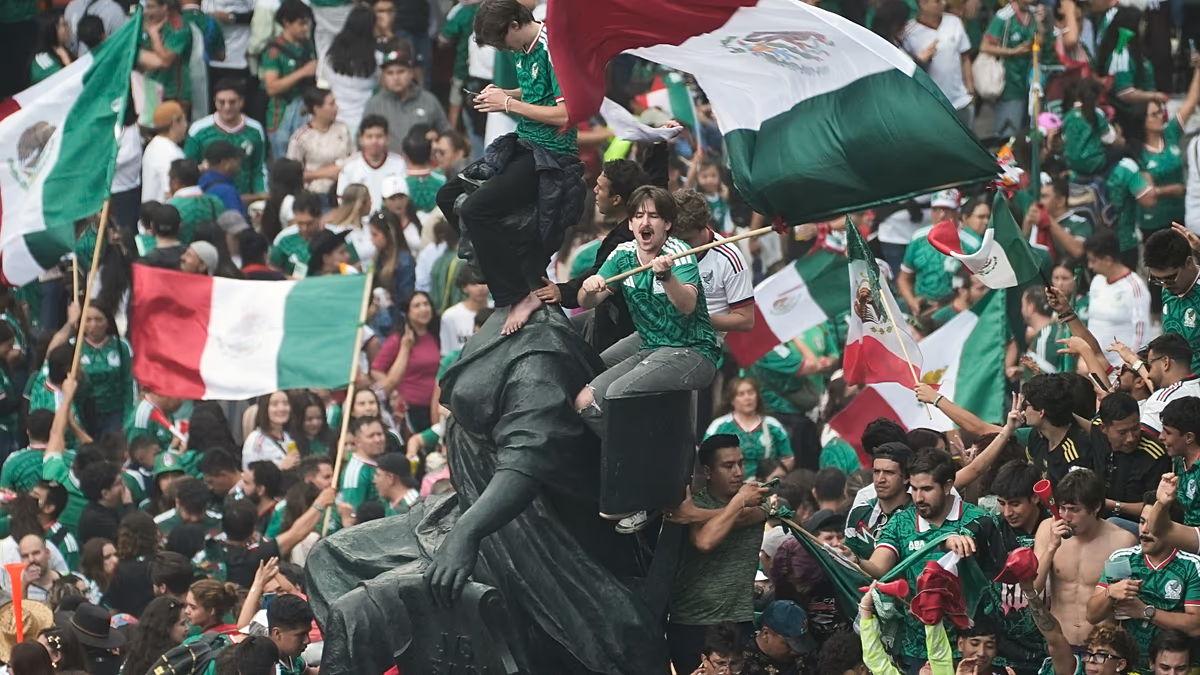



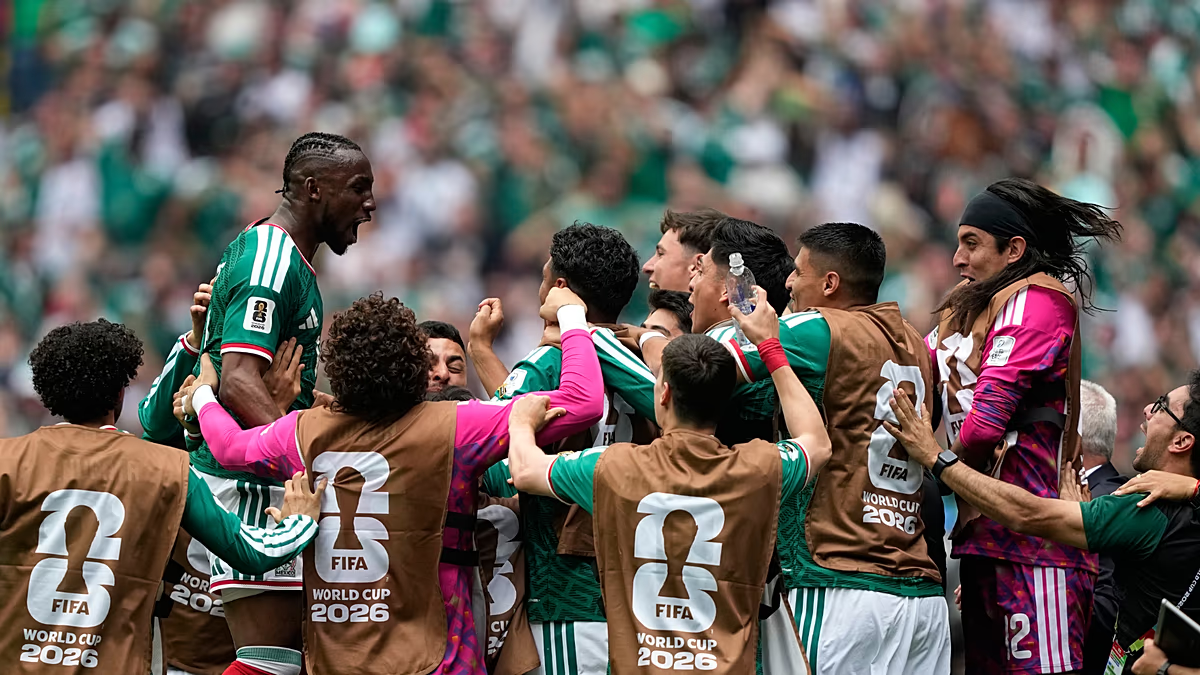
On a vibrant evening in June 2026, the long-awaited FIFA World Cup roared to life at the iconic Estadio Azteca in Mexico City. In front of a deafening, capacity crowd of over 80,000, the host nation, Mexico, took to the field carrying not just the hopes of a football-mad country, but also the weight of recent history. Their mission was clear: to banish the painful memories of a shocking group-stage exit in Qatar 2022 and launch their tournament with the authority expected of a host. Their opponent, South Africa, stood ready to spoil the party. What unfolded was a match of soaring emotion, historic goals, and combustible drama, setting a thrilling and unpredictable tone for the weeks of football to come.
The Mexican response to the pressure was emphatic and swift. With the nation’s energy fueling them, they struck in just the ninth minute. Julián Quiñones, seizing the moment, scored the goal that will forever be recorded as the first of the 2026 World Cup, sending the Azteca into a state of pure euphoria. The hosts continued to dominate, and their lead was doubled before halftime by the veteran striker Raúl Jiménez. At 35 years old, Jiménez rose to meet a cross with a powerful header, scoring in a stadium that now holds a unique place in football lore. By hosting this opener, the Azteca became the first venue in history to stage matches in three separate World Cups, having also been a centerpiece in 1970 and 1986. The goal was a poetic link between generations of Mexican football.
The significance of the moment was not lost on Mexico’s coach, Javier Aguirre. As a player, he had been part of the Mexican squad that last hosted the tournament in 1986. Now, decades later, he was leading a new generation onto the same hallowed turf. After the match, Aguirre reflected on bridging that gap, saying, “I made an effort to explain to them what a World Cup and an opening match on home soil meant, but they are young and had to experience it for themselves.” He added with pride, “I can no longer talk about having played in a home World Cup, because they already know what it’s like.” His words captured a passing of the torch, as his players transitioned from hearing about history to actively creating it.
However, the match’s narrative would take a fiery and ill-tempered turn in the second half. The occasion’s intensity boiled over, resulting in a flurry of red cards that rewrote the record books. South Africa’s Sphephelo Sithole was first dismissed for denying a clear goal-scoring opportunity. The tension escalated further when his teammate, Themba Zwane, was shown a straight red for an off-the-ball slap. Mexico was not spared, as defender César Montes later received his marching orders for a dangerous, late foul. This cascade of dismissals meant that for the first time ever, three red cards were shown in a World Cup opening match, equaling the most in any World Cup game since 2006.
Despite the numerical chaos, Mexico managed the game professionally to secure a vital 2-0 victory. For South Africa’s veteran coach, Hugo Broos, the result was a harsh lesson in the pinnacle of international football. He acknowledged the gap in experience, stating, “This level is much higher than whatever level we played before. We played a good team, and we played a good game. I saw a desperate Mexico.” He remained focused on improvement, adding, “We must improve in the next days. We’ll get over the disappointment.” His counterpart, Aguirre, preferred to keep his team’s eyes fixed firmly on the immediate future, emphasizing a step-by-step approach rather than grand pronouncements about winning the group.
With three points securely in hand, Mexico now looks ahead to a crucial Group A encounter against South Korea in Guadalajara. South Africa, meanwhile, must regroup quickly for a daunting challenge against the Czech Republic in Atlanta. The opening match of the 2026 World Cup delivered everything fans crave: history, passion, goals, and controversy. It provided a perfect snapshot of tournament football—where dreams are ignited, pressure can combust, and the journey is only just beginning. For Mexico, the dream of equalling their best-ever runs as host, in 1970 and 1986, is compellingly alive.