


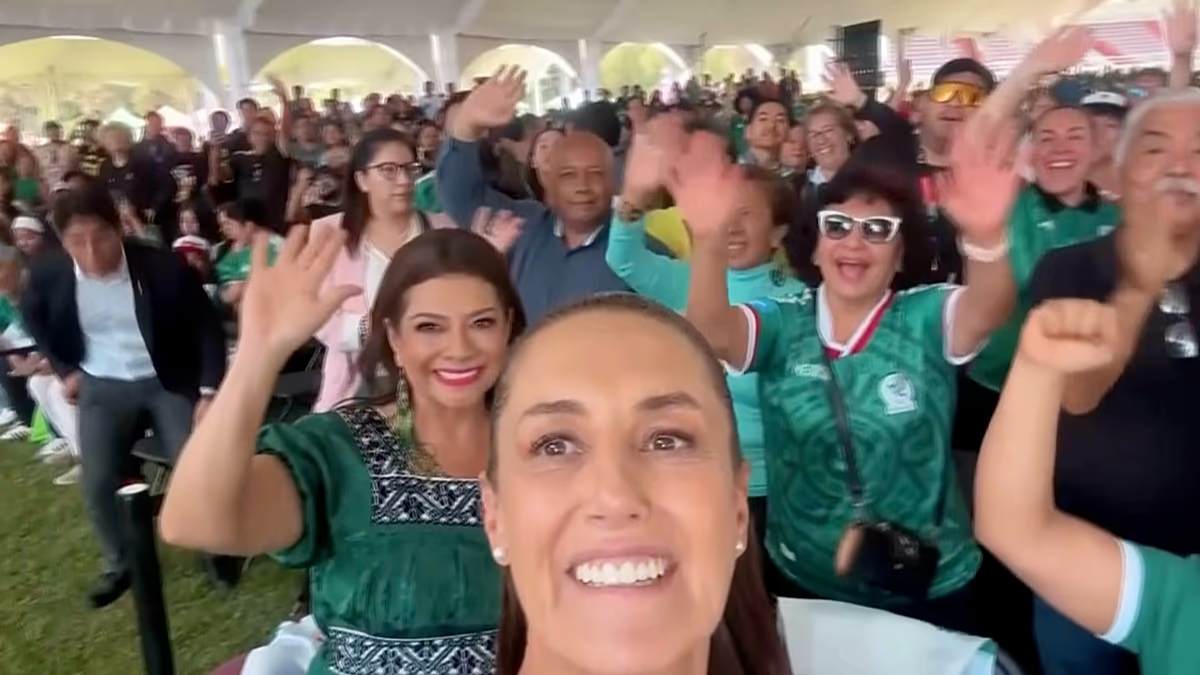
The vibrant heart of Mexico City, the historic Zócalo Square, was transformed on a historic evening in the summer of 2026. No longer just a grand plaza of political and cultural significance, it became the pulsating epicenter of a nation’s shared passion. Thousands upon thousands of supporters, a sea of green, white, and red, gathered under the open sky, their faces illuminated by giant screens. The energy was electric, a palpable mix of nervous excitement and unwavering national pride. This was no ordinary match day; it was the opening game of the FIFA World Cup 2026, hosted across North America, and Mexico, a co-host, was stepping onto the global stage against South Africa. The air buzzed with anticipation, vuvuzelas hummed, and the collective heartbeat of a football-mad nation quickened as the moment of kickoff approached.
Amidst this roaring ocean of fervent fans, a particularly notable figure stood shoulder-to-shoulder with her fellow citizens. President Claudia Sheinbaum, having exchanged the formalities of the National Palace for the jersey of El Tri, joined the massive crowd in the public fan zone. Her presence was a powerful, symbolic gesture. It was a deliberate choice to experience this historic moment not from a detached, official box, but from within the emotional crucible of the crowd—feeling the collective gasps, the shared groans, and the eruption of joy alongside every other fan. This act of solidarity transformed her from a head of state into a fellow compatriot, sharing in the universal language of hope and sporting passion that football provides.
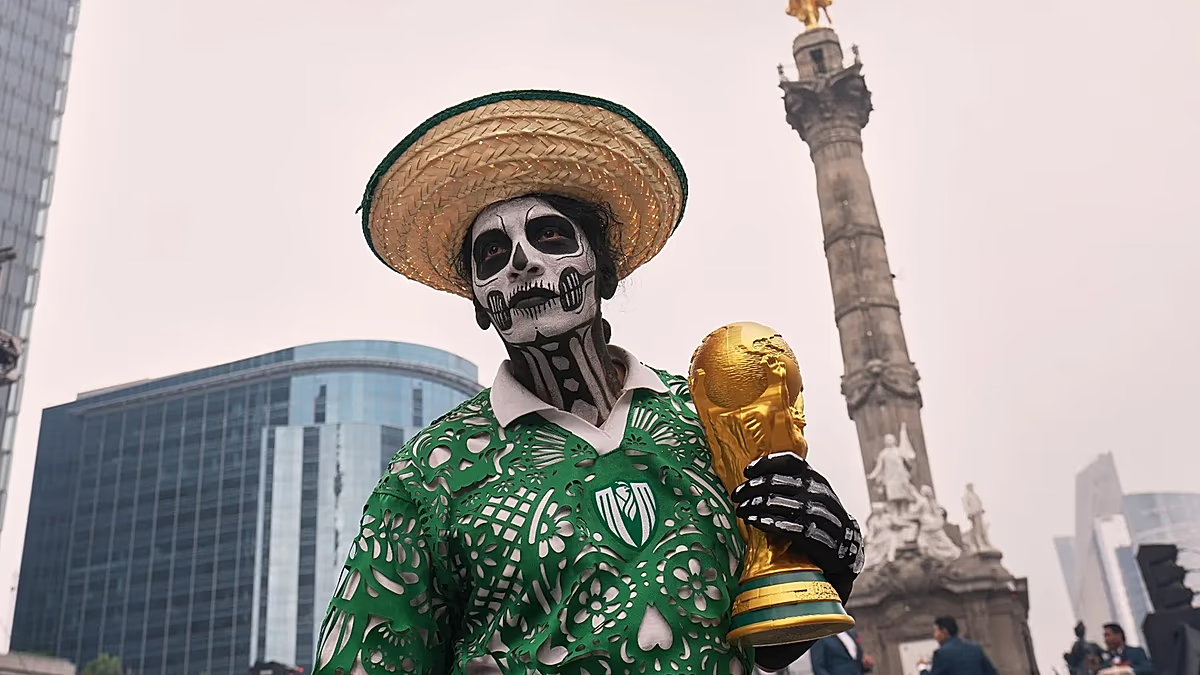
The scene in the Zócalo was a magnificent spectacle of unity. From students to grandparents, from seasoned football veterans to families introducing a new generation to the beautiful game, the crowd represented a cross-section of Mexican society. They were united by a single, powerful hope: to witness their team start its World Cup journey with triumph. Every near-miss drew a synchronized roar; every skillful move by a Mexican player sent waves of applause through the square. The fan zone became a living, breathing entity, its mood shifting with the flow of the game, a testament to how sport can temporarily dissolve everyday concerns and forge a powerful, collective identity.
As the match unfolded, the narrative on the pitch became a metaphor for the resilience and spirit often associated with the Mexican people. The game was a tense, hard-fought battle. South Africa, undoubtedly inspired by the magnitude of the occasion, proved to be formidable and disciplined opponents. For long stretches, the breakthrough goal seemed agonizingly out of reach. Yet, the crowd’s support never wavered. Chants of “¡México! ¡México!” rose in crescendo during moments of pressure, willing their team forward. This unwavering faith from hundreds of thousands in the Zócalo and millions more across the country was a reminder that the team’s strength was drawn not just from the eleven players on the field, but from the soul of an entire nation backing them.
While the specific details of the match’s outcome remain part of the article’s withheld conclusion, the true story of the evening was already written in the Zócalo. It was a story that transcended the final score. The gathering showcased the profound cultural importance of football in Mexico—it is more than a sport; it is a national ritual, a shared emotional journey, and a source of immense pride. President Sheinbaum’s participation underscored this, highlighting how moments of national celebration can bridge the space between government and citizenry. The 2026 World Cup opening was a gift to the host nation, a chance to present its vibrant spirit to the world, and the Zócalo fan zone served as its most authentic stage.
Ultimately, that evening in June 2026 captured a timeless human experience. It was about the joy of collective belonging, the thrilling uncertainty of competition, and the simple, profound act of hoping together. Whether the result brought unbridled celebration or the dignified acceptance of a hard-fought draw, the shared experience itself was the victory. For one night, in the shadow of centuries-old architecture, a modern communal festival unfolded, proving once again that football has the unique power to write stories not just in record books, but in the hearts of all who gather to believe in a common dream. The world was watching, and Mexico, in its passion and unity, had already made a memorable opening statement.