

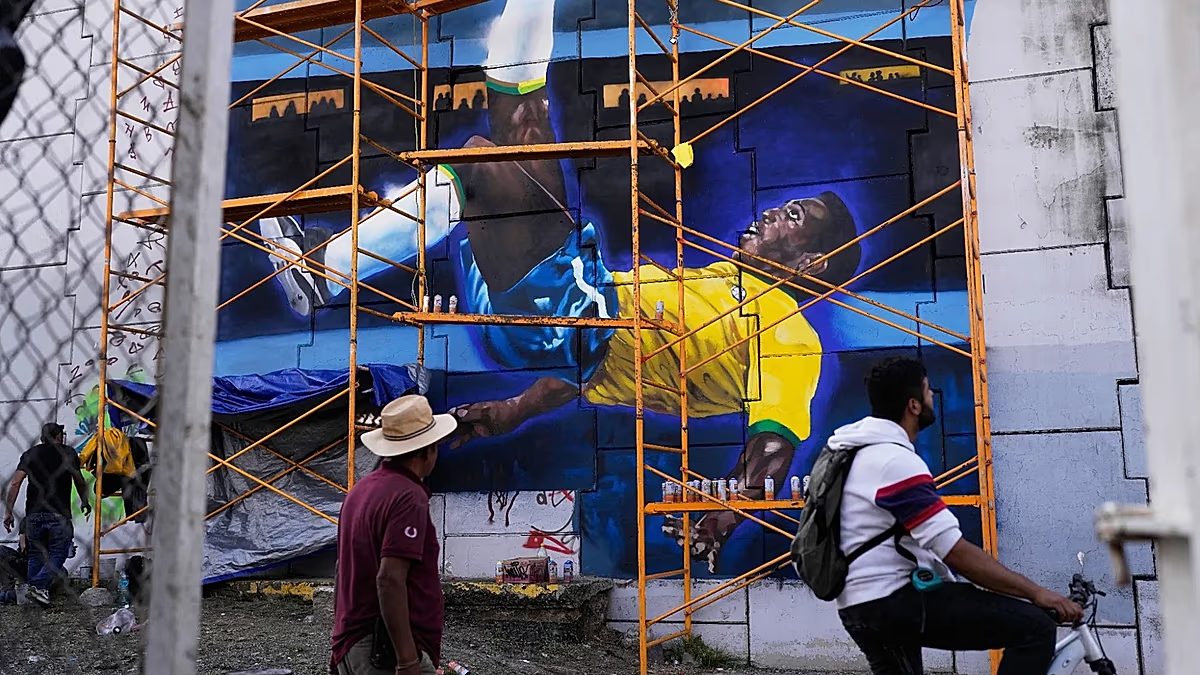
Here in the vibrant heart of Rio de Janeiro, the beautiful game is never merely played; it is lived, breathed, and painted onto the very fabric of the city. As the World Cup approaches, a profound transformation sweeps through neighborhoods like Tijuca and Saude, where the quiet grey of concrete and asphalt is joyously surrendering to a brilliant explosion of green and yellow. This is not the work of a single commissioned artist, but a collective, grassroots outpouring of national pride. Ordinary residents have taken up brushes and cans, turning entire streets into vast, open-air murals dedicated to the Brazilian national team. From towering walls to humble kerbstones and forgotten street corners, every available surface becomes a canvas for hope, a declaration of unwavering support for the Seleção.
This vibrant urban tapestry is far more than simple decoration; it is a cherished tradition steeped in community and ritual. For generations in Rio, the approach of a major football tournament has served as a powerful social catalyst, pulling neighbours from their homes and uniting them in a shared, colourful project. The act of painting together strengthens communal bonds, transforming anonymous streets into intimate expressions of collective identity. It is a time for storytelling, for sharing memories of past glories—the magic of Pelé, the artistry of Zico, the divine talent of Ronaldo—and for passing on that fervent passion to wide-eyed children now dipping their own brushes into pots of bright tinta. The mural becomes a living history, a visual narrative of a nation’s love affair with football.
The aesthetic goal is straightforward yet powerful: to immerse the city in the iconic colours of Brazil, creating a continuous sea of support that both honours the players and fuels the dreams of every fan. The aim is simple, as residents say: to prepare the city for the football and keep hopes alive as Brazil chases another World Cup crown. Walking down these transformed avenues is an immersive experience, a sensory overload of national symbolism. The dazzling yellow represents not just the jersey, but the sun, optimism, and the radiant joy the game is meant to bring. The deep green echoes the vastness of the Amazon and the lushness of the coastal forests, grounding the spectacle in the nation’s natural beauty. Against this backdrop, stars representing the nation’s five previous World Cup victories often shine, with space left—both literally and metaphorically—for a hopeful sixth.
This ritualistic preparation is deeply intertwined with a sense of faith and superstition. Many residents fervently believe that this collective act of beautification and dedication is not just supportive, but actively lucky. There is a feeling that by physically altering their environment, by dedicating their own labour and neighbourhood to the cause, they are contributing to the team’s fortune on the pitch thousands of miles away. It is a tangible form of prayer, a way for those who cannot be in the stadium to feel directly connected to the struggle and the potential triumph. The painted streets become a sacred space, an altar to football where every brushstroke is an offering for victory.
Ultimately, these neighbourhood murals represent a profound and human response to the pressure and expectation that always accompanies Brazil at a World Cup. The nation carries the immense weight of being perennial favourites, of a history that demands excellence. In the face of this anxiety, the communal painting is a therapeutic release—a way to channel nervous energy into creativity, to replace doubt with vibrant, undeniable colour. It is a declaration that the journey matters as much as the destination, that the community’s shared belief and celebration are victories in themselves. The murals loudly proclaim that regardless of the final result, the spirit of futebol is alive and thriving in the streets of Rio.
Therefore, as the world turns its eyes to the tournament, the true pre-game spectacle is unfolding not in a stadium, but in the residential heart of Rio de Janeiro. The streets of Tijuca and Saude, now resplendent in green and yellow, stand as a powerful testament to the soul of Brazilian football. They remind us that for millions, the sport is a powerful cultural glue, a source of collective identity, and a catalyst for community artistry. These open-air galleries, created by the people and for the people, are the authentic beating heart of the World Cup frenzy, a vivid, human-made landscape where hope is not just felt, but vividly painted for all the world to see.