



The Allure of the Road Less Traveled: Rethinking the Modern Journey
In an era of overtourism and homogenized experiences, a quiet revolution is unfolding in the world of travel. The iconic capitals and mega-cities that have long dominated bucket lists are, for a growing number of discerning travelers, losing their exclusive appeal. The quest is shifting from checking off major landmarks to seeking connection, authenticity, and a deeper sense of place. This movement is not about rejecting famous cities outright, but rather about expanding the map to include the rich, often overlooked urban gems that offer a more intimate and rewarding exploration. As global travel networks like WorldHotels highlight, the future of meaningful travel lies in bypassing the crowded, cookie-cutter itineraries for destinations where culture feels personal, atmosphere is rich, and discovery is a daily pleasure.
Europe, a continent steeped in world-famous capitals, is also a treasure trove of these compelling alternatives. Consider the Netherlands, where the magnetic pull of Amsterdam’s canals is undeniable. Yet, just a short journey away, cities like Arnhem present a profoundly different Dutch narrative. Nestled near the German border, Arnhem is where vibrant urban creativity meets untamed natural beauty. It serves as a gateway to the breathtaking De Hoge Veluwe National Park, a sprawling sanctuary for hiking and cycling, while simultaneously fostering a cutting-edge fashion scene within its Modekwartier district. This seamless blend allows a traveler to spend a morning immersed in forest silence and an afternoon browsing independent design studios—a duality that crowded capitals struggle to offer. Completing the experience, a stay in a historic hotel like the century-old Hotel Haarhuis provides a serene and connected base from which to appreciate this multifaceted city.
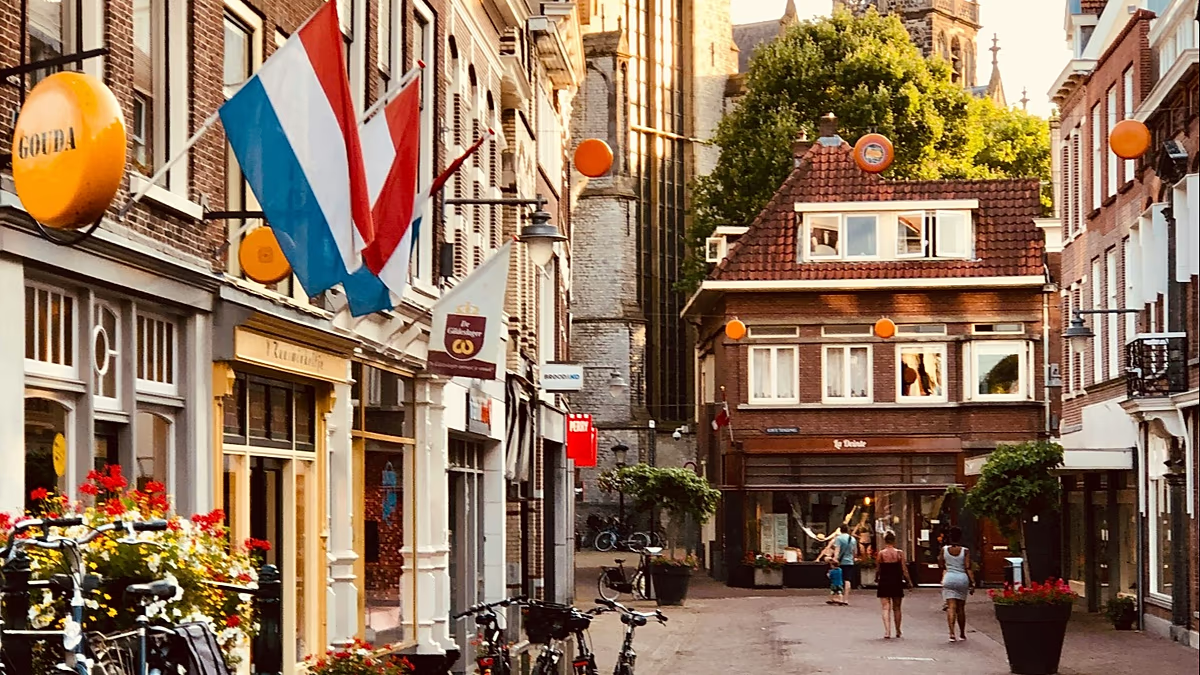
Similarly, the charming city of Gouda invites travelers to move beyond its eponymous cheese stereotype. Sandwiched between Rotterdam and Utrecht, Gouda’s appeal lies in its walkable, intimate scale and its postcard-perfect aesthetic of cobbled streets and gabled trading houses. Visiting during the weekly cheese market (from April to August) offers a lively, sensory immersion into a centuries-old tradition, yet the true reward is in wandering without a strict agenda, soaking in the gentle, everyday rhythm of local life. As noted by WorldHotels, this “everyday atmosphere” is precisely what modern travelers increasingly crave—a chance to feel part of a living community rather than mere spectators in a tourist throng. A stay at the City Hotel Gouda, overlooking the tranquil Gouwe River, perfectly encapsulates this experience of peaceful immersion.
Belgium, too, offers a masterclass in underrated urban charm with the city of Kortrijk. Trading the grand European institutions of Brussels for Kortrijk’s blend of historical weight and provincial warmth proves a rewarding exchange. This Flemish city possesses the cultural heft of a major center—evident in medieval landmarks like the formidable Broel Towers guarding the Leie River—but delivers it with the accessible, welcoming spirit of a large village. Here, history is not just observed but savored, quite literally, along a dedicated Chocolate Trail. Following the journey of the cacao bean from its raw state to exquisite artisanal pralines at institutions like Chocolatier Vandenbulcke transforms sightseeing into a deliciously immersive education.
The accommodation itself in these alternative destinations often becomes a central chapter of the travel story. In Kortrijk, this is epitomized by the remarkable Hotel Damier. As Belgium’s oldest hotel, dating back to 1398, a night here is a direct link to the past. Its prime location on the Great Market Square means the city’s heartbeat is right outside the door, yet the hotel offers a timeless refuge. This combination—of being historically anchored and perfectly positioned—exemplifies the advantage of lesser-known capitals: the privilege of staying in a landmark property without the overwhelming crowds or exorbitant prices typically found in their world-famous counterparts.
Ultimately, this trend toward underdog destinations signals a maturation of travel desires. It reflects a conscious choice to prioritize depth over breadth, connection over congestion, and serendipitous discovery over pre-scripted tours. The rise of cities like Arnhem, Gouda, and Kortrijk is not a dismissal of the great European capitals, but an expansion of the continent’s narrative. It celebrates the idea that true travel richness often resides in the quieter corners, where history is tangible, culture is lived, and the journey feels uniquely personal. For those seeking to move beyond the familiar, the path forward is clear: turn away from the crowded guidebook highlights and venture toward the authentic, rewarding, and wonderfully unexplored.